
Last updated October 15, 2026
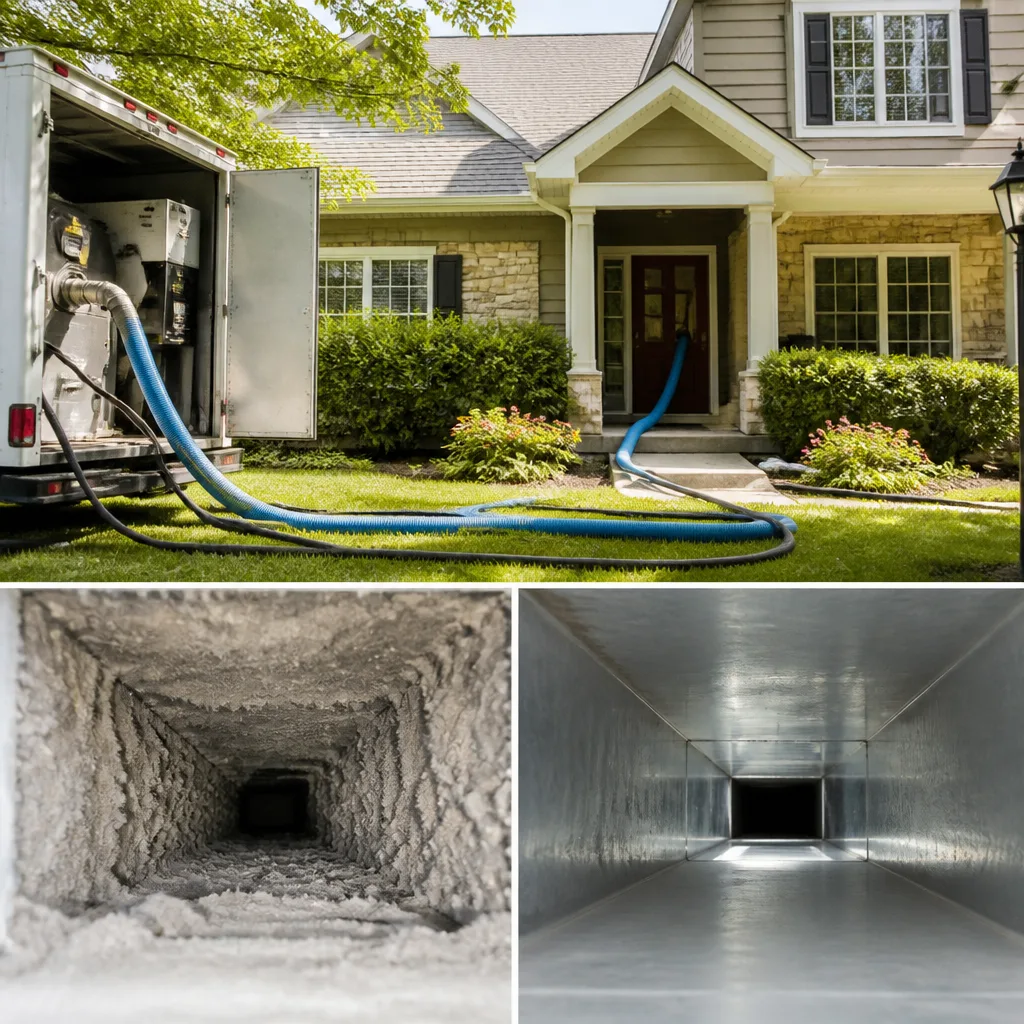 Whole-home duct cleaning
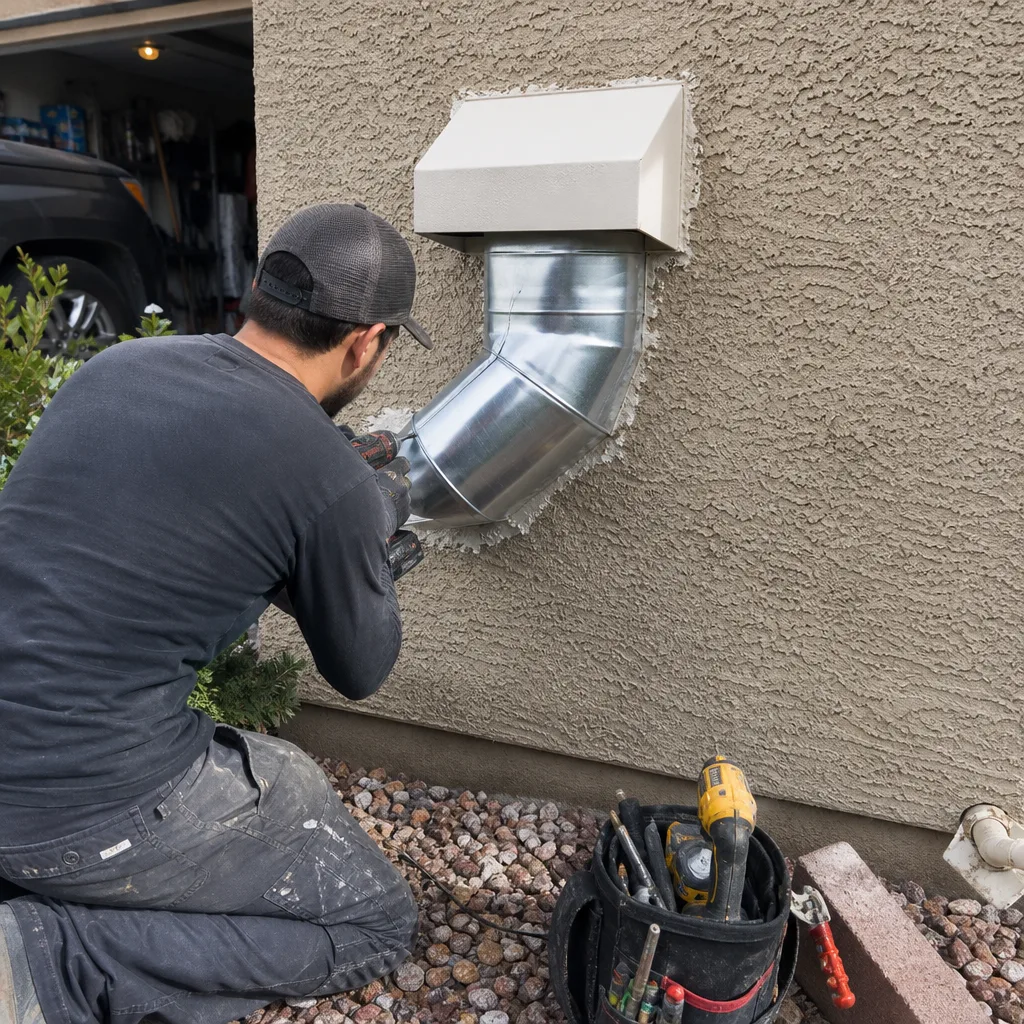
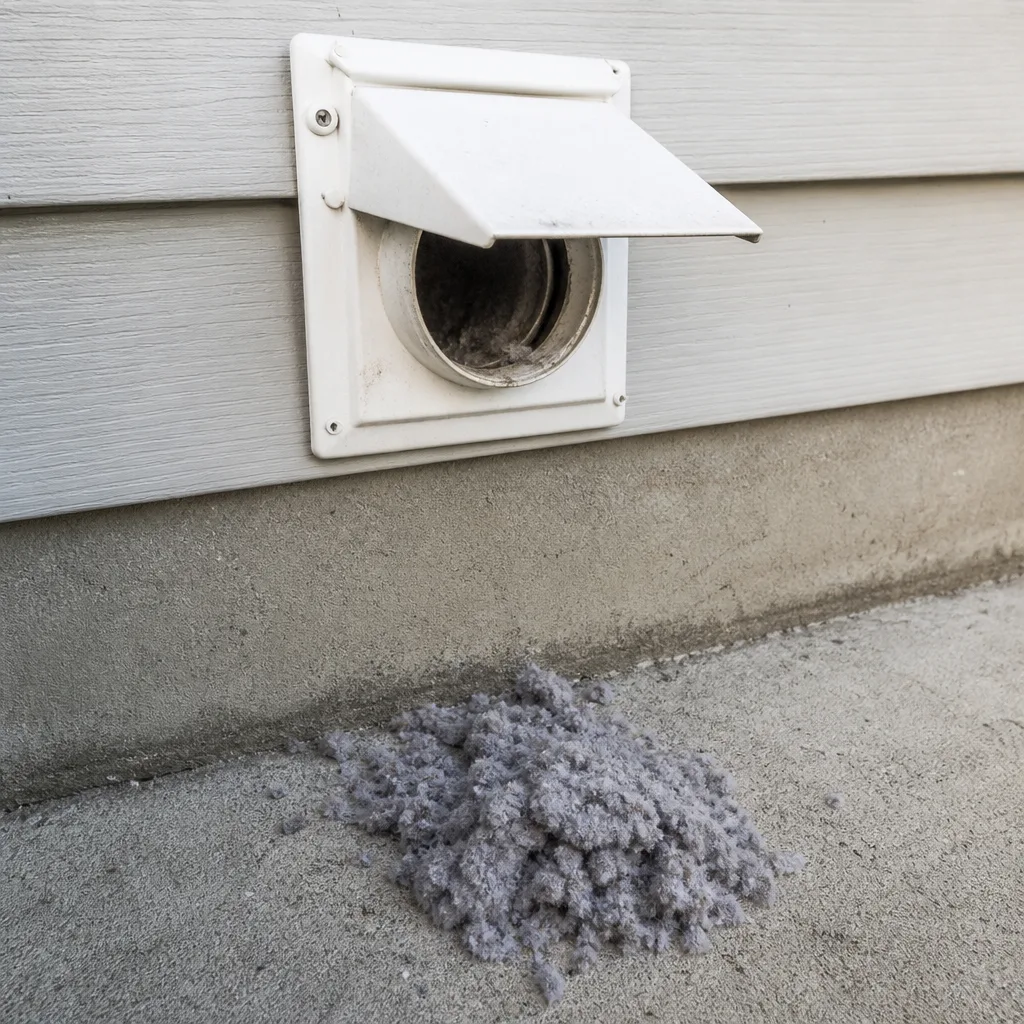 Dryer vent cleaning
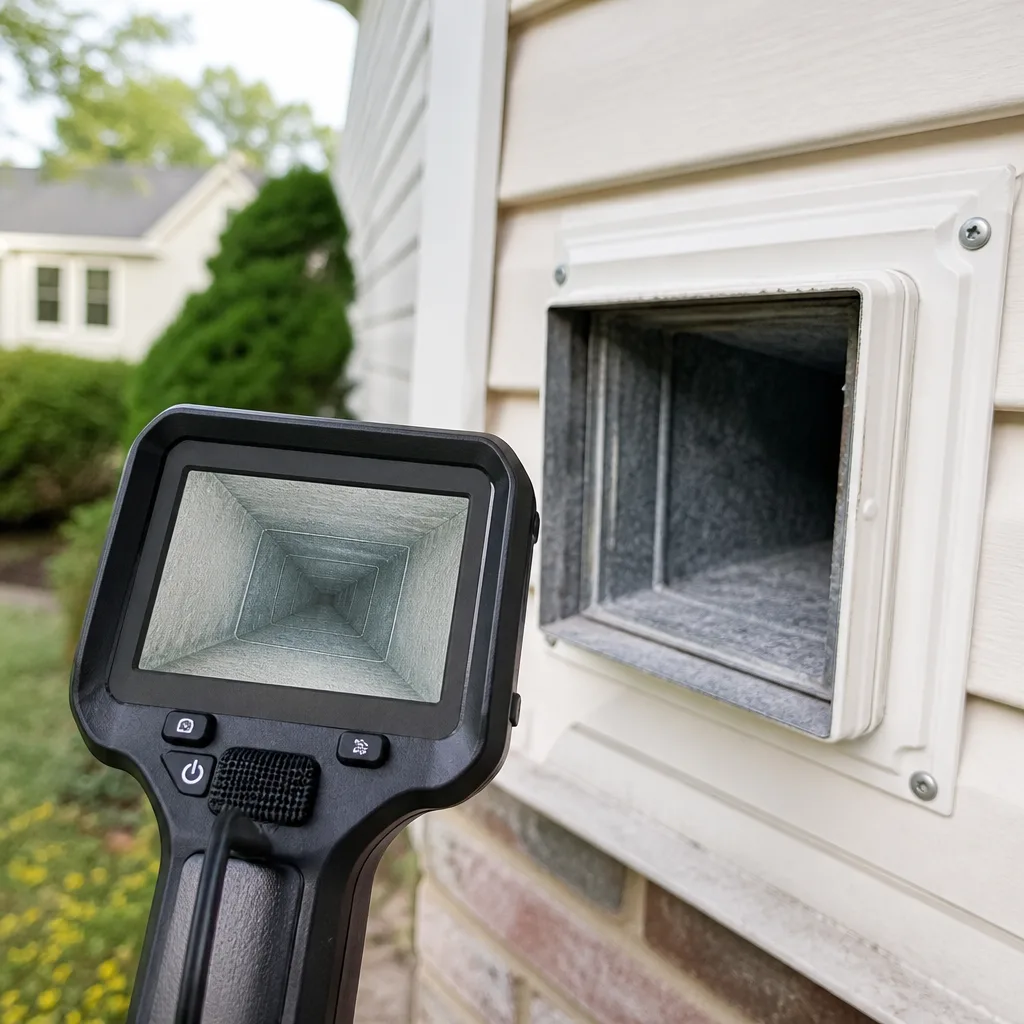 Camera inspection
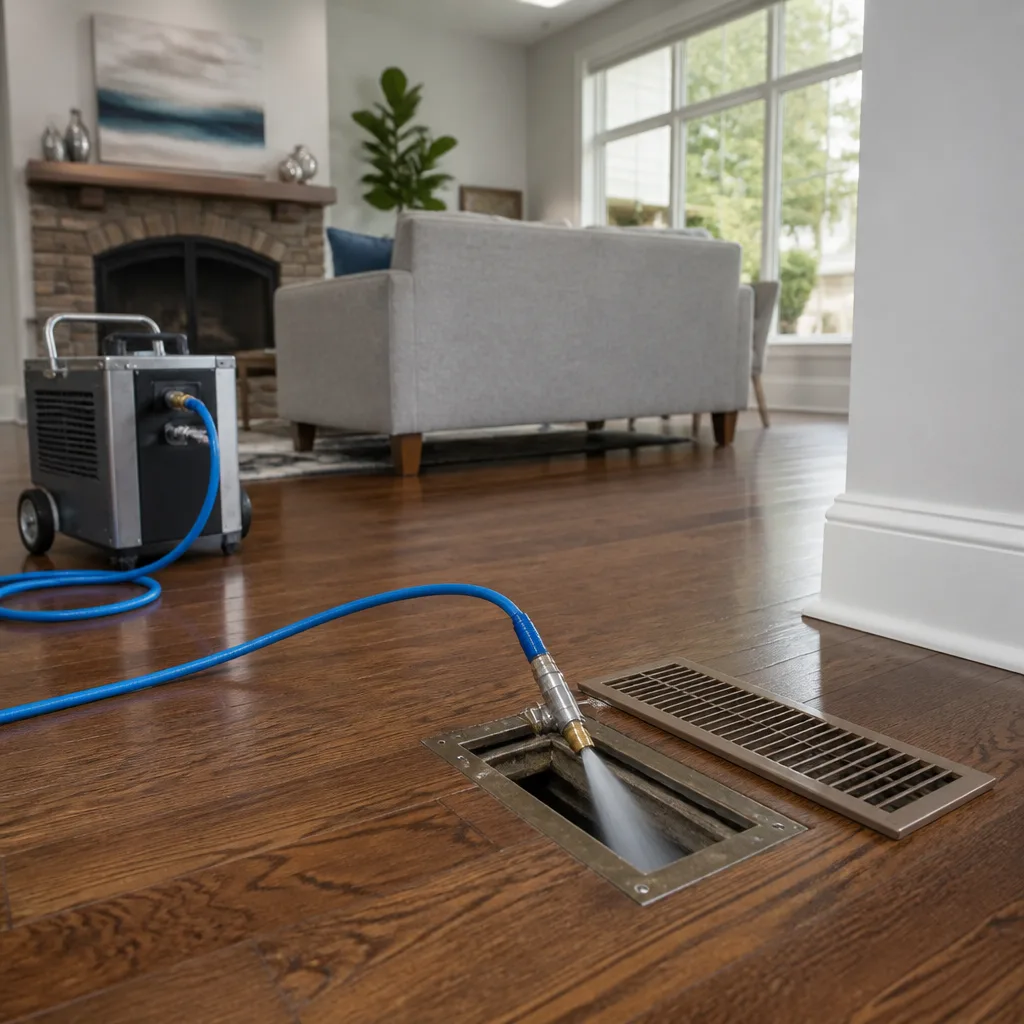 Sanitizing & deodorizing
Whole-system duct and dryer vent check with before-and-after photos - you see exactly what came out of your vents
That "$99 whole-house special" is a bait ad - the real number appears once they are in your hallway, or the "clean" is a shop-vac at the register. We photograph the inside of your ducts before and after instead.
Seasonal Air Duct Cleaning Care for Las Vegas: Year-Round Homeowner’s Guide
Here’s the uncomfortable math most national duct cleaning guides never confront: in Las Vegas, scheduling an Air Duct Cleaning in July means running your home without AC for two to four hours while it’s 112°F outside. That’s not a convenience tradeoff. For older adults, young children, or anyone with respiratory issues, it’s a legitimate safety calculation. This guide is built around the actual Las Vegas calendar – two HVAC crisis seasons, one dust-event window, and one brief stretch where you can get the work done without your house turning into an oven. You’ll learn exactly when to schedule, what a haboob changes, and why the standard “spring and fall” advice from national sites doesn’t apply here.
Quick Answer
The best times to clean your air ducts in Las Vegas are late February through April and October through November, when neither the AC nor the heat is running hard. A haboob changes that timeline immediately – after a major dust storm, you should inspect your registers and return grilles within 48 hours and schedule a cleaning if you see visible dust accumulation or smell that signature desert silt odor when the system runs. Seasonal air duct cleaning in Las Vegas costs roughly $350 to $650 for a standard single-system home, and that price should be put in writing before any work begins.
Styles & brands we work with
Table of Contents
- Why Las Vegas Needs Its Own Duct Cleaning Calendar
- The Optimal Scheduling Window: Late February – April and October – November
- Why Summer Scheduling Is a Real Safety Tradeoff
- Before and After a Haboob: The Post-Dust-Storm Inspection Sequence
- How Summer Heat Accelerates Duct Lining Degradation
- The Fall Pre-Season Check: AC-to-Heat Transition Air Quality Event
- Construction Seasons and Your Neighborhood’s Airborne Debris
- What Air Duct Cleaning Actually Costs in Las Vegas
Why Las Vegas Needs Its Own Duct Cleaning Calendar
Las Vegas doesn’t have four seasons. It has two HVAC crisis periods – the summer cooling marathon that runs roughly May through September, and the shorter winter heating stretch from late November through February. Between those, you get two transition windows, one monsoon-adjacent dust event season, and a construction cycle that never really stops. A duct care plan built around “spring and fall” is a plan built for Ohio or Georgia, not for a city where July temperatures routinely cross 110°F and the air itself carries fine desert silt that finds its way into every crack, chase, and return plenum in your home.
In our experience cleaning ducts across Las Vegas – from Summerlin to Henderson to Centennial Hills – the homes that need the most aggressive cleaning are rarely the oldest ones. They’re the ones where the system runs nearly constantly for six months straight, pulling dusty outdoor air across return grilles that sit low to the ground. The longer your AC runs, the more particulate matter gets trapped in your ducts. The more particulate matter trapped in your ducts, the more gets recirculated every time the blower kicks on. That’s the cycle this guide is designed to help you break.
One more local factor that national guides miss: Las Vegas sits in a valley, and temperature inversions in winter can trap particulate matter near ground level for days at a time. That’s not a reason to panic. It’s a reason to be strategic about when you schedule your air duct cleaning in Las Vegas.
Key Takeaways for Las Vegas Homeowners
- The optimal cleaning windows are late February – April and October – November
- Summer cleaning requires planning for 2 – 4 hours without climate control
- Post-haboob inspection should happen within 48 hours
- Duct lining degradation from summer heat is real and inspectable
- Construction activity in your neighborhood directly affects cleaning frequency
The Optimal Scheduling Window: Late February – April and October – November
Here’s the direct answer: if you’re planning a routine air duct cleaning in Las Vegas, aim for late February through April or October through November. These are the shoulder seasons when temperatures sit in the 60s and 70s, your HVAC system isn’t running hard in either direction, and you can shut the system down for a few hours without your house becoming uncomfortable.
That last point matters more than most people realize. A proper air duct cleaning requires the system to be off while the technician works. The blower can’t be running during negative-pressure extraction, and your home’s internal temperature will drift toward the outdoor temperature during that window. In October or March, that drift is barely noticeable. In July, it’s a different story entirely.
The February – April window has a specific advantage: you’re cleaning out everything that accumulated during the previous summer’s constant AC operation, plus any dust that settled during the winter heating months. You get a fresh system going into the next cooling season. The October – November window works similarly in reverse – you clear out summer buildup before the heating season starts, when your furnace will be circulating air through ducts that may have been quietly collecting dust for six months.
One practical note: February and March are also when many Las Vegas homeowners schedule their pre-summer AC maintenance. If you can coordinate your duct cleaning with your AC tune-up, you’ll only need to shut the system down once. That’s the kind of efficiency that saves you a half-day of inconvenience.
Why Summer Scheduling Is a Real Safety Tradeoff
Most national guides treat scheduling as a matter of convenience: “spring is a great time to clean your ducts because the weather is nice.” In Las Vegas, scheduling in July or August isn’t just inconvenient. It’s a real decision that involves your household’s comfort and, in some cases, safety.
When we clean ducts in Las Vegas in the summer, here’s what happens: the technician arrives, the system is powered down, and your home begins warming toward the outdoor temperature. Even with the work done efficiently, you’re looking at two to four hours without AC. When it’s 112°F outside, the indoor temperature can climb into the 90s during that window. For most healthy adults, that’s unpleasant. For elderly residents, infants, or anyone with cardiovascular or respiratory conditions, that kind of heat exposure is genuinely dangerous.
That doesn’t mean summer duct cleaning never happens. Emergencies happen – a system failure, a major post-haboob contamination event, a buyer’s inspection requirement before closing. But if you have the ability to plan ahead, the shoulder seasons are where you want to be. If you must schedule during peak summer, the best approach is to book the earliest morning slot available and plan for your household’s needs: make arrangements for vulnerable family members, have a plan to keep pets comfortable, and expect the house to be warm for a few hours.
This is also where the cost question intersects with timing. Some companies offer summer discounts because demand drops – homeowners naturally avoid scheduling in extreme heat. If you find a summer deal, ask yourself whether the savings justify the discomfort. Sometimes the answer is yes. But go in with your eyes open.
Before and After a Haboob: The Post-Dust-Storm Inspection Sequence
Haboobs are a Las Vegas fact of life. These massive dust walls sweep across the valley, typically during the monsoon season from July through September, and they dump a startling amount of fine particulate matter into the air – and into your HVAC system. The question isn’t whether a haboob affects your ducts. It’s whether the effect is bad enough to move your cleaning schedule forward.
The answer depends on what you find when you inspect. Here’s the sequence we recommend for Las Vegas homeowners in the 48 hours after a significant dust event (our Air Duct Cleaning Maintenance Checklist for Las Vegas Homeowners has the full version):
- Check your registers and return grilles. Pull a few vent covers off and look at the inside surface. If you see a layer of fine dust or silt on the metal or on the duct opening, the storm pushed particulate matter past your filters.
- Check your air filter. If your filter was fresh before the storm and it’s visibly caked with dust after, that’s a sign the system was pulling contaminated air. Replace it immediately – a clogged filter restricts airflow and forces your AC to work harder.
- Turn the system on and stand near a supply register. Does the air coming out smell like dust, dirt, or that distinct desert-silt scent? That’s an indicator that particulates are now embedded inside the ductwork, not just sitting on the filter.
- Listen for airflow changes. If some rooms feel like they’re getting less air than before the storm, dust buildup may be restricting airflow through the branch ducts.
If you find dust smells, visible silt in the duct openings, or noticeably reduced airflow, a cleaning is warranted sooner rather than later. The dust that settles inside your ducts during a haboob doesn’t just sit there – it recirculates through your living space every time the blower runs. If your inspection comes back clean, you can likely stick with your original schedule.
One thing worth stating plainly: a haboob doesn’t automatically mean you need a full duct cleaning. What it means is that an inspection is non-negotiable. The inspection takes 15 minutes and costs nothing. Skipping it means leaving a potential air quality problem in your home for months.
How Summer Heat Accelerates Duct Lining Degradation
Las Vegas attics routinely reach 130°F to 150°F in the summer. That’s not hyperbole – that’s the measured reality in most valley homes, even with proper attic ventilation. Your ductwork lives in that environment for months on end, year after year. What does that heat actually do to the materials inside your ducts?
Flex duct, which is standard in most modern Las Vegas homes, has an inner liner made of plastic that can become brittle under sustained heat exposure. The liner can develop micro-cracks, which then collect dust and debris that can’t be easily removed by normal airflow. The outer insulation jacket can also break down over time, and when insulation particles enter the airstream, they become part of what circulates through your home. Rigid metal ducts are more heat-tolerant, but even they can experience issues: at the joints and connections, the sealant or mastic can dry out and crack, allowing attic air – which in Las Vegas means dusty, hot attic air – to infiltrate the conditioned airstream.
This is why October matters so much for Las Vegas homeowners. When the cooling season finally ends, the damage from the summer heat is done and measurable. A visual inspection of accessible ducts in October can reveal liner degradation, cracked sealant, or separated connections that developed over the summer months. Identifying those issues in October gives you a full month or more to address them before the heating season starts, and it gives you a cleaner answer to the question: is my duct system ready for another Vegas summer, or does it need attention first?
If your home is more than 15 years old and the ducts have never been inspected, the October check is especially important. Duct systems don’t last forever, and Las Vegas heat accelerates their aging curve in ways that homes in cooler climates don’t experience. When degradation is caught early, it’s often a repair rather than a replacement. When it’s missed, it becomes a larger problem – and a larger invoice. For that reason, we recommend pairing your fall duct inspection with any necessary air duct repair in Las Vegas rather than waiting until failure.
The Fall Pre-Season Check: AC-to-Heat Transition Air Quality Event
There’s a specific moment every fall when Las Vegas homeowners switch from cooling to heating for the first time in six or seven months. The temperature dips into the 40s at night, and suddenly the thermostat flips. What most homeowners don’t realize is that this transition moment is often when air quality complaints spike.
Here’s why: during the cooling season, the evaporator coil runs cold and wet, which means the air moving through your system is relatively humid. That moisture helps settle some particulate matter inside the ducts. When you switch to heating, the air passing through the system is hot and dry. That dry heat loosens the settled dust, dries it out, and sends it through the ductwork and into your living space. The result is that familiar “burning dust” smell that Las Vegas homeowners often notice on the first cold night of fall. It’s not a fire. It’s the accumulated summer dust being baked off.
That smell is a signal. A light dust scent that dissipates within a few hours is normal and not a cause for concern. A strong smell that lingers for days, or visible dust being pushed out of registers, suggests the ducts are holding enough accumulated material to warrant attention. The October pre-season check is designed to catch this before it becomes a problem: have the ducts inspected for dust buildup and integrity issues, address any repairs or cleaning needs while the weather is mild, and enter the heating season with a system that’s actually clean rather than one that’s about to announce its condition through your supply registers.
Construction Seasons and Your Neighborhood’s Airborne Debris
Las Vegas is a city that never stops building. New subdivisions rise in the west and northwest parts of the valley, infill projects pop up in older neighborhoods, and renovations happen on nearly every block. What does that mean for your air ducts? More than most homeowners realize.
Construction activity – especially grading, excavation, and framing – generates particulate matter that travels far beyond the job site. In neighborhoods where multiple homes are being built or renovated, the ambient dust load can be significantly elevated for months at a time. That dust can enter your home through open windows and doors, ride in on clothing and shoes, and, critically, get pulled into your HVAC system through return grilles. If your neighborhood is in an active construction phase, your ducts are accumulating particulate matter faster than they would in a settled, established area.
Here’s a practical rule of thumb for Las Vegas homeowners: if you live within a quarter-mile of active construction – or on a street where multiple homes are being renovated – keep an eye on your air filter and plan for a cleaning frequency closer to every 2 – 3 years rather than the standard 3 – 5. The air filter is your early indicator. If it’s collecting visible dust twice as fast as it did before construction started in your area, that dust is almost certainly getting past the filter and into the duct system. For homeowners in fast-growing areas like the far northwest valley or parts of the southwest, this is an underappreciated factor in indoor air quality.
What Air Duct Cleaning Actually Costs in Las Vegas
Let’s talk about money, because you should know what a reasonable price looks like before you pick up the phone. For more guides & resources on home maintenance costs, see our blog. Air duct cleaning in the Las Vegas market typically runs between $350 and $650 for a standard single-system home, depending on the number of vents, the size of the system, and the level of contamination. Homes with multiple systems (common in two-story or large single-story homes) will fall above that range. Those prices are for a legitimate, thorough cleaning using negative-pressure extraction – the same professional approach used by companies running Rotobrush or Nikro equipment. Companies that quote dramatically lower prices are often planning to upsell once they’re inside your home, or they’re not actually performing a full cleaning.
The most important thing to look for is not the price itself but whether the price is written before any work begins. At Linden Air Duct Las Vegas, every job gets a written price before the technician starts. No exceptions. You’ll know the cost of the entire job before a single vent is opened, and that number doesn’t change at the end. If you ever talk to a company that won’t put the price in writing upfront – for any reason – walk away. That’s the single biggest red flag in the duct cleaning industry, and it’s the one that Las Vegas homeowners most often regret ignoring.
For homeowners who want a second layer of accountability, ask about guarantees. A written guarantee that covers the work for a specific period – like the 365-Day Done Right Promise that comes standard with every Linden Air Duct Las Vegas job – tells you the company is willing to stand behind the work in writing. If you can get a written price and a written guarantee from the same company, you’ve covered the two most important bases.
One more practical note on cost: dryer vent cleaning in Las Vegas is a separate service and is typically priced separately from air duct cleaning. If a company offers to include it for a small upcharge, that’s reasonable; if a company tries to bundle it at a price that seems too good to be true, it probably is.
Common Mistakes to Avoid
- Scheduling in July without a plan. If you absolutely must clean your ducts in peak summer, book an early morning slot and arrange for vulnerable household members to be elsewhere during the work. A house without AC in July is not a minor inconvenience.
- Ignoring your air filter between cleanings. Your filter is the first line of defense, and in Las Vegas dust conditions, it loads up fast. Check it monthly during the summer cooling season and after any major dust event.
- Waiting for the burning-dust smell to fade without investigating. The fall dust smell is a signal that accumulated material is being baked off. If it’s strong or persistent, that’s a duct condition issue, not just a seasonal quirk.
- Assuming one cleaning every five years is always enough. Las Vegas conditions mean some homes need cleaning every 2 – 3 years. Construction proximity, haboob frequency, and whether you have pets all change the equation.
- Choosing a company based on price alone. The duct cleaning industry has a well-earned reputation for bait-and-switch pricing. A written, upfront price and a written guarantee matter more than the lowest quote.
- Forgetting that the dryer vent is a separate system. Your dryer vent accumulates lint on its own schedule and in Las Vegas, where dry conditions make lint more combustible, regular dryer vent cleaning is a fire-safety issue as much as an efficiency issue.
- Skipping the post-haboob inspection. A major dust storm can alter your duct condition in a single afternoon. The 48-hour inspection takes 15 minutes, and skipping it means potential air quality problems go unnoticed for months.
See the difference
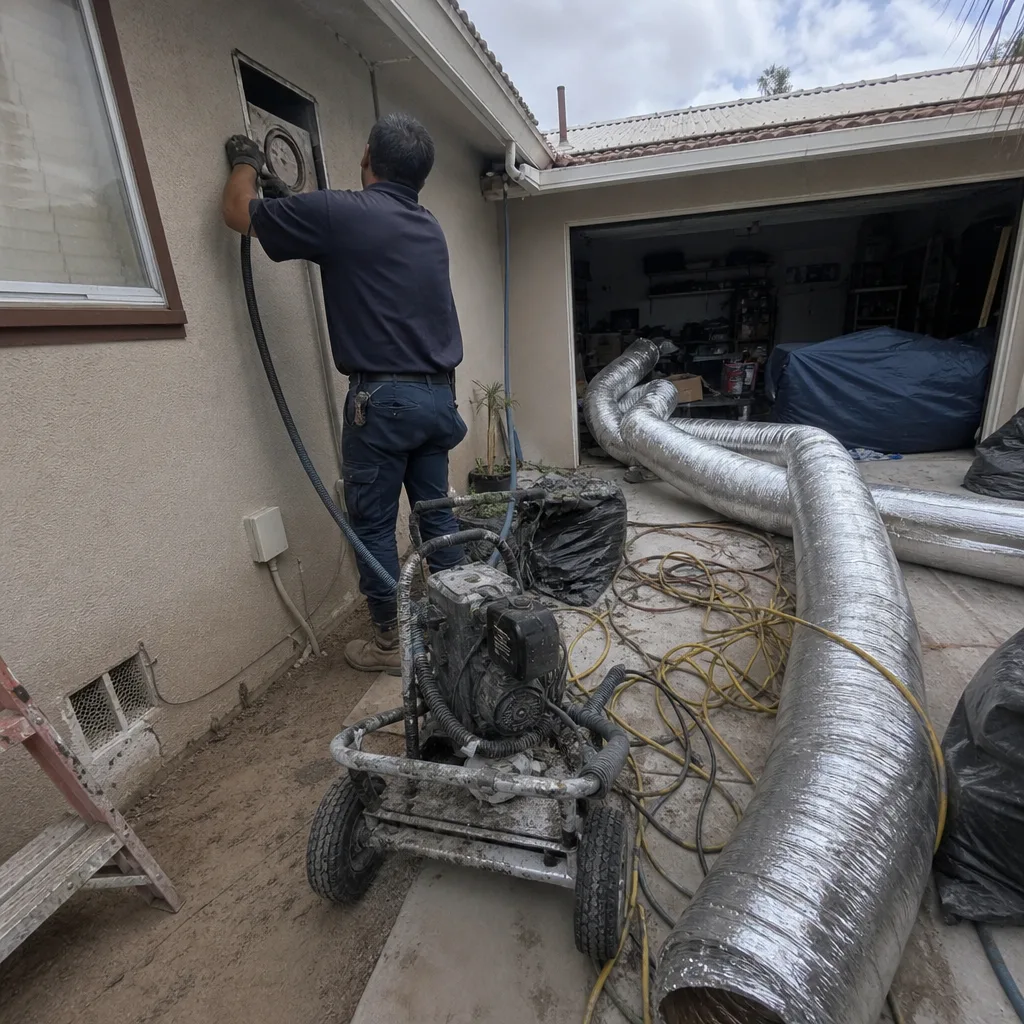 Before
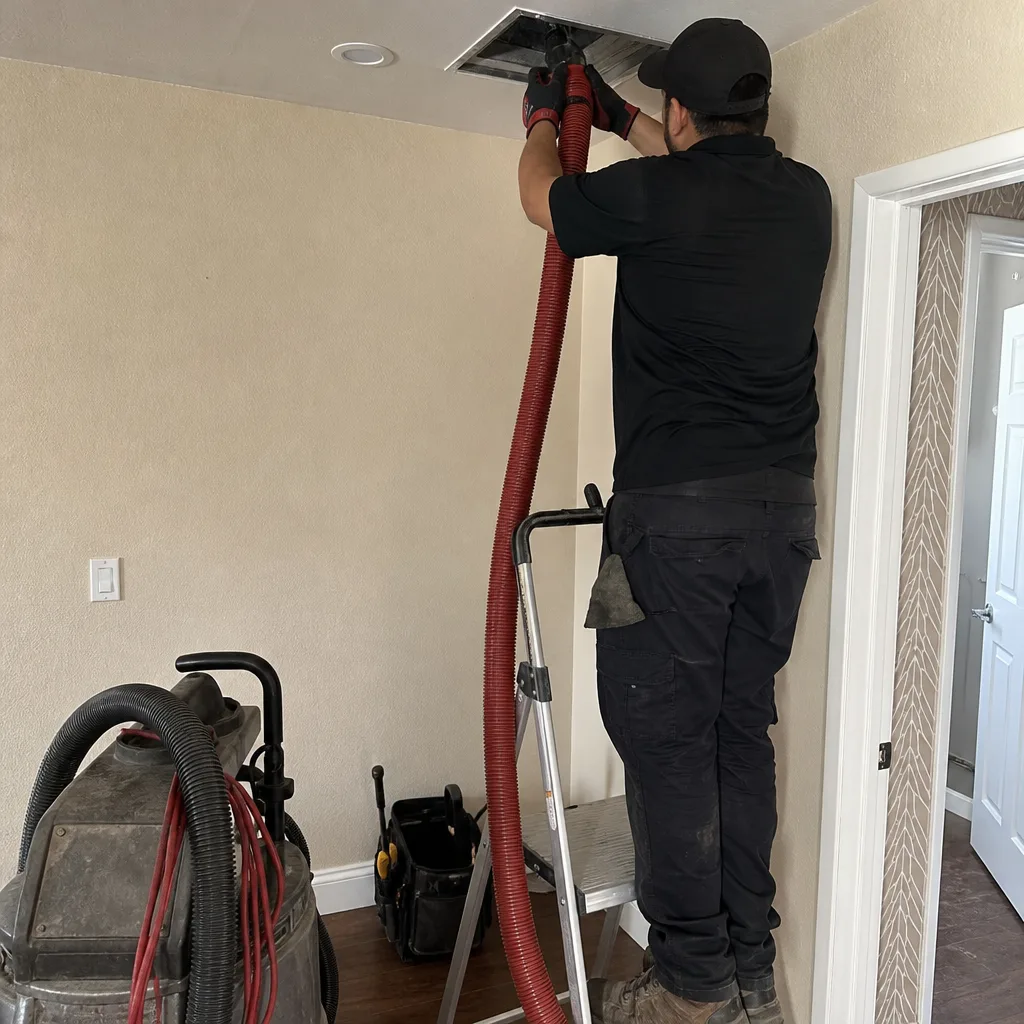 After
After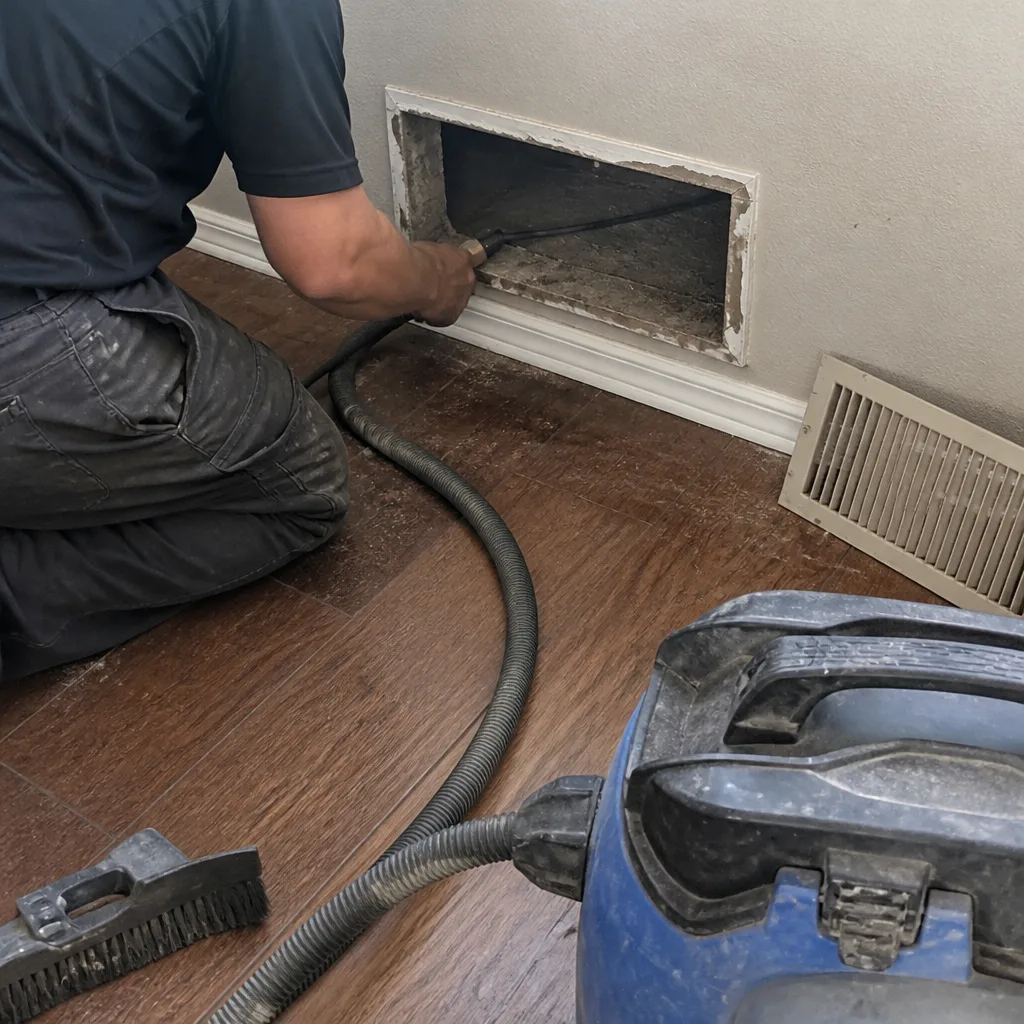 Before
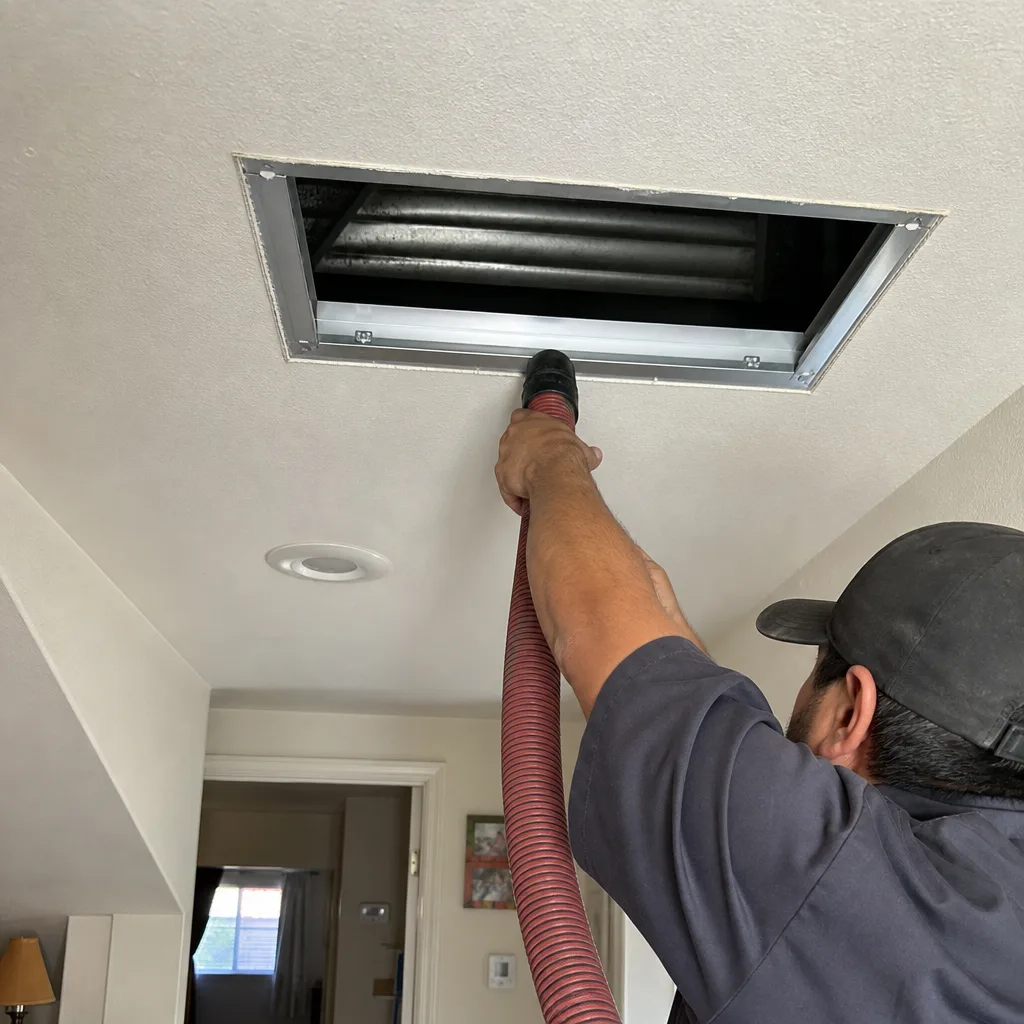 After
After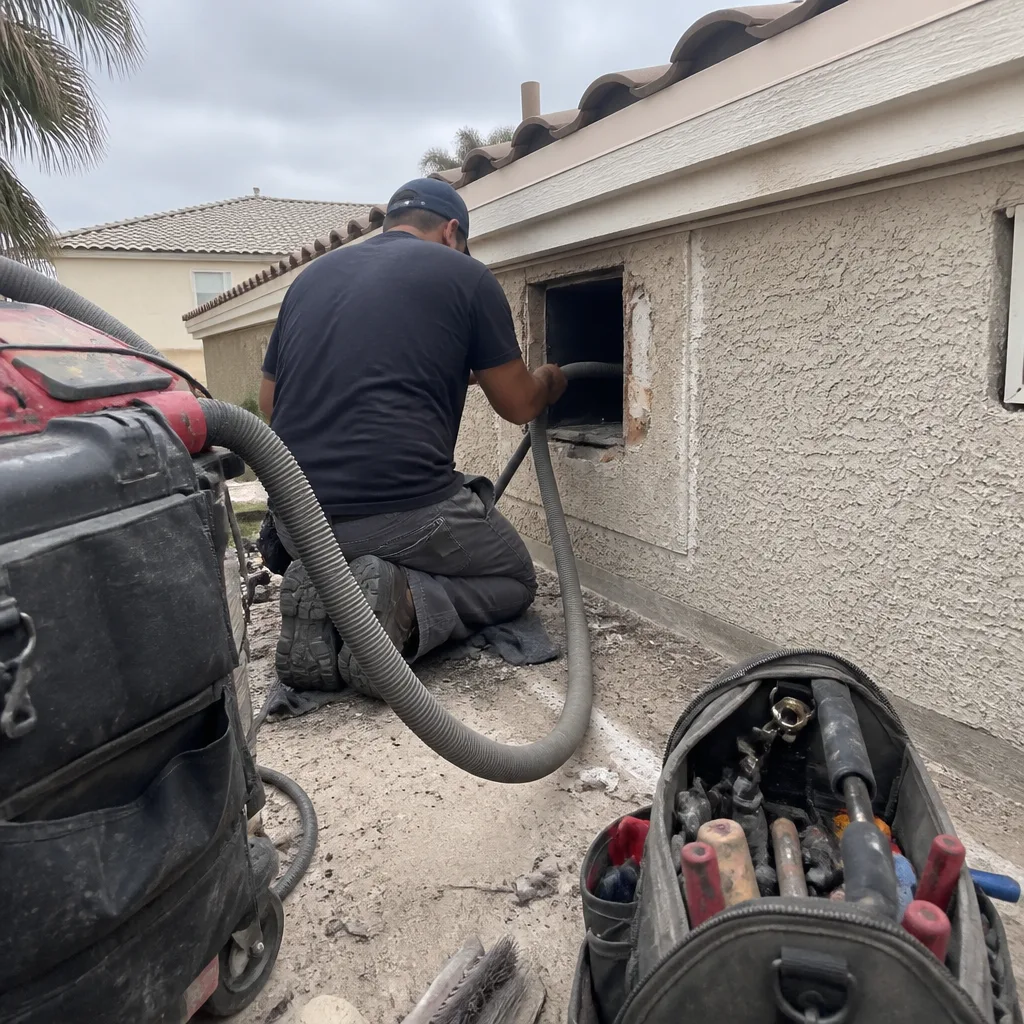 Before
 After
AfterWhen to Call a Professional
If you’ve checked your registers after a haboob and found visible dust accumulation, if the fall burning-dust smell lingers for more than a few days, if your air filter is loading up unusually fast even when there’s no storm activity, or if it’s been more than three years since your last cleaning and you live in an area with elevated dust or construction activity – those are all scenarios where a professional assessment makes sense. A duct inspection identifies what’s actually in your ducts and what condition the system is in, and a reputable company will tell you whether cleaning is needed or whether you can wait. At Linden Air Duct Las Vegas, we offer free estimates in Las Vegas – call (725) 726-5532 to schedule. We also handle Linden Air Duct Las Vegas home appointments for all your air quality needs.
Frequently Asked Questions
Most Las Vegas homes benefit from air duct cleaning every 3 to 5 years, but several local factors can shorten that interval: living near active construction, experiencing frequent haboobs, having pets that shed, or running the AC continuously through long, hot summers. If you’re in a dust-heavy area or have allergy concerns, every 2 to 3 years is a reasonable target. Call (725) 726-5532 for a professional assessment of your specific home.
Summer duct cleaning requires running your home without climate control for two to four hours, which can push indoor temperatures into the 90s during peak heat. It’s not inherently harmful to the system, but it’s a real safety consideration for elderly residents, infants, and anyone with heat sensitivity. If you must schedule in summer, choose the earliest available morning slot and plan accordingly.
Within 48 hours, inspect your registers and return grilles for dust accumulation, check your air filter for unusual loading, run the system to check for dust smells, and listen for airflow changes. If any of those indicators appear, contact a professional for a more thorough inspection. If everything looks normal, you can likely stick with your existing maintenance schedule.
That smell is accumulated dust inside the ducts being baked off by the dry heat of the furnace after months of sitting in the system during cooling season. A light scent that fades within a few hours is normal. A strong, persistent smell that lasts for days suggests heavier buildup and warrants a duct inspection.
Expect to pay between $350 and $650 for a standard single-system home in Las Vegas. The most important thing to verify is that the price is provided in writing before any work begins – a written, upfront price protects you from the bait-and-switch tactics that plague the duct cleaning industry. Some companies, including Linden Air Duct Las Vegas, also provide written guarantees on the work itself.
Air duct cleaning addresses the ductwork connected to your HVAC system, removing accumulated dust, debris, and contaminants from the heating and cooling airstream. Dryer vent cleaning addresses the separate exhaust duct that carries hot, lint-laden air from your clothes dryer to the outside. Both matter for different reasons – HVAC ducts for air quality and equipment efficiency, dryer vents for fire safety and drying performance.
The Bottom Line
Las Vegas homeowners who plan their duct cleaning around the valley’s actual climate conditions get better results, less inconvenience, and clearer pricing than those who follow generic national advice. Target late February through April or October through November for scheduled cleanings. Watch your system closely after haboobs. Understand that summer heat degrades duct materials faster here than in cooler climates, which makes the October inspection particularly important. Keep an eye on construction activity near your home. And demand a written price and written guarantee from whoever does the work – in this industry, those two pieces of paper are worth more than any discount. Ready to schedule your seasonal check? Call (725) 726-5532 for a free estimate. A live person answers, every time, any hour.
Written by Marcus Veale, Owner at Linden Air Duct Las Vegas, serving Las Vegas since 2004.