
Last updated October 15, 2026
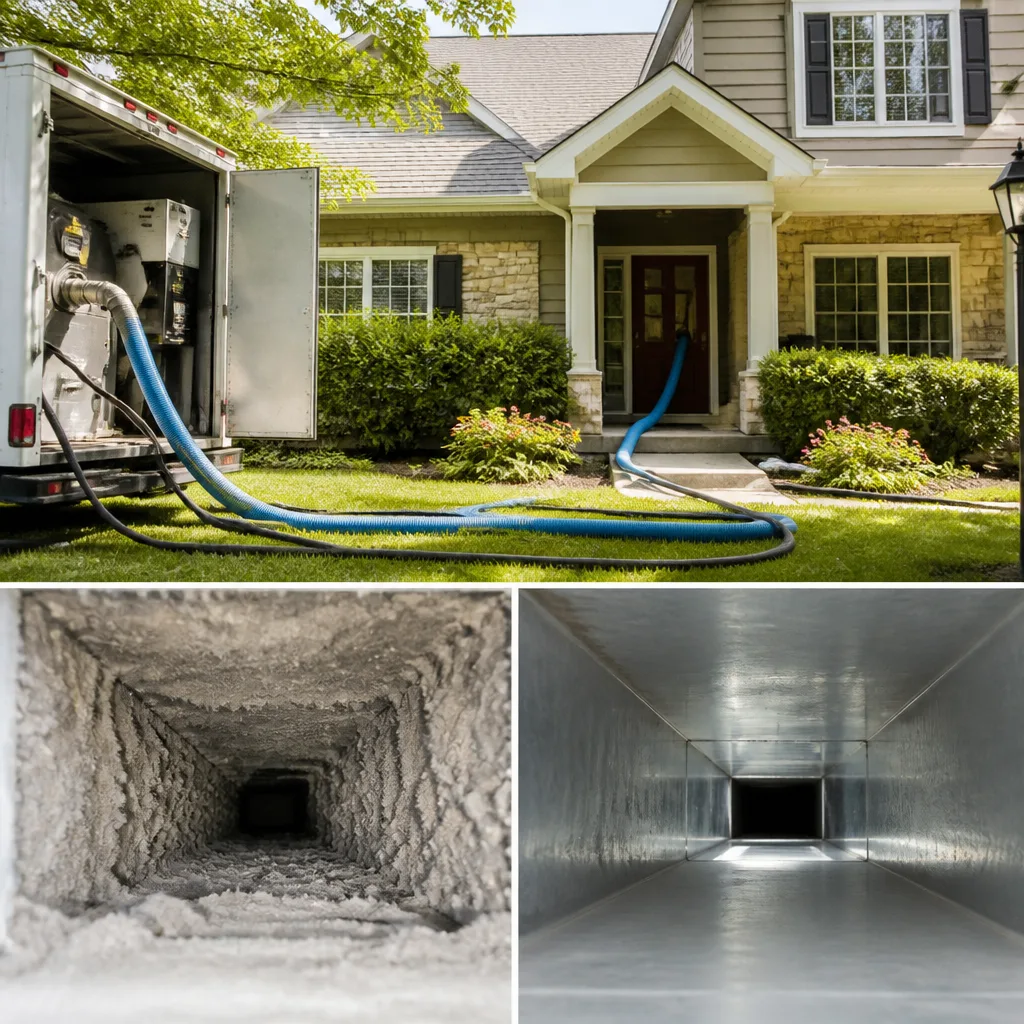 Whole-home duct cleaning
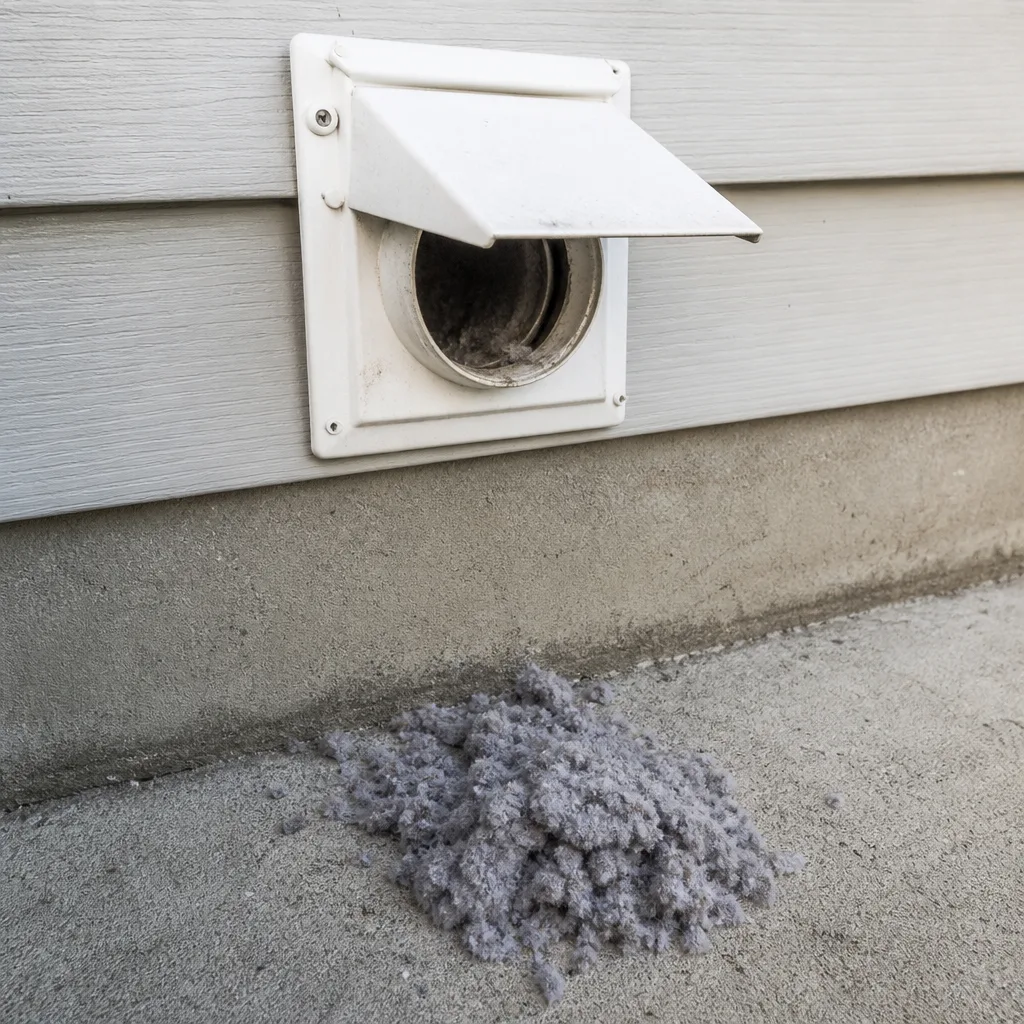 Dryer vent cleaning
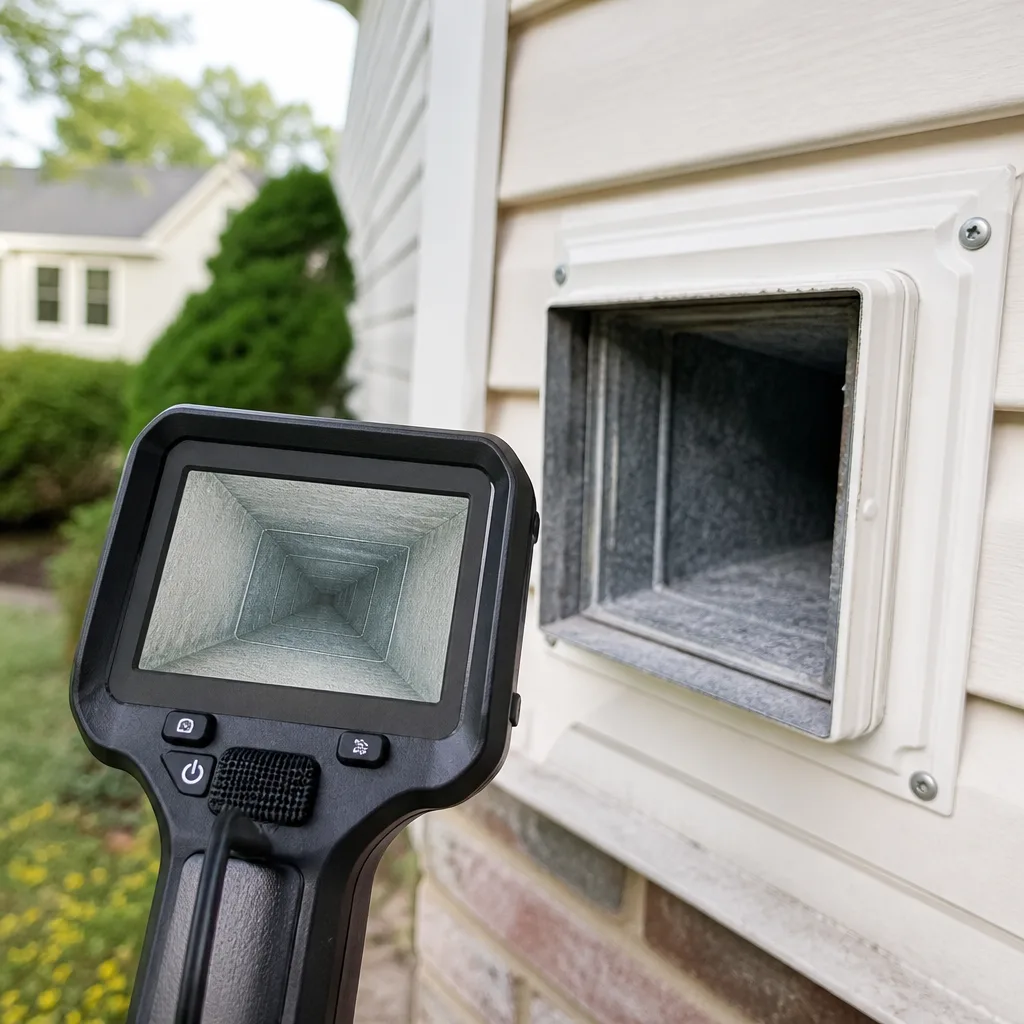 Camera inspection
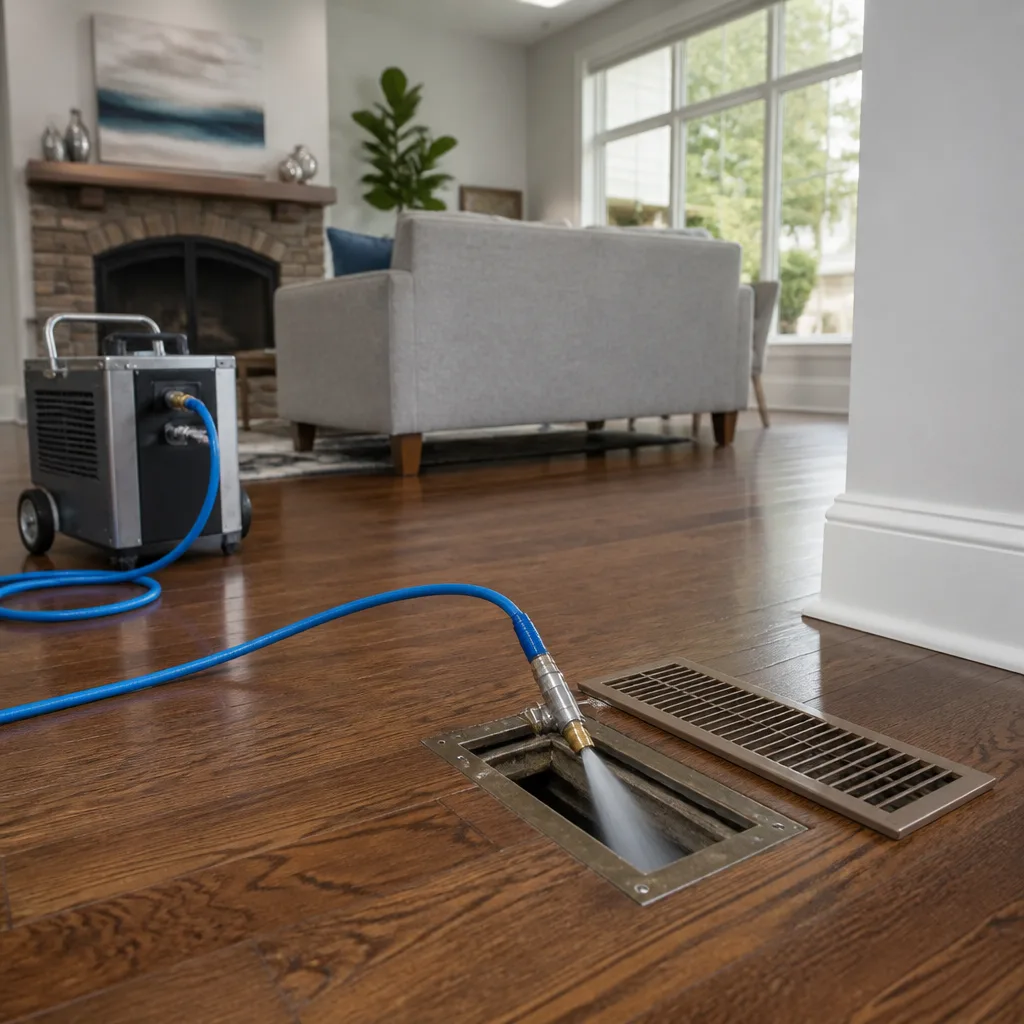 Sanitizing & deodorizing
Whole-system duct and dryer vent check with before-and-after photos - you see exactly what came out of your vents
That "$99 whole-house special" is a bait ad - the real number appears once they are in your hallway, or the "clean" is a shop-vac at the register. We photograph the inside of your ducts before and after instead.
Air Duct Cleaning Permits, Codes & Inspections in NV: What You Need to Know
Here’s a counterintuitive fact that surprises most Las Vegas homeowners: the majority of air duct cleaning jobs in Nevada require no permit at all. The work is classified as maintenance, not construction. But the moment a technician starts replacing duct material, tapping into the air handler, or adding equipment inside the plenum, the job crosses a legal line. The trouble is, many homeowners don’t know where that line sits, and by the time they find out, an unpermitted modification is already buried inside the walls. This guide draws the line precisely, explains what Clark County actually enforces, and gives you the one question that protects your home and your resale value. For more details, see our The Complete Guide to Air Duct Cleaning in Las Vegas.
Styles & brands we work with
Quick Answer
Routine air duct cleaning, where the ducts are accessed through existing openings and cleaned using negative-pressure extraction, does not require a permit or a contractor’s license in Nevada. However, if a technician replaces duct sections, modifies the return air system, installs UV sanitizing equipment inside the air handler, or adds new duct runs, that work falls under HVAC contracting and requires a C-21 license from the Nevada State Contractors Board, and in Clark County, a building permit may also be required. Before any technician touches a duct connection, ask whether the work changes the duct system, and if the answer is yes, ask to see the C-21 license number.
Table of Contents
- Cleaning vs. Modification: Where Nevada Draws the Line
- What NAC 624 Actually Says About Duct Work
- UV Air Purifier Installations: The Most Common Unpermitted Job
- Clark County Building Department Requirements
- How to Check a Duct Company’s Nevada Contractor License
- Why Unpermitted Work Shows Up on Nevada Property Disclosures
- The One Question to Ask Before Work Begins
- Common Mistakes to Avoid
- When to Call a Professional
- Frequently Asked Questions
- The Bottom Line
Cleaning vs. Modification: Where Nevada Draws the Line
The legal distinction in Nevada comes down to whether the duct system is being restored to its original condition or changed from it. Cleaning restores. Modification changes. That is the entire framework in one sentence, and every permit question flows from it.
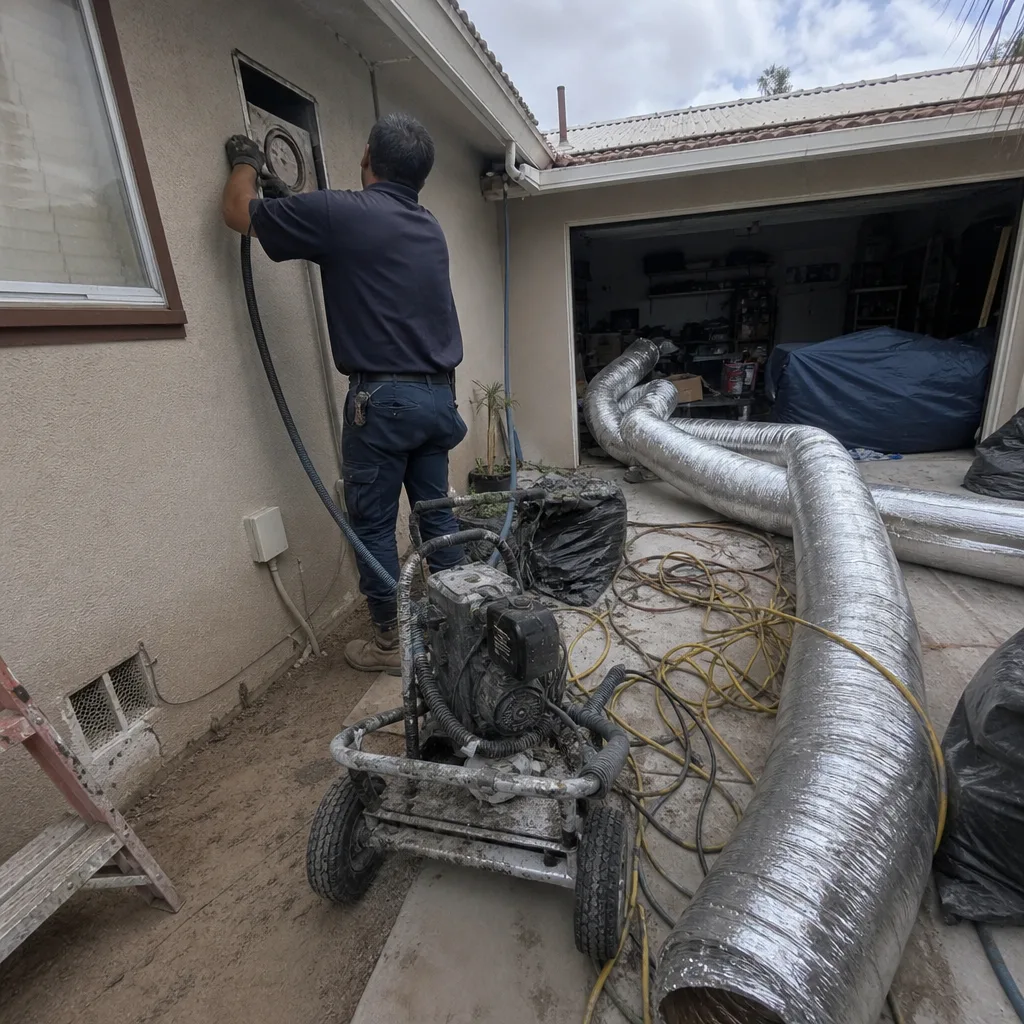
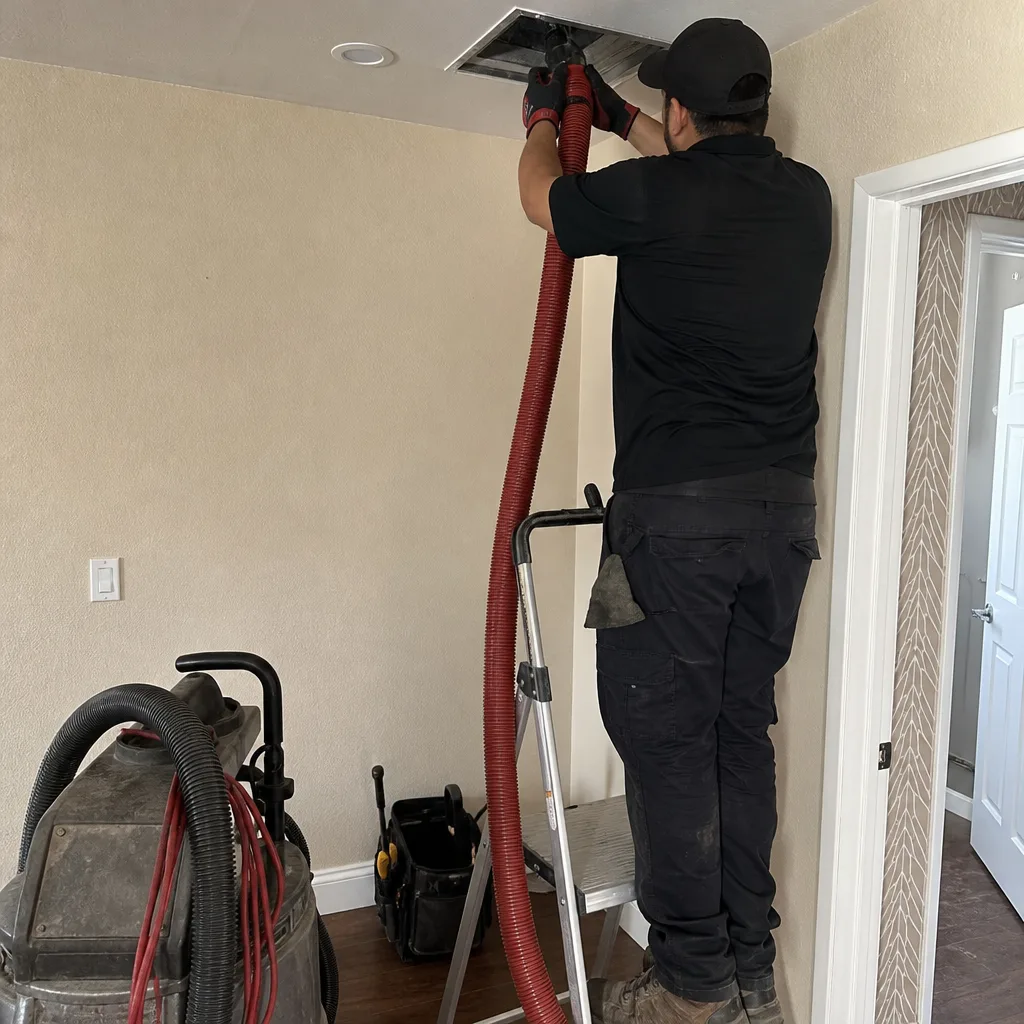
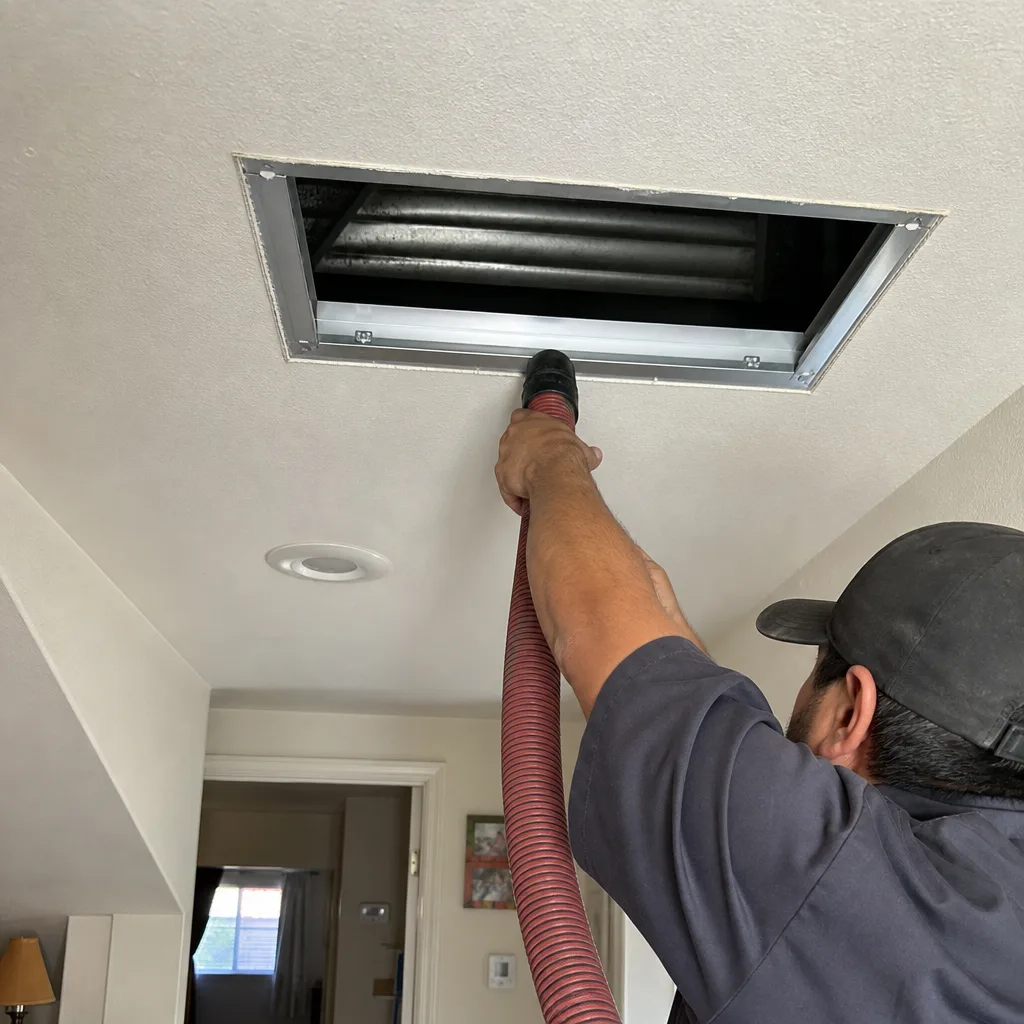
When we clean ducts in Las Vegas homes, we access the system through existing registers, return grilles, and the air handler cabinet. We run negative-pressure extraction equipment, agitate the interior surfaces with rotating brushes, and pull the dislodged debris out through a HEPA-filtered vacuum. Nothing about the duct system is altered. The ducts are the same length, the same diameter, connected at the same points, carrying the same airflow. Nevada treats this as routine maintenance, the same category as changing an air filter or cleaning a condenser coil. No permit. No contractor’s license required.
Modification is different. If a section of flex duct has collapsed or been chewed through by rodents in a Summerlin attic, and a technician cuts out the damaged run and installs a new section, that is a repair that changes the physical system. Under Nevada law, that technician must hold a C-21 refrigeration and air conditioning contractor’s license issued by the Nevada State Contractors Board. The same applies to adding a new supply run to a room that runs hot in the summer, enlarging a return air drop, or installing a motorized damper. These are not cleaning tasks. They are HVAC installations, and they trigger licensing and potentially permitting requirements.
The reason this matters in Las Vegas specifically is our housing stock. A large share of homes in the valley were built between 1985 and 2005, and flex duct in attics that bake at 140 degrees in July degrades faster here than almost anywhere else in the country. Technicians see damaged duct runs constantly. A homeowner who calls for Air Duct Cleaning services may be told the ducts need replacement, and without knowing the rules, they may approve work that should have been done by a licensed contractor with a permit. That decision can come back years later, at resale.
For more on what a proper cleaning actually involves, see our guide to Air Duct Cleaning in Las Vegas.
What NAC 624 Actually Says About Duct Work
The Nevada Administrative Code chapter 624 governs contractor licensing. It is the document that defines what types of work require a contractor’s license and what types do not. For air duct work, the critical passage separates maintenance from construction. NAC 624 defines the scope of the C-21 classification, refrigeration and air conditioning, as including the installation, alteration, and repair of air handling systems, ductwork, and related components. That means any alteration or repair of ductwork falls under C-21.
Duct cleaning is not listed as a C-21 activity. It is not an installation, not an alteration, and not a repair in the licensing sense. A company that only cleans ducts, brushes registers, and vacuums out debris does not need a C-21 license. That is why many legitimate duct cleaning companies in Las Vegas operate without a contractor’s license, and that is legally fine. The State Contractors Board is not coming after a company for running a Rotobrush machine through a duct system.
But the Board does enforce the line aggressively when it is crossed. A company that holds no C-21 license and replaces a duct run is performing unlicensed contracting. If a homeowner files a complaint, the Board can issue a citation, and the homeowner may be left with work that has no licensed contractor behind it. That means no bond coverage, no contractor recovery fund protection, and no legal recourse through the Board’s complaint process. For older Las Vegas homeowners, this is a real vulnerability, because unlicensed workers often target precisely the kind of homeowners who are least likely to verify credentials at the door.
The practical takeaway: a cleaning-only company is not required to hold a C-21. The moment the scope shifts to repair or modification, the company doing that scope must hold one. If your cleaning technician offers to replace a duct section as part of a cleaning visit, the correct response is to ask for the C-21 license number and verify it with the State Contractors Board before any material is cut.
UV Air Purifier Installations: The Most Common Unpermitted Job
We have seen this scenario play out in Las Vegas more times than we can count. A homeowner calls for air duct cleaning. During the job, or during the estimate walkthrough, the technician recommends a UV air purifier installed inside the air handler or in the supply plenum. It sounds like a simple add-on. It is not. Installing UV equipment inside the duct system is an HVAC alteration, and in Clark County, it often requires an electrical permit and a mechanical permit.
The Clark County Building Department treats UV sanitizer installations inside ductwork as a modification to the mechanical system. The unit must be wired into the air handler’s electrical circuit or a dedicated circuit, which triggers electrical code requirements. The installation also involves cutting into the duct or plenum to mount the lamp, which triggers mechanical code requirements. A licensed electrical contractor or a C-21 contractor with the proper classifications must perform the work. A permit must be pulled, the work must pass inspection, and the permit must be closed out.
What actually happens in many cases is that a duct cleaning technician, holding no contractor’s license, installs the UV lamp during a cleaning visit. The homeowner receives no permit, no inspection record, and no documentation that the installation meets code. The lamp is mounted, the wire is run, and the job is done before the homeowner even has time to ask whether a permit was needed.
This matters for two reasons. First, a UV lamp installed incorrectly inside an air handler can be a fire hazard if the wiring is not done to code, and a lamp mounted where it degrades the duct liner can release fibers into the airstream. Second, the unpermitted installation becomes a disclosure issue when the home is sold. Nevada sellers are required to disclose known unpermitted work, and a sharp home inspector will often spot the UV unit and flag it.
If you are considering UV purification, ask the company to state in writing whether the installation requires a permit and who will pull it. If the answer is vague, stop. Brands like Honeywell and Aprilaire manufacture UV and electronic air cleaning products, and their installation instructions assume a licensed installer. That assumption exists for a reason.
Clark County Building Department Requirements
Clark County issues building permits through its Building Department, and the rules apply to unincorporated areas of the county. The City of Las Vegas, Henderson, and North Las Vegas each have their own building departments, but their requirements for mechanical work are substantially similar because they all enforce the same adopted building codes. What follows applies across the valley.
The key question is whether the work involves a change to the duct system. Here is how the building departments generally classify common scopes:
- Duct cleaning via existing access points: No permit. No inspection. Classified as maintenance.
- Replacing a section of damaged flex duct with a like-for-like section: Mechanical permit typically required. The connection points change, and the work must be inspected for proper sealing and support.
- Adding a new supply or return duct run: Mechanical permit required. This changes system airflow and must be calculated and inspected.
- Installing UV sanitizing equipment inside the plenum or air handler: Electrical and mechanical permits typically required. The work involves wiring and penetration of the duct system.
- Modifying the return air drop to accommodate a thicker filter media cabinet: Mechanical permit required. The return system is part of the duct system, and altering it changes static pressure and airflow.
The permit process for a mechanical alteration in Clark County generally follows these steps:
- The contractor submits a permit application with a scope of work description.
- The building department reviews the application, typically within a few business days for simple mechanical work.
- The permit is issued, and the work is performed.
- The contractor schedules an inspection.
- The inspector verifies the work meets code, and the permit is closed out.
Homeowners sometimes ask whether they can pull their own permit as an owner-builder. In Nevada, a homeowner can pull a permit for work on their own primary residence, but the work must still be done to code, must still be inspected, and the homeowner assumes all liability. For duct modifications inside an attic in a Las Vegas summer, this is a poor time to learn building code by trial and error. The attic is 130 degrees, the duct connections must be sealed correctly or the system leaks conditioned air into the attic, and a failed inspection means doing the work twice. For anything beyond a simple like-for-like flex duct replacement, most homeowners are better served by a licensed contractor who pulls the permit and stands behind the inspection.
Our Air Duct Repair in Las Vegas page covers what a proper repair scope looks like and what written guarantees should accompany it.
How to Check a Duct Company’s Nevada Contractor License
If the scope of work on your Las Vegas home includes any repair or modification, the company performing the work must hold a C-21 license. Checking that license takes five minutes, and it is the single most effective protection a homeowner has against unlicensed work. Here is the process:
- Ask the company for their Nevada State Contractors Board license number. If they hesitate, that is an answer in itself.
- Go to the Nevada State Contractors Board website and search the license number in the license verification tool.
- Confirm that the license classification includes C-21, refrigeration and air conditioning. A B-2 residential and small commercial classification may also cover HVAC work if the company is a general contractor.
- Check the license status. It must be active, not suspended, revoked, or expired.
- Check the bond amount. Nevada requires licensed contractors to carry a bond, which provides a path to recovery if the contractor fails to perform.
- Verify the name on the license matches the name of the company you are hiring. Subcontracting to an unlicensed crew under a licensed company’s number is a known pattern, and it leaves the homeowner with no real protection.
For a cleaning-only job, no C-21 license is required, but the company should still carry general liability insurance. Ask for a certificate of insurance, not just a verbal assurance. Any company that refuses to provide proof of insurance should be crossed off the list immediately.
In our own operation, every technician who arrives at a Las Vegas door is background-checked and identity-verified under the Threshold Standard. The tech’s name and photo are sent before the visit, and a photo ID badge is shown at the door. That is not a legal requirement in Nevada, but it is the standard we think every homeowner deserves when a stranger enters the house.
Why Unpermitted Work Shows Up on Nevada Property Disclosures
Nevada is a disclosure state. When you sell your home, you are legally required to complete a seller’s real property disclosure form, known in Nevada as the SRPD. One of the questions on that form asks whether you are aware of any work performed on the property without required permits. If you answer no and the buyer later discovers unpermitted work, you have created a basis for a lawsuit. If you answer yes, the buyer may demand the work be legalized before closing, which means pulling a retroactive permit, opening the walls or ceiling if necessary, and paying for corrections.
Unpermitted duct modifications are exactly the kind of issue that surfaces during a resale in Las Vegas. A buyer’s home inspector opens the attic access, sees a new-looking flex duct run that does not match the rest of the system, and notes it in the report. The buyer’s agent asks the seller about it. The seller, who may not have known the duct replacement was supposed to be permitted, now faces a disclosure question they cannot truthfully answer without admitting the problem.
The cost of retroactive permitting is almost always higher than the cost of doing it properly the first time. The building department will want to inspect the work, which may mean opening the ceiling or wall to expose the duct connections. If the work does not meet current code, it must be corrected. The seller pays. A $400 duct replacement from an unlicensed worker can become a $3,000 correction at resale, and that is before considering the delay in closing.
For Las Vegas homeowners who plan to sell within a few years, the safest approach is simple: if duct work is modified, require a permit. Keep the permit documentation with your home records. When the disclosure form asks about unpermitted work, you can answer no with a clear conscience and a paper trail to prove it.
The One Question to Ask Before Work Begins
Before any technician touches a duct connection, removes a section of duct, or proposes equipment inside the air handler, ask this question and listen carefully to the answer:
“Does this work change or modify the duct system, and if so, who is pulling the permit?”
The answer that tells you to stop the job is any version of “you don’t need a permit for this” delivered without reference to the specific scope of work. A knowledgeable, licensed technician will give you a precise answer: cleaning does not change the system, so no permit; replacing this flex run is a modification, so here is the permit plan. That distinction is the whole game.
A second question to ask when any repair is proposed: “May I see your C-21 license number and bond information?” A licensed contractor will provide both without friction. An unlicensed worker will deflect, change the subject, or offer a cash price for skipping paperwork. That deflection is the signal to end the conversation.
We have walked through hundreds of Las Vegas homes where a previous company did exactly the kind of work we are describing. Duct runs replaced with whatever flex was on the truck. UV lamps mounted with wire nuts and no electrical box. Return drops widened without regard for static pressure. In many of those homes, the homeowner had no idea the work required a permit, because no one told them. The technician who did the work certainly knew. That asymmetry is why asking the question matters.
For dryer vent work, the rules are similar but with their own nuances. See our Dryer Vent Cleaning in Las Vegas page for what applies to vent cleaning and replacement.
Common Mistakes to Avoid
- Assuming all duct work is permitted the same way. Cleaning is not permit-required. Repair and modification are. Homeowners who treat them as the same category end up with unpermitted modifications without realizing it.
- Approving a UV sanitizer upsell during a cleaning visit. This is the single most common unpermitted install in Las Vegas, and the wiring and mounting are often not done to code. Ask about permits before approving.
- Not verifying the C-21 license before a repair. The company’s website saying “licensed and insured” is not verification. Check the State Contractors Board database with the actual license number.
- Paying cash to avoid permit fees. This saves a few hundred dollars upfront and creates a disclosure problem that costs thousands at resale. It is the most expensive discount in home maintenance.
- Failing to keep permit records. Even when a permit is properly pulled and closed, many Las Vegas homeowners lose the paperwork. Keep the permit number and inspection sign-off in your home records. You will need them at resale.
- Letting a cleaning-only company perform a repair they are not licensed for. Some cleaning companies will offer to replace a damaged duct section as a convenience. If they do not hold a C-21, that convenience is unlicensed contracting.
- Ignoring the disclosure form when selling. The SRPD asks specifically about unpermitted work. Answering no when you know about an unpermitted duct modification is not a gray area. It is a liability.
When to Call a Professional
If you are only scheduling a cleaning, the company does not need a C-21 license, but you should still insist on background-checked technicians, written pricing before work begins, and proof of insurance. If the scope includes any repair, modification, UV installation, or duct replacement, hire a licensed contractor and require a permit in writing. The specific scenarios that call for a professional with the right credentials: damaged or collapsed duct runs in the attic, mold remediation inside ductwork that requires removal and replacement, new supply runs for rooms that do not cool, return air modifications, and any equipment installation inside the air handler or plenum. Linden Air Duct Las Vegas offers free estimates in Las Vegas and can walk you through exactly which scope applies to your home. Call (725) 726-5532 and we will tell you plainly whether your job is a cleaning or a permitted repair.
Frequently Asked Questions
No. Air duct cleaning that accesses the system through existing openings and uses negative-pressure extraction is classified as maintenance, not construction, and requires no permit or contractor’s license in Nevada. A proper cleaning with equipment from trade brands like Nikro or Rotobrush does not alter the duct system. If the job goes well, the ducts are cleaner and the system is otherwise unchanged. Call (725) 726-5532 for a quote on your Las Vegas home.
A permit is required when the duct system is changed: replacing duct sections, adding new runs, modifying the return system, or installing equipment inside the plenum or air handler. These scopes are HVAC alterations under Nevada law and fall under the C-21 contractor classification. In Clark County, a mechanical permit and possibly an electrical permit are required, and the work must pass inspection. If a company tells you otherwise, ask for the specific code reference.
Yes, in most cases. Installing UV sanitizing equipment inside the duct system involves cutting into the plenum or air handler and wiring the unit, which triggers mechanical and electrical permit requirements. Many UV units sold under brands like Honeywell and Aprilaire assume installation by a licensed contractor. An unpermitted UV install can create a disclosure issue at resale and a potential fire hazard if the wiring is substandard.
Ask for the company’s Nevada State Contractors Board license number, then verify it on the Board’s website. Confirm the license is active and carries the C-21 classification for refrigeration and air conditioning if any repair or modification is planned. For a cleaning-only job, no C-21 is required, but the company should provide proof of general liability insurance. Any company that hesitates to provide these details is not one you want in your home.
Yes. Nevada’s seller’s real property disclosure form asks specifically about unpermitted work. If you know about an unpermitted duct modification and fail to disclose it, you are exposed to legal liability. If you do disclose it, the buyer may require retroactive permitting before closing. A retrofit permit often costs far more than doing the work properly the first time, because the building department may require the work to be exposed for inspection and corrected to current code.
Duct cleaning restores the system to its original condition and requires no permit. Duct repair changes the system, because it involves removing and replacing duct material or altering connections, and that work requires a C-21 licensed contractor and typically a mechanical permit. The distinction is not about the size of the job. Replacing a single three-foot section of flex duct is a repair, not a cleaning, and the same rules apply. Ask any company proposing repair work whether they hold a C-21 and who pulls the permit. Call (725) 726-5532 if you are unsure which category your job falls into.
The Bottom Line
Nevada draws a clean line between air duct cleaning, which requires no permit, and air duct repair or modification, which requires a C-21 licensed contractor and, in Clark County, typically a mechanical permit. The most common trap for Las Vegas homeowners is the UV sanitizer upsell, an unpermitted electrical and mechanical install that surfaces later at resale. Before any duct work begins, ask the one question that matters: does this change the duct system, and who is pulling the permit? If you cannot get a straight answer, stop the job. Good companies answer the question before you finish asking it. That is the standard we hold ourselves to at Linden Air Duct Las Vegas home, and it is the standard you should demand from anyone who works in your home.
Written by Marcus Veale, Owner at Linden Air Duct Las Vegas, serving Las Vegas since 2004. Explore our more guides & resources.
See the difference
 Before
 After
After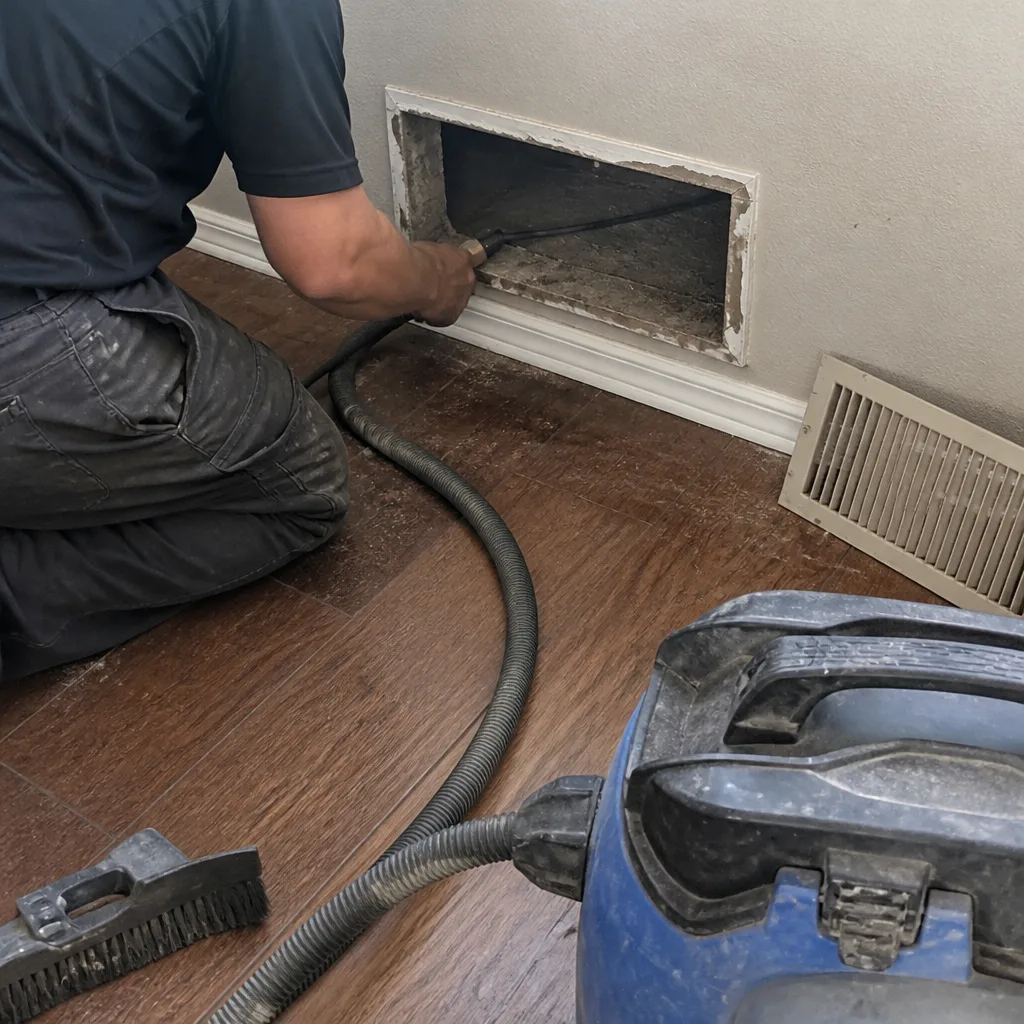 Before
 After
After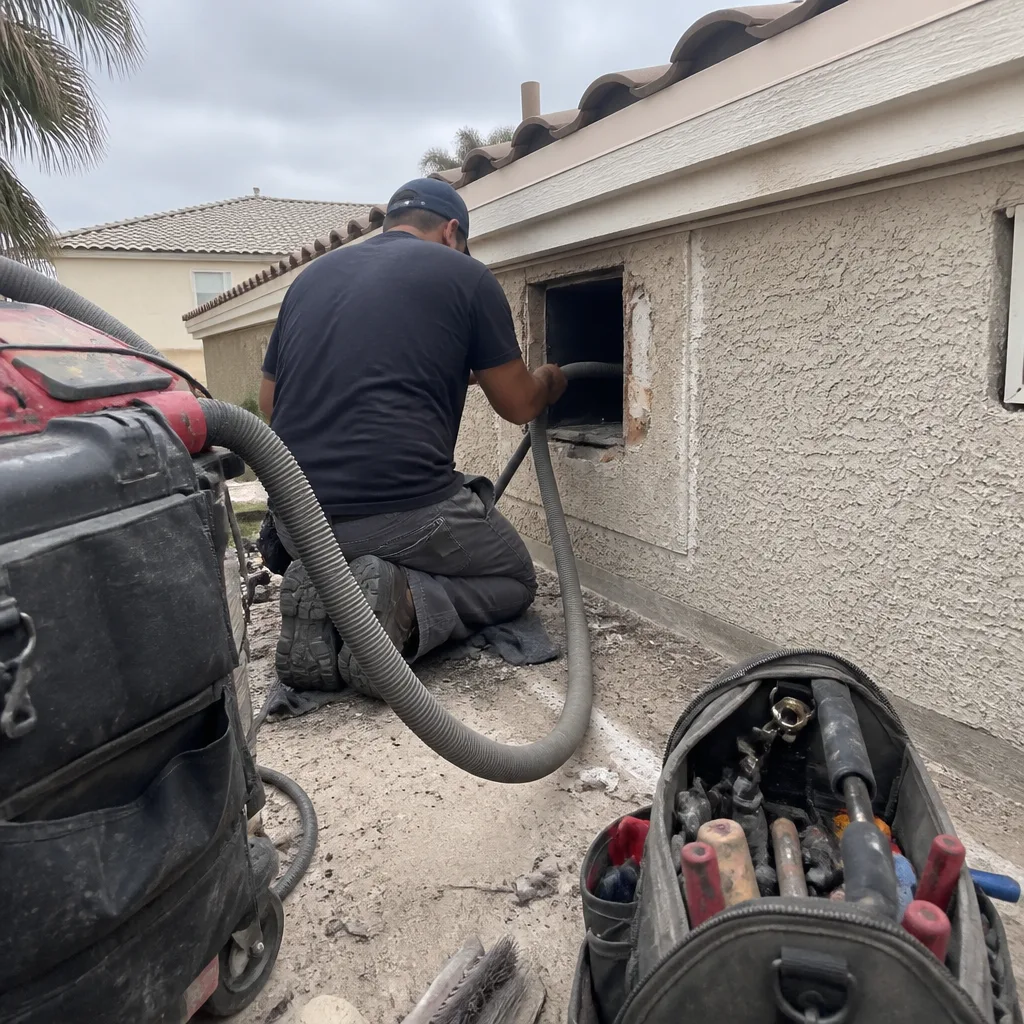 Before
 After
After