
Last updated October 15, 2026
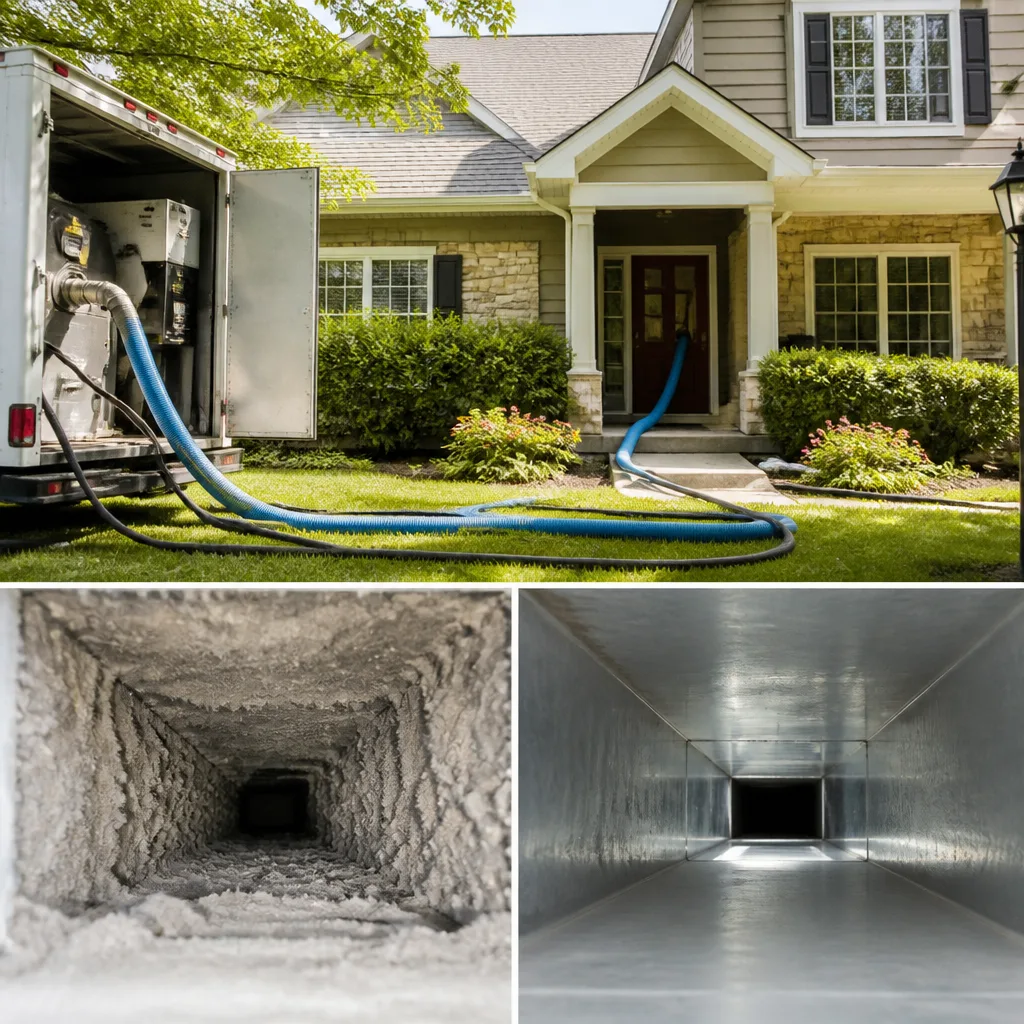 Whole-home duct cleaning
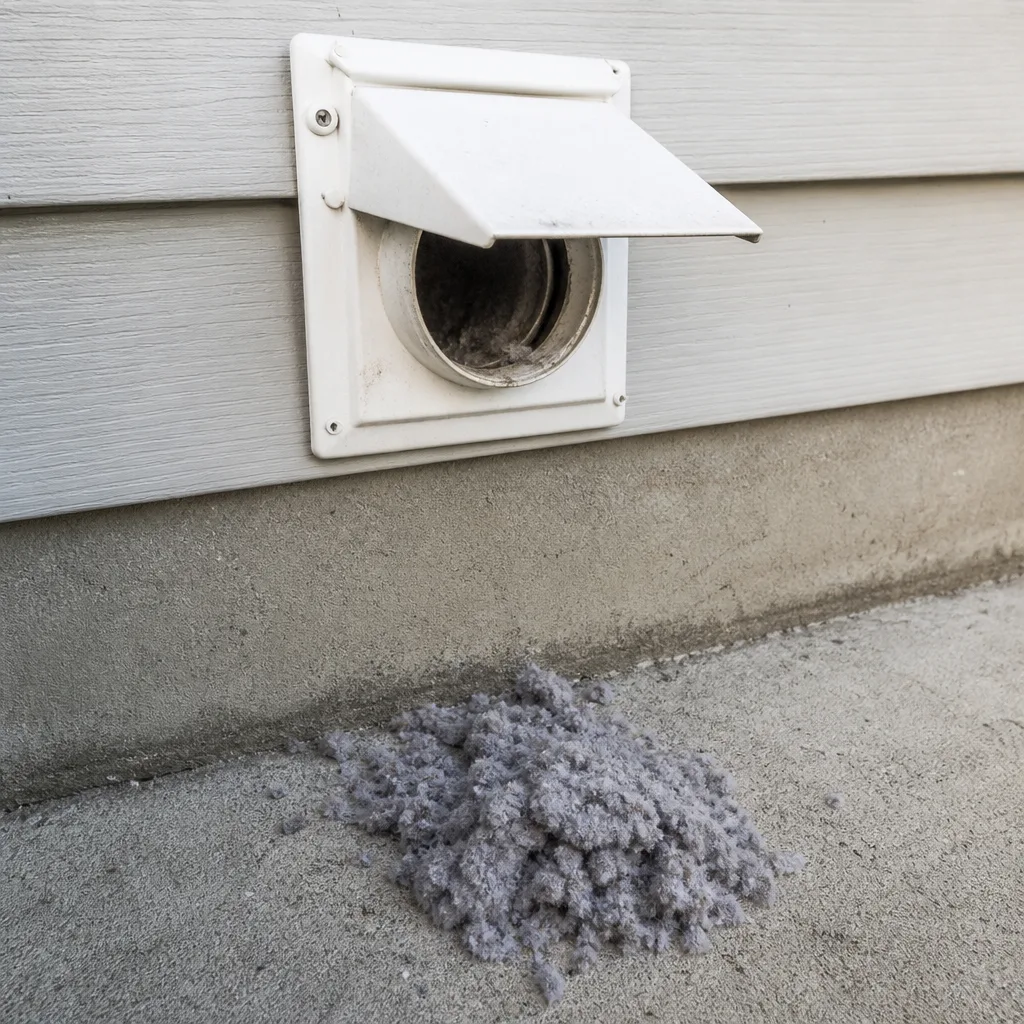 Dryer vent cleaning
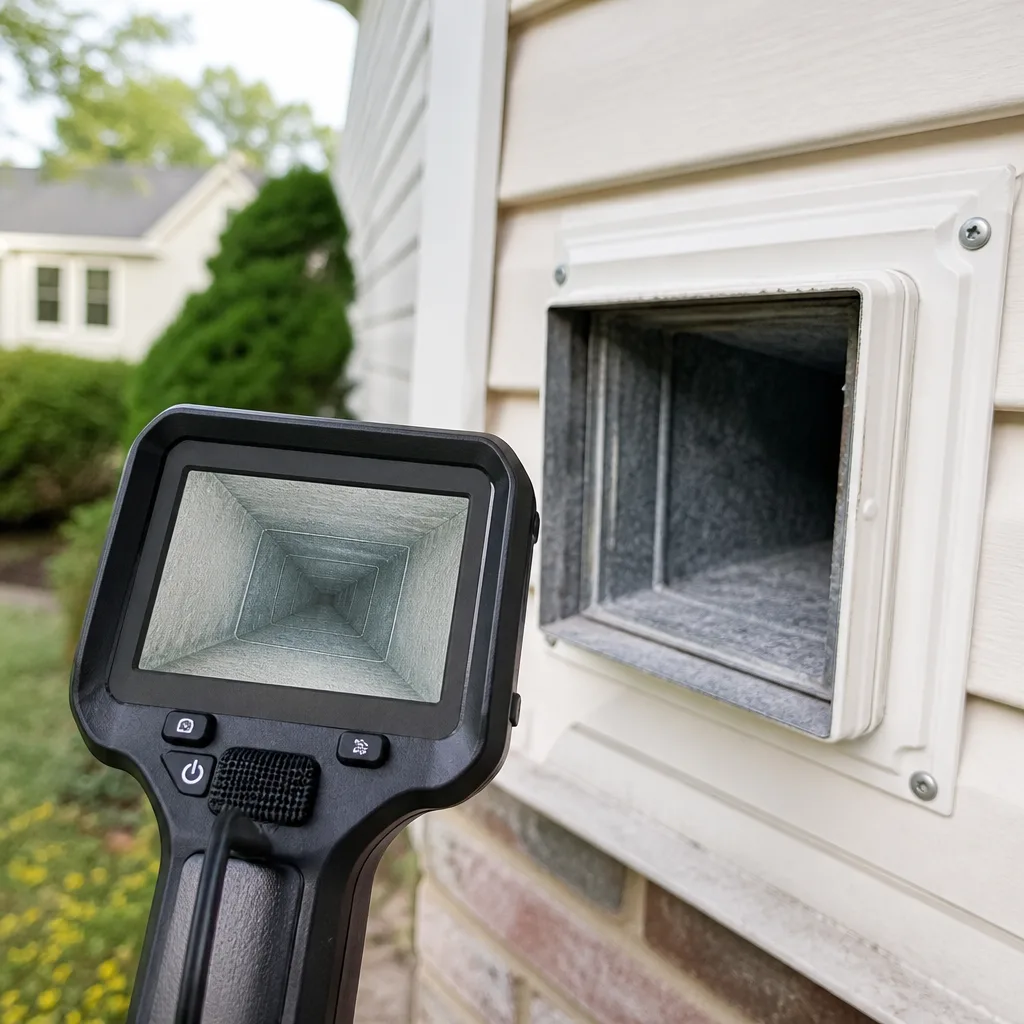 Camera inspection
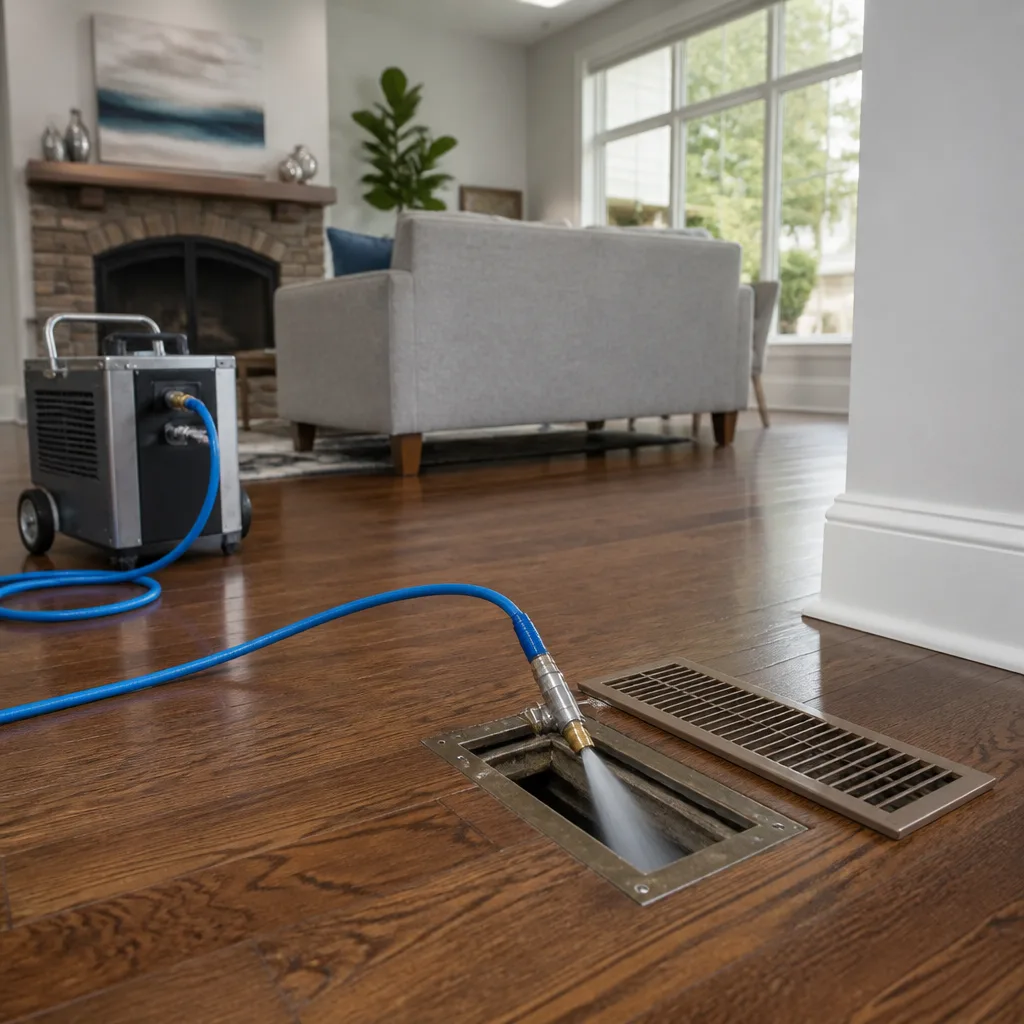 Sanitizing & deodorizing
Whole-system duct and dryer vent check with before-and-after photos - you see exactly what came out of your vents
That "$99 whole-house special" is a bait ad - the real number appears once they are in your hallway, or the "clean" is a shop-vac at the register. We photograph the inside of your ducts before and after instead.
DIY vs Professional Air Duct Cleaning: The Las Vegas Homeowner’s Decision Guide
The best-selling air duct cleaning kit on Amazon produces roughly 1/12th the airflow of a truck-mounted professional system. For a typical Las Vegas single-story home with 25-foot duct runs, that means you’re not cleaning your ducts. You’re agitating the debris, loosening it from settled spots, and redistributing it through your living space while your shop vac strains against physics it cannot beat. This guide explains exactly what DIY can accomplish in a Las Vegas home, what it physically cannot do no matter how much time you spend, and how to decide when Air Duct Cleaning services are actually worth paying for.
Quick Answer
DIY air duct cleaning in Las Vegas is effective only for what you can reach with your arm: register covers, visible grille surfaces, and the first few inches of duct openings. The moment ducts extend beyond about six feet from a vent opening, consumer vacuums lack the airflow and static pressure to pull debris out. For full-system cleaning of typical Las Vegas homes with 15- to 30-foot duct runs, professional negative-pressure extraction is the only method that actually removes material rather than moving it around. We’ll walk you through what DIY genuinely accomplishes, what it cannot, and how to evaluate whether a professional quote justifies the price difference. For How to Hire a Air Duct Cleaning Contractor in Las Vegas: A Step-by-Step Guide, see our detailed resource.
Styles & brands we work with
Table of Contents
- The Airflow Physics: Why CFM and Static Pressure Decide Everything
- What DIY Legitimately Accomplishes (And Where It Has Real Value)
- The Debris-Redistribution Risk: How DIY Can Create a Bigger Problem
- Why Las Vegas Dust Is Different: The Climate Factor
- When DIY Air Duct Maintenance Makes Sense
- When Professional Cleaning Is Non-Negotiable
- How to Evaluate a Professional Quote Against DIY Costs
- The Equipment Threshold: What Actually Moves Debris Out
The Airflow Physics: Why CFM and Static Pressure Decide Everything
Air duct cleaning works on one principle: air moving fast enough through a duct creates enough force to lift debris off the duct walls and carry it to a collection point. Two numbers matter. CFM (cubic feet per minute) is the volume of air a machine moves. Static pressure is how hard that air pushes against resistance, which in ductwork means friction from every bend, turn, and foot of duct length.
Here’s the comparison that matters. A high-end consumer shop vacuum generates 100 to 150 CFM. A professional truck-mounted unit from brands like Rotobrush or Nikro typically generates 2,000 to 3,000 CFM. That’s not a modest upgrade. It’s the difference between a garden hose and a fire main.
Why does this matter in Las Vegas specifically? Because most tract homes built in the Las Vegas Valley since the 1990s, from Summerlin to Henderson to North Las Vegas, use long flex duct runs. A single-story home with the air handler in the garage commonly has duct runs of 20 to 35 feet from the plenum to the farthest register. Every foot of that run adds friction. Every bend adds more. By the time a 150 CFM shop vac’s suction reaches 15 feet down a flex duct, it’s moving almost no air at all. The debris at that depth does not move toward the vacuum. It barely vibrates.
A truck-mounted system pulling 2,500 CFM at the plenum still has meaningful suction at 30 feet. That’s the physical threshold that separates cleaning from pretending to clean. No amount of time, effort, or determination changes it. You cannot outwork airflow physics with a longer afternoon.
What DIY Legitimately Accomplishes (And Where It Has Real Value)
We’re not going to tell you DIY is worthless. It isn’t. There are specific tasks a homeowner can do that genuinely improve air quality and system efficiency, especially in Las Vegas where dust accumulates fast. The key is understanding the exact scope where your effort has real value.
Here’s what DIY air duct work actually accomplishes:
- Register and grille cleaning: The metal or plastic covers where air enters your rooms collect dust, cooking residue, and pet hair. Removing them, washing them in warm soapy water, and wiping the visible duct opening behind them removes real debris from the most accessible part of your system. In Las Vegas, where fine desert dust settles on every horizontal surface, this matters more than in wetter climates.
- Surface wiping around vents: The drywall or floor surface immediately around a register accumulates a ring of fine dust. Wiping it prevents that dust from being pulled back into the system or drifting into your living space.
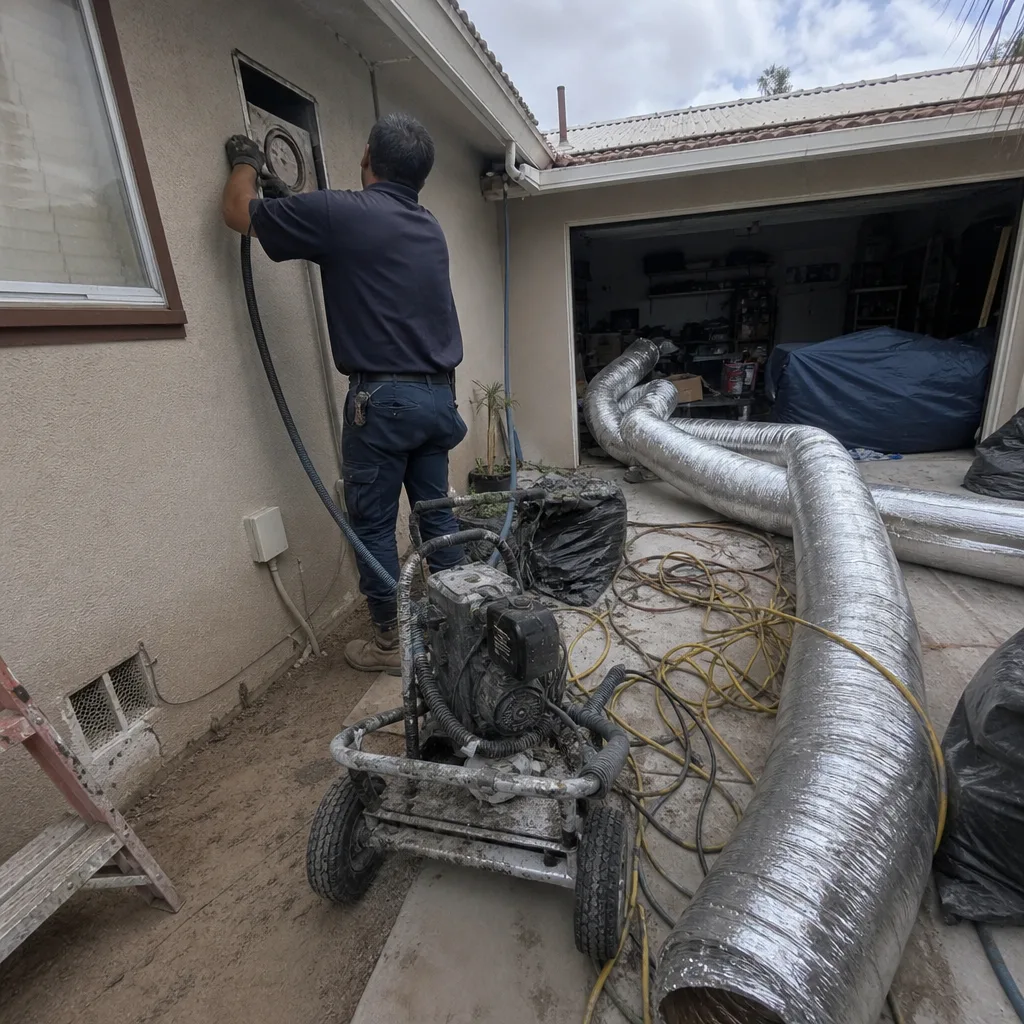
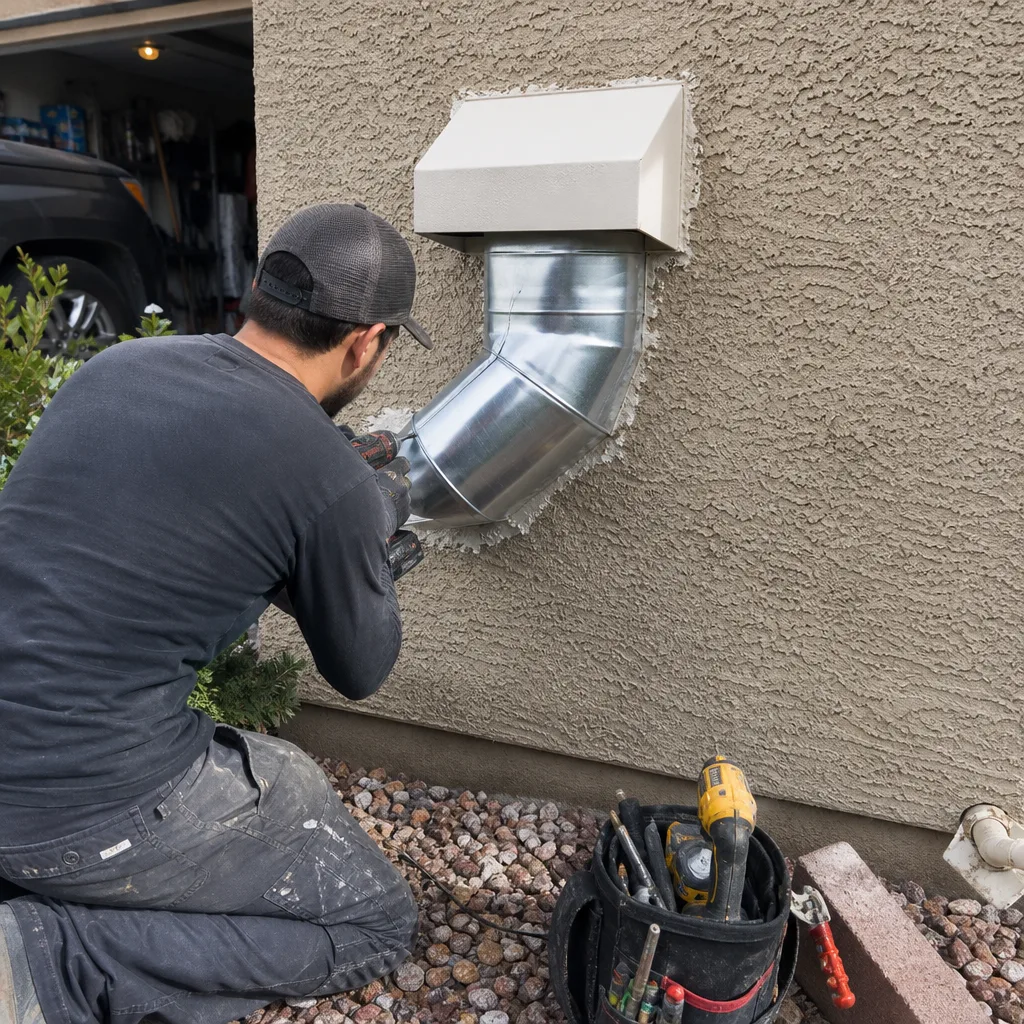
- Dryer vent brushing under 6 feet: If your dryer is on an exterior wall and the vent run is short, a homeowner can use a basic drill-powered brush kit to clear lint from the accessible portion. This is one of the few genuinely useful DIY duct tasks, and it’s a real fire-safety improvement. But only for the part you can reach. Beyond six feet, you’re pushing lint deeper, not removing it.
- Return air filter replacement: Changing the air filter on your air handler every 30 to 60 days in Las Vegas, where the AC runs six months straight, does more for your system health than any one-time cleaning. A clogged filter forces your blower to work harder and pulls more dust into the system.
That’s the complete honest list. If a DIY guide tells you a brush kit and a shop vac can clean “all the way through” your duct system, it’s wrong. The physics doesn’t support it for any Las Vegas home with ducts longer than a few feet. What you’re doing is maintaining the accessible surfaces, which is worthwhile but is not the same thing as cleaning the inside of your ductwork. Recognizing that distinction is the whole point of this guide.
When you do this yourself, you also get visibility. You see what’s directly behind the register. If it’s fine gray dust, that’s normal Las Vegas accumulation. If it’s something else, which we’ll cover below, that’s information you’d want before deciding your next step.
The Debris-Redistribution Risk: How DIY Can Create a Bigger Problem
Here’s the uncomfortable truth about the Amazon brush kit approach: in many Las Vegas homes, it actively makes things worse. We’ve seen the aftermath. It goes like this.
The kit includes a flexible rod with a brush head. You attach it to a drill, insert it into the register opening, and spin it. The brush agitates settled debris off the duct walls. But your shop vac is connected to the same register you’re working from, pulling maybe 130 CFM through a duct that’s 25 feet long. The suction at the far end is negligible.
What happens to the dislodged debris? It doesn’t get pulled back to your vacuum. It becomes airborne inside the duct system. Then the AC cycles on, and that newly loosened material gets pushed deeper into the system. In homes where the air handler sits in the garage, that debris can accumulate around the evaporator coil and blower motor. That’s not a cleaning problem anymore. It’s a repair problem, and cleaning an evaporator coil or replacing a blower motor costs far more than a professional duct cleaning does.
Worse, the fine dust you disturb doesn’t always go deeper. Some of it finds its way back through the registers and into your living space. A homeowner who started the Saturday project to reduce dust often ends up with more dust on the countertops by Sunday evening. The debris didn’t leave the system. It relocated.
There’s also a specific risk with flex duct older than about ten years. The inner liner of flex duct degrades in Las Vegas heat. Attic temperatures in July routinely reach 140 degrees, and that heat bakes the plastic liner. When it’s older and brittle, spinning a brush against it can tear or separate the liner. Now you have a leak in places you can’t see, pulling 140-degree attic air into your AC system. Your energy bill climbs and the problem is invisible until a professional finds it with a camera or pressure test.
The takeaway is not that DIY is always dangerous. The takeaway is that DIY under the wrong conditions moves problems around instead of fixing them. The brush kit does not know the difference between loosening debris for extraction and loosening debris for redistribution. Only the airflow volume does.
Why Las Vegas Dust Is Different: The Climate Factor
Las Vegas is not a dusty city. It’s a dust system. The Mojave Desert produces fine particulate that behaves differently from the household dust in, say, Seattle or Chicago. It’s smaller, drier, and more pervasive.
That fine desert dust, often under 10 microns, passes through standard air filters and settles in ductwork. It’s not like the lint and pet hair that dominate ducts in other climates. It’s a fine silt that coats surfaces evenly and compacts over time. Once settled, it doesn’t just sit there. Every time your AC cycles, which in Las Vegas is hundreds of times per summer month, some of that dust re-enters the airstream and gets pushed into your home. Las Vegas homeowners notice this as the fine film that accumulates on furniture even with windows closed and a clean filter.
This matters for the DIY versus professional decision because fine compacted dust is the hardest type to remove without adequate airflow. A brush alone against compacted silt does little. The shear force of high-volume airflow is what breaks it loose and carries it to the collection canister. Low-CFM consumer equipment simply lacks the muscle for this specific dust profile.
Renovation debris is a separate category in Las Vegas and worth naming. The Valley is in a near-constant state of construction. If your neighborhood has seen new builds or remodels, that’s fine gypsum dust and silica in the air. Post-renovation debris in ducts is heavy, it’s harmful to breathe, and it requires high-volume extraction. If you’ve had tile cut in your home or drywall sanded, that’s a category of particulate that no consumer vacuum will pull from ductwork.
The climate also means your AC runs harder and longer than almost anywhere else in the country. That’s not a side note. It’s the reason Seasonal Air Duct Cleaning Care for Las Vegas: Year-Round Homeowner’s Guide resources recommend more frequent attention, and why duct maintenance here has a bigger return than in milder climates. Clean ducts mean less resistance, which means your system doesn’t work as hard, and you’re not circulating the same desert dust through your living room five times a day.
When DIY Air Duct Maintenance Makes Sense
Let’s be concrete about the scenarios where handling ductwork yourself is the right call. These are narrow, but they’re real.
Scenario one: register-level cleaning. Remove your register covers, wash them, wipe the visible duct opening as far as your hand reaches. Do this every three to six months in Las Vegas. It takes an hour for a typical home and keeps the most visible dust from cycling through your living space.
Scenario two: short-run dryer vents. If your dryer is in an exterior-wall laundry room and the vent is a straight shot under six feet, buy a drill-powered brush kit and clear it. This is a genuine fire-safety improvement and the most valuable DIY duct task in any home. Check the exterior vent flap while you’re at it. If it’s stuck open, fix it or replace it, because an open flap in Las Vegas is an invitation for birds, rodents, and hot outside air.
Scenario three: visible mold on a register you can reach. If you see mold on a register cover, remove it and clean it with a mild bleach solution. That’s a surface issue you can handle. But understand the difference: mold on the accessible register is a wipe-clean job. Mold inside the ductwork is a different conversation entirely, and it’s in the non-negotiable professional category below.
Scenario four: regular filter replacement. We mentioned this earlier, but it belongs here too. The single most effective maintenance task for your HVAC system in Las Vegas is changing your filter. A MERV 8 filter changed every 30 to 45 days in summer, every 60 days in the cooler months, keeps larger particles from entering the system in the first place. This is the one DIY habit that genuinely reduces duct-cleaning frequency.
What ties these scenarios together is that they’re all maintenance of accessible surfaces. None of them claim to clean the inside of ducts you cannot reach. That’s the honest boundary. If your ducts are clean at the register level and your filter is fresh, you’re doing the maintenance part correctly. The system interior is a separate question.
When Professional Cleaning Is Non-Negotiable
Some situations cannot wait, cannot be shopped around forever, and cannot be DIY’d into submission. Here’s the list of conditions where professional air duct cleaning in Las Vegas is the only responsible choice.
- Post-renovation debris. Drywall dust, tile-cutting silica, and construction debris are heavy, fine, and harmful to breathe. Las Vegas sees constant renovation activity, and if you’ve had any interior work done, your ducts are carrying construction dust. This material requires high-CFM extraction, period.
- Rodent evidence. If you’ve seen rodent droppings near registers, heard movement in the attic, or found nesting material, the ducts may contain contamination that no homeowner should handle. Rodent waste in ductwork is a health hazard, and the cleanup requires professional equipment and protective protocols.
- Visible mold growth. Mold inside ducts is not a register-wiping job. If you see mold on the interior of ductwork, in the air handler, or around the evaporator coil, you need professional assessment. Las Vegas is dry, but condensation from AC coils creates the moisture mold needs, and once present, it spreads through the air system.
- Flex duct older than 10 years. Las Vegas attic heat bakes flex duct liners. After a decade, the liner is brittle and easily damaged by DIY brushing. A professional with a camera inspection can assess liner condition before any cleaning starts, and the equipment used in professional cleaning triggers far less physical abrasion than a spinning consumer brush head.
- Persistent dust despite clean filters. If you’ve changed your filter on schedule, kept your registers clean, and still find a fine dust film on furniture days after vacuuming, that dust is coming from inside the system. It’s settled in the ductwork and cycling back into your air. This is the most common reason Las Vegas homeowners eventually call us, and it’s not fixable at the register level.
In these categories, budget is a secondary question. The primary question is whether the problem gets fixed or gets worse. DIY in these scenarios risks worsening the condition or leaving contamination in the air your family breathes. A professional with camera verification, negative-pressure extraction, and written guarantees is not a luxury in these cases. It’s the basic standard of care.
How to Evaluate a Professional Quote Against DIY Costs
Let’s talk about price honestly. A typical whole-system air duct cleaning in the Las Vegas Valley ranges from $350 to $600 for a single-family home, depending on home size, number of systems, and accessibility. A DIY brush kit costs $30 to $80. That price gap is real, and it’s exactly why the DIY question keeps coming up.
But here’s the more useful framing: what does the professional quote actually guarantee, in writing, that DIY cannot guarantee at all? When you evaluate a quote, you’re not just buying airflow. You’re buying accountability for an outcome. Here’s what to look for.
A written price before work starts. Any legitimate duct cleaning company in Las Vegas puts the price in writing before the van rolls. If a company hesitates to do that, the quote is not a quote. It’s an opening offer. That’s the bait-and-switch reputation this industry has earned, and the fix is simple: get it in writing.
A written guarantee with a defined term and callback rights. What happens if dust returns three weeks after the cleaning? A professional guarantee tells you. At Linden Air Duct Las Vegas, every job includes our 365-Day Done Right Promise: if the work is not right, we make it right, and that’s in writing on every job. For air duct repair in Las Vegas, every repair includes a written guarantee and a free second visit if the repair does not hold. That’s the difference between paying for a service and paying for an outcome.
Verification of who is coming to your door. This matters more than most companies admit. You’re letting a stranger into your home. A professional company tells you who that person is before they arrive. Under the Threshold Standard, our technicians are background-checked, identity-verified, photo-badged, and introduced to you by name and photo before the visit. That’s a standard you should expect from any company you invite into your home, and it’s worth paying for.
Equipment you can verify. Professional-grade equipment from trade-trusted brands like Rotobrush and Nikro is visible proof of capability. Ask what equipment the company uses. If they can’t name it, that’s an answer too.
Here’s the honest bottom line on cost. If you’re comparing a $350 professional cleaning to a $50 DIY attempt, you’re comparing two different tasks. The DIY attempt is register maintenance, which you should do yourself periodically anyway. The professional cleaning addresses the 25 feet of duct behind the wall that no consumer tool can reach. Different job, different price, different outcome. The question is which job you actually need done.
The Equipment Threshold: What Actually Moves Debris Out
Let’s get specific about the equipment gap, because it’s the heart of this entire guide and most DIY-versus-professional articles completely ignore it.
Consumer-grade equipment: A standard wet/dry shop vacuum produces 100 to 150 CFM. That’s excellent for cleaning spills, sawdust, and garage floors. It is not designed for ductwork. A drill-powered brush kit provides mechanical agitation, which loosens debris but does not extract it. Combined, you have agitation with weak extraction, which is the exact combination that creates the redistribution risk we described earlier.
Portable professional equipment: Compact units from Nikro and similar manufacturers produce 400 to 700 CFM with actual filtration. These are suitable for small commercial spaces and can handle short residential runs. They’re a step up from consumer gear but still limited for 30-foot residential duct runs.
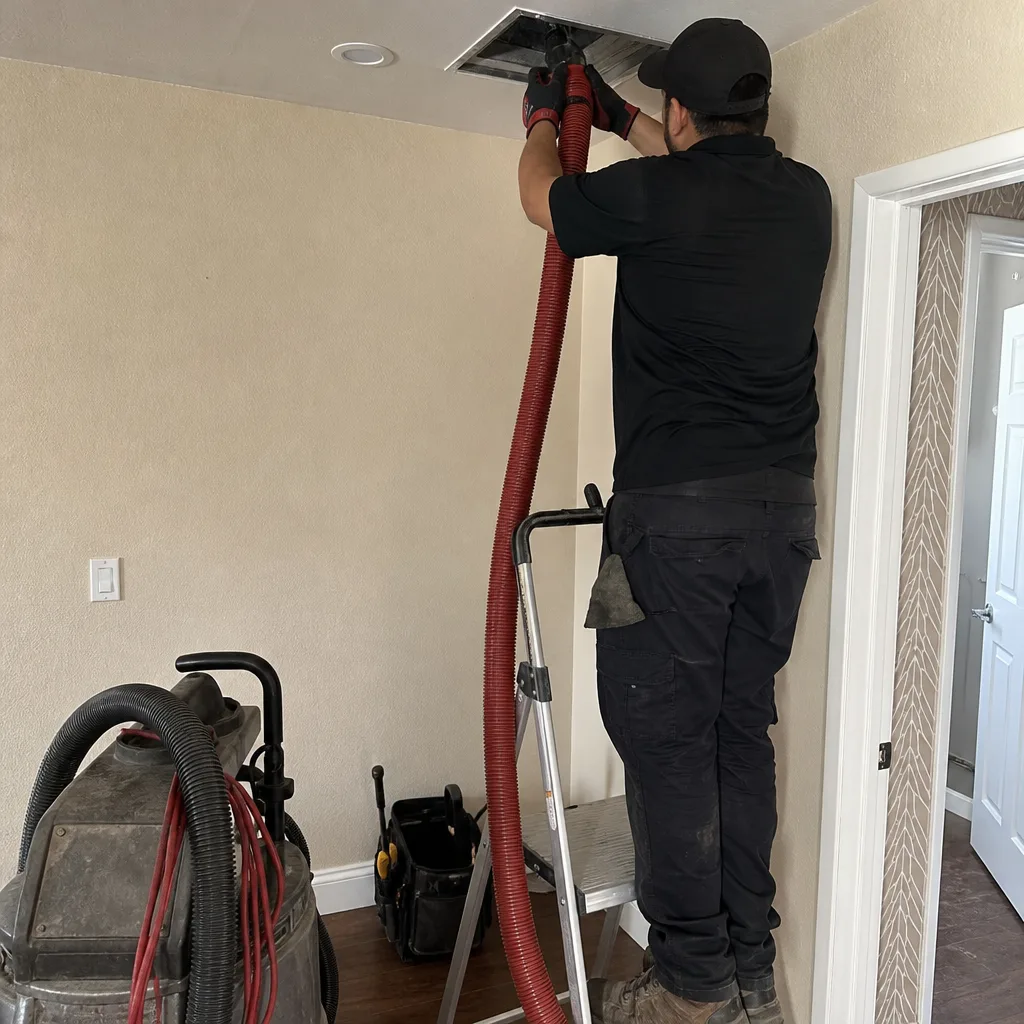
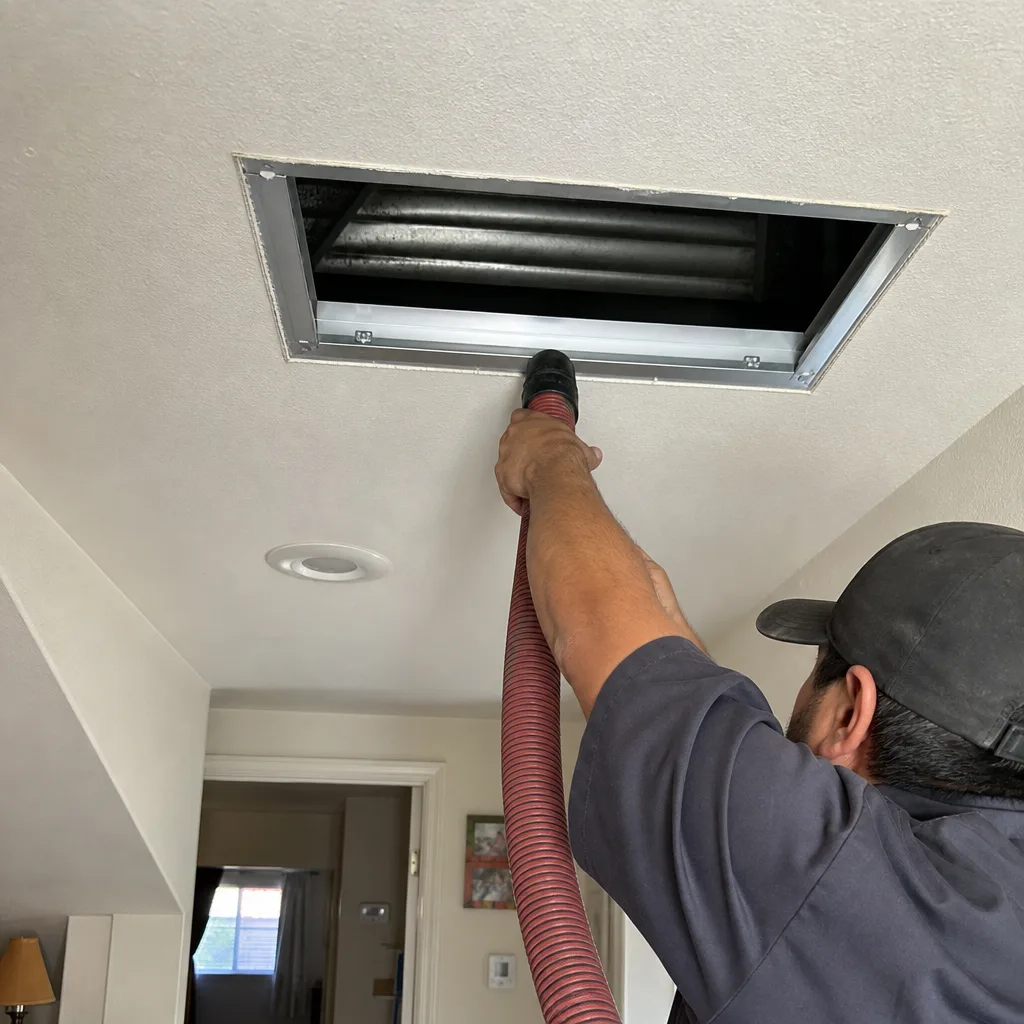
Truck-mounted professional systems: Brands like Rotobrush and Nikro build truck-mounted units delivering 2,000 to 3,000 CFM with HEPA filtration. This is the standard for full-system residential cleaning. The vacuum hose connects at the plenum or air handler, creating negative pressure throughout the entire duct system. Agitation tools work from each register while the system continuously extracts. Debris doesn’t get a chance to resettle or redistribute. It’s pulled to the collection canister in one continuous flow.
The air-quality side matters too. Professional duct cleaning companies in Las Vegas work with filtration and purification products from brands like Honeywell and Aprilaire, which integrate with your HVAC system to address the fine dust that keeps circulating even after cleaning. A cleaned duct system with a good filter and, where appropriate, an air purifier addresses the full dust cycle that Las Vegas homeowners live with.
Here’s the plain-language threshold: if the equipment cannot pull meaningful suction through 25 feet of duct, it cannot clean a 25-foot duct. That’s not a marketing claim. It’s a measurement. And it’s the single most important piece of information for deciding between a Saturday project and a professional visit.
Common Mistakes to Avoid
- Assuming the brush kit is cleaning because the brush is spinning. The brush loosens debris, but without adequate airflow, that debris goes somewhere worse. In Las Vegas homes with long flex runs, “somewhere worse” usually means deeper into the system, toward the air handler.
- Trusting a per-vent price over a real quote. The industry’s oldest trap is the teaser rate that becomes a far larger invoice once the technician is in your home. A honest company gives one flat price per system, in writing, before work starts. Never accept per-vent pricing as the basis for a cleaning job.
- Ignoring the age of your flex duct. Duct liner degrades in Las Vegas attic heat. If your flex duct is over ten years old, spinning a brush inside it without a camera inspection first is asking for a tear you can’t see until your energy bill tells you about it.
- Replacing cleaning with just filter changes. Filter changes are necessary and valuable, but they don’t remove debris that’s already settled in your ductwork. If the dust predates the filter discipline, the filter isn’t fixing it.
- Skipping pre- and post-cleaning verification. A professional cleaning that’s worth paying for includes verification: before-and-after photos or camera footage of your actual ducts. If a company won’t show you what they did, you don’t know what they did. This is exactly why we provide documentation on every job we complete.
- Confusing register cleaning with system cleaning. Clean register covers are not clean ducts. They’re the visible two percent of the system. Confusing the two is how homes go years with accumulating duct debris while the homeowner reasonably believes the issue is handled.
See the difference
 Before
 After
After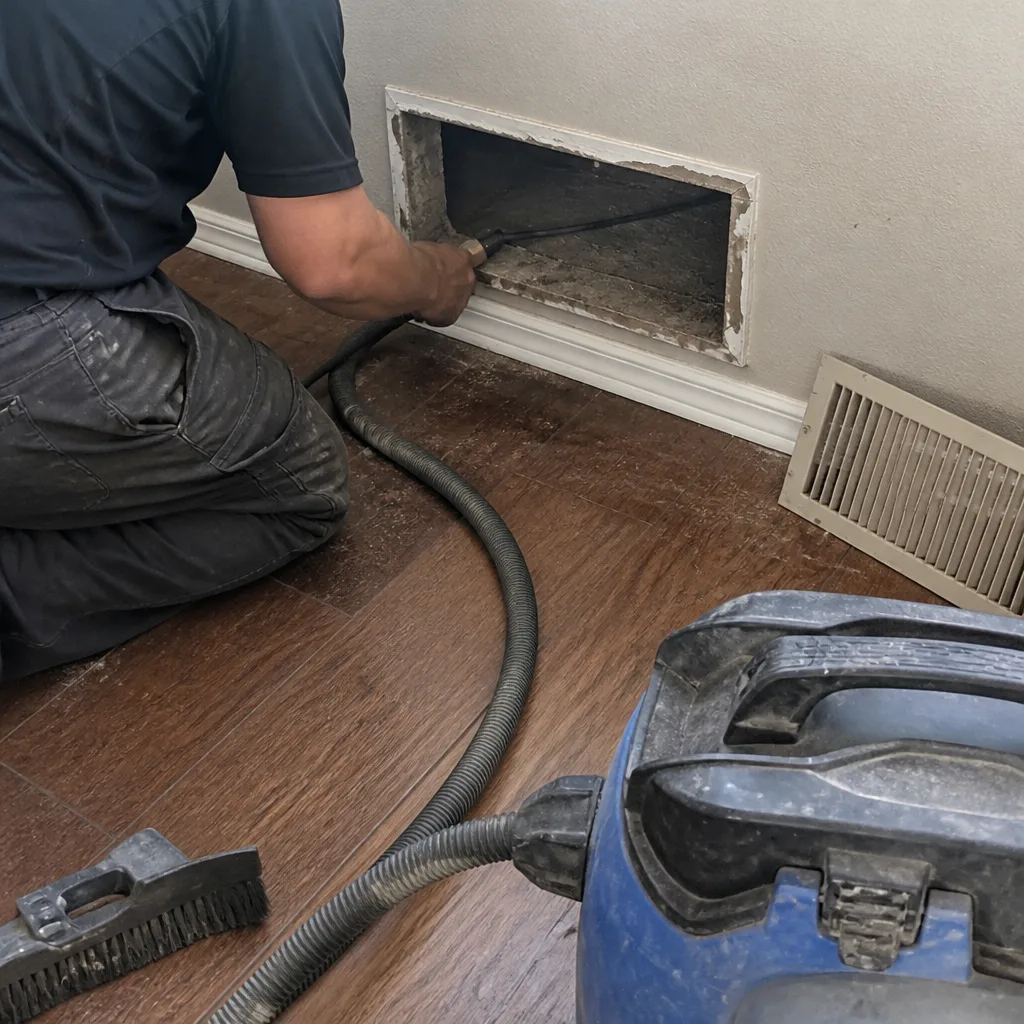 Before
 After
After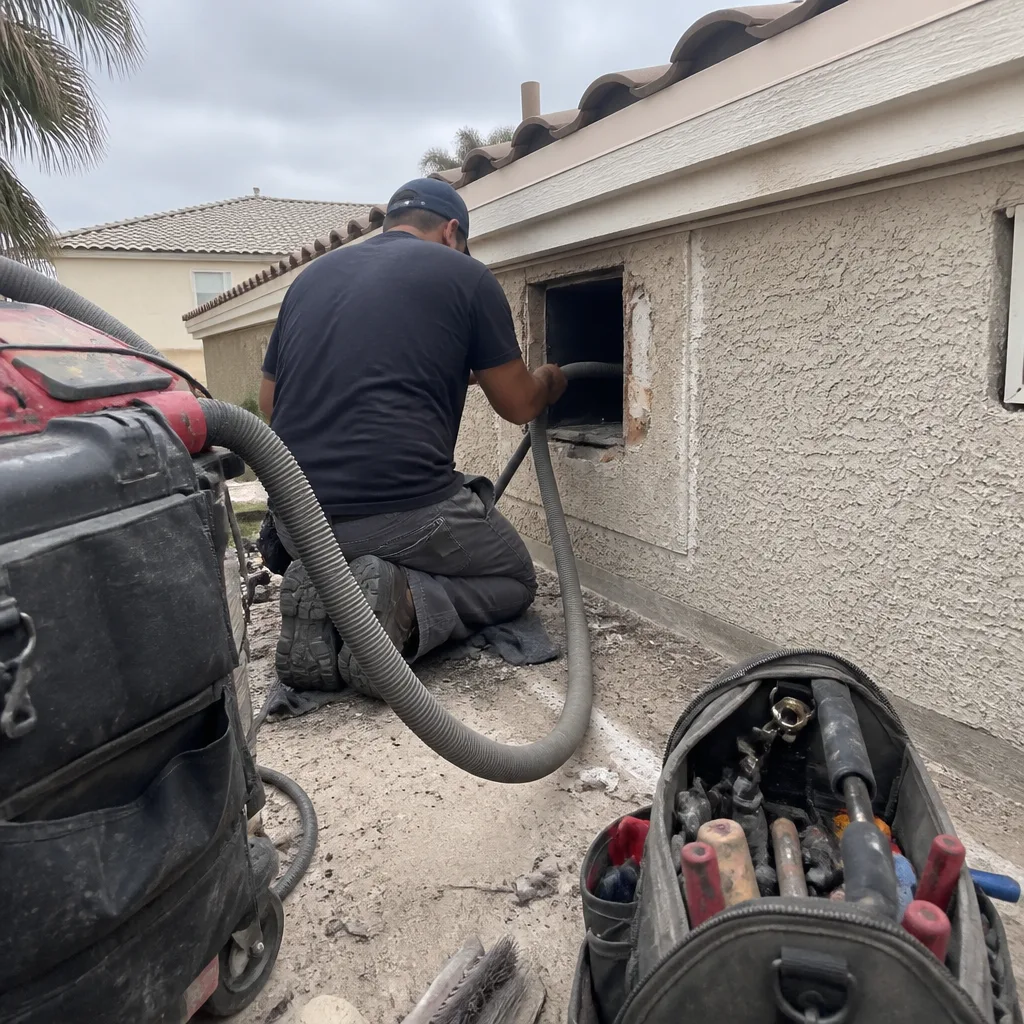 Before
 After
AfterWhen to Call a Professional
Call a professional if you’ve had renovation work, seen rodent evidence or mold, noticed dust returning days after cleaning, or live in a home with ducts older than ten years. These conditions are beyond the capability of consumer equipment, and the risks of DIY attempts outweigh any savings. If you’re in the Las Vegas Valley and want an honest assessment and a written price before any work begins, Linden Air Duct Las Vegas home is here to help. Call us at (725) 726-5532 for a free estimate, and a live person will answer, any time of day or night.
Frequently Asked Questions
Whole-system air duct cleaning for a typical single-family Las Vegas home costs between $350 and $600. The price depends on home size, the number of air handlers, and the condition of the ductwork. At Linden Air Duct Las Vegas, you receive one flat price per system in writing before any work begins, so the number you’re quoted is the number you pay. Call (725) 726-5532 for an exact quote, and it’s free.
You can clean the accessible portions of your system: register covers, visible grille surfaces, and the first few inches of duct openings. You cannot clean the 15 to 30 feet of duct behind the wall because consumer vacuums don’t generate enough airflow to pull debris from that distance. The brush dislodges it, but without professional-grade negative pressure, the debris redistributes rather than extracts.
The price difference reflects what the equipment physically does. A DIY kit generates 100 to 150 CFM of airflow and can reach a few feet. A truck-mounted professional system generates 2,000 to 3,000 CFM and can extract debris from a full 30-foot duct run. You’re not paying for a more expensive version of the same task. You’re paying for a different task entirely: full-system extraction versus register-level maintenance.
Insist on before-and-after verification. A legitimate company documents the work with photos or camera footage of your actual ducts, showing the condition before and after. This is standard practice at Linden Air Duct Las Vegas, and we walk you through what the images show. If a company won’t show you the work, you have no way to verify it happened.
For most Las Vegas homes, professional duct cleaning every three to five years is appropriate. Homes with pets, recent renovation, heavy AC usage, or occupants with allergies or respiratory conditions may benefit from cleaning every two to three years. The desert dust load in Las Vegas is higher than in most climates, which shortens the interval compared to national averages.
Yes, and this is the one DIY task we actively encourage for short, straight vent runs under six feet. For longer or inaccessible runs, professional dryer vent cleaning in Las Vegas uses equipment that clears the entire run. Clogged dryer vents are a leading cause of house fires, and in Las Vegas, where lint dries fast and accumulates quickly, maintaining that vent is a safety issue, not a convenience. Call (725) 726-5532 if you’re unsure about the length or condition of your vent run.
The Bottom Line
The DIY versus professional question ultimately comes down to physics. Your shop vac and brush kit can maintain the accessible surfaces of your duct system, and you should do that work regularly. It’s the visible ten percent. The other ninety percent, the 20 to 30 feet of duct behind your walls, is beyond the reach of consumer equipment in Las Vegas homes. When conditions like renovation debris, mold, rodent evidence, or aging flex duct are present, professional cleaning is not a question of budget. It’s a question of whether the problem gets fixed or gets worse. What you’re paying for with a legitimate professional is not just airflow. It’s written accountability for an outcome, from a company you can identify at the door and hold to a guarantee in writing.
Written by Marcus Veale, Owner at Linden Air Duct Las Vegas, serving Las Vegas since 2004.