
Last updated October 15, 2026
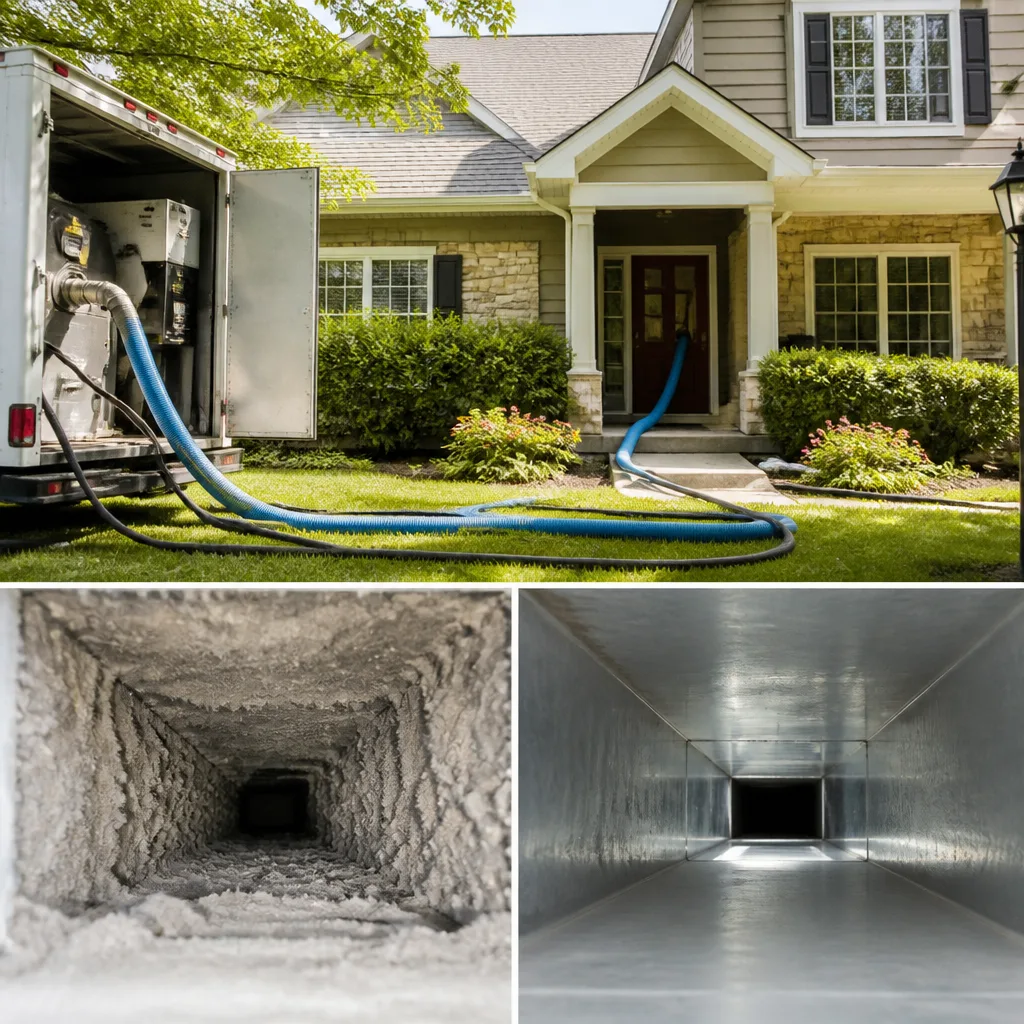 Whole-home duct cleaning
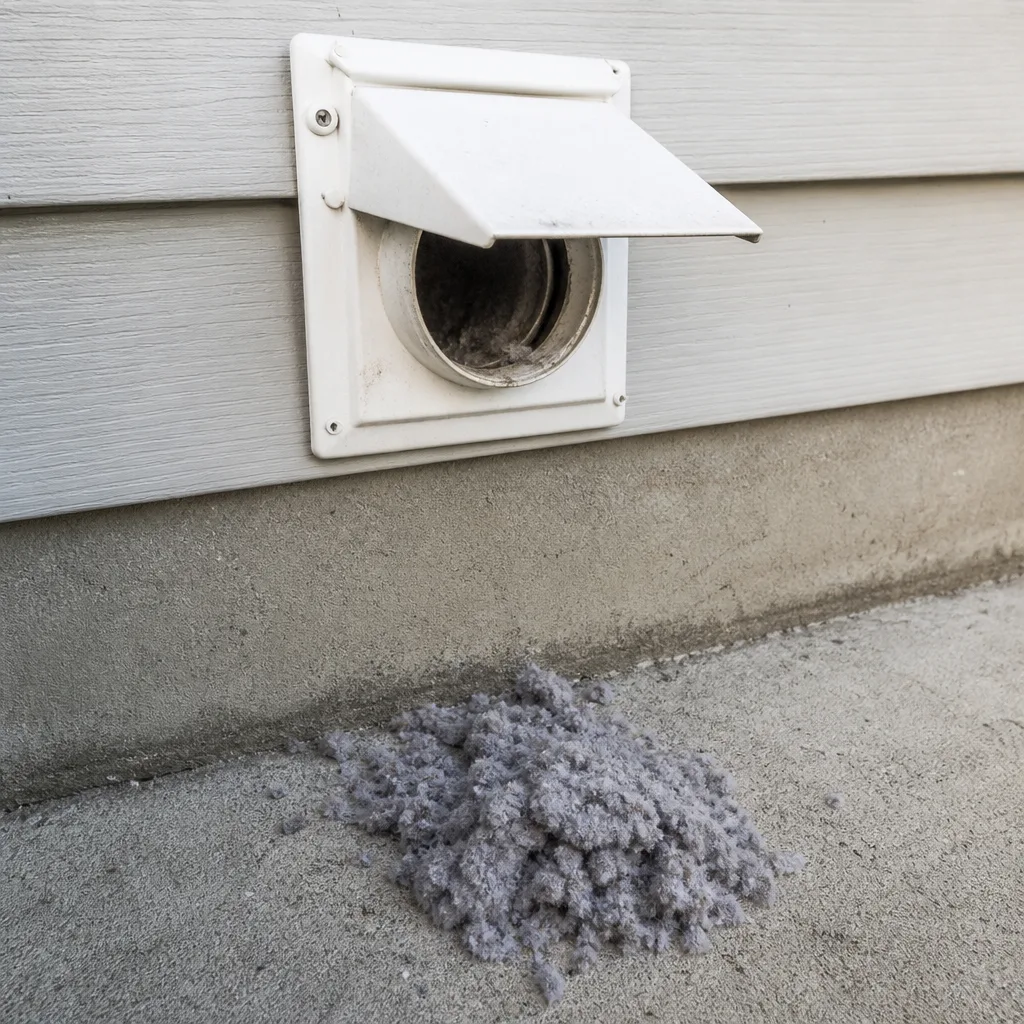 Dryer vent cleaning
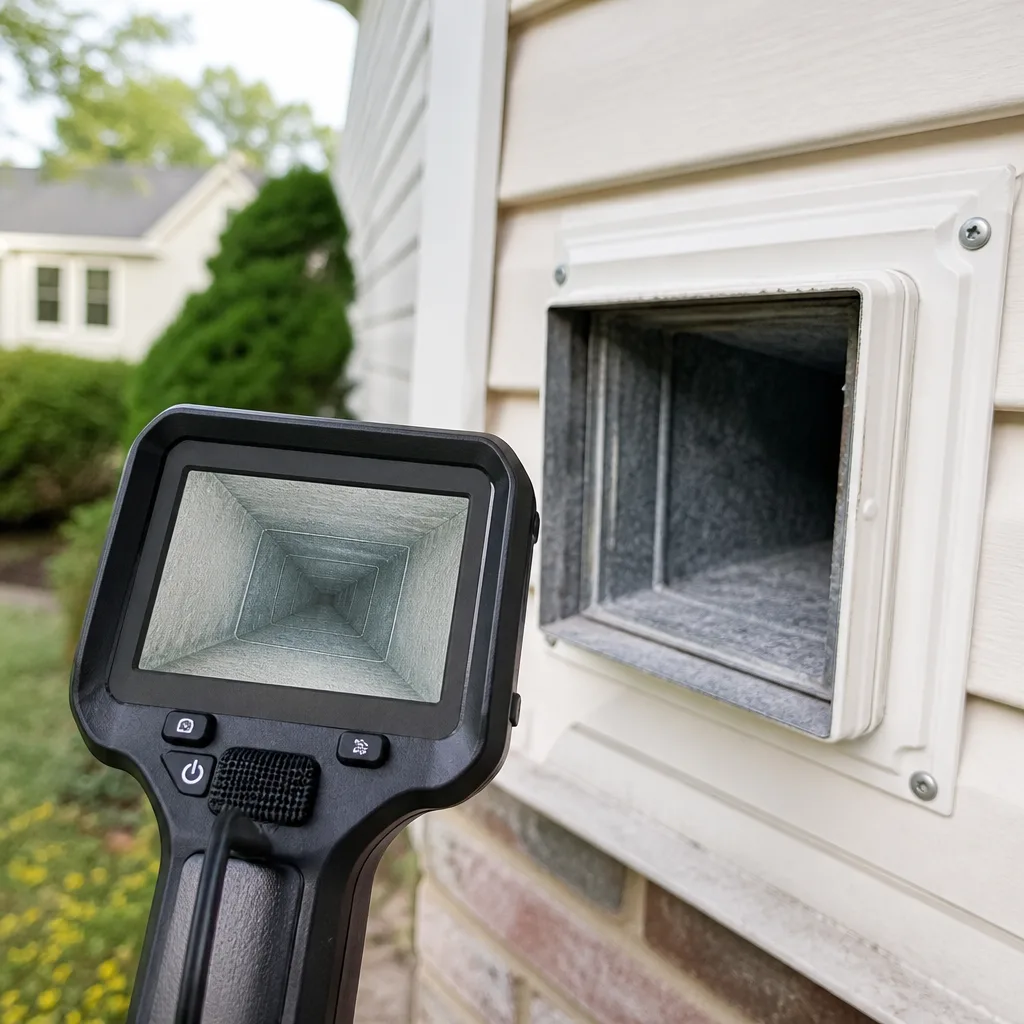 Camera inspection
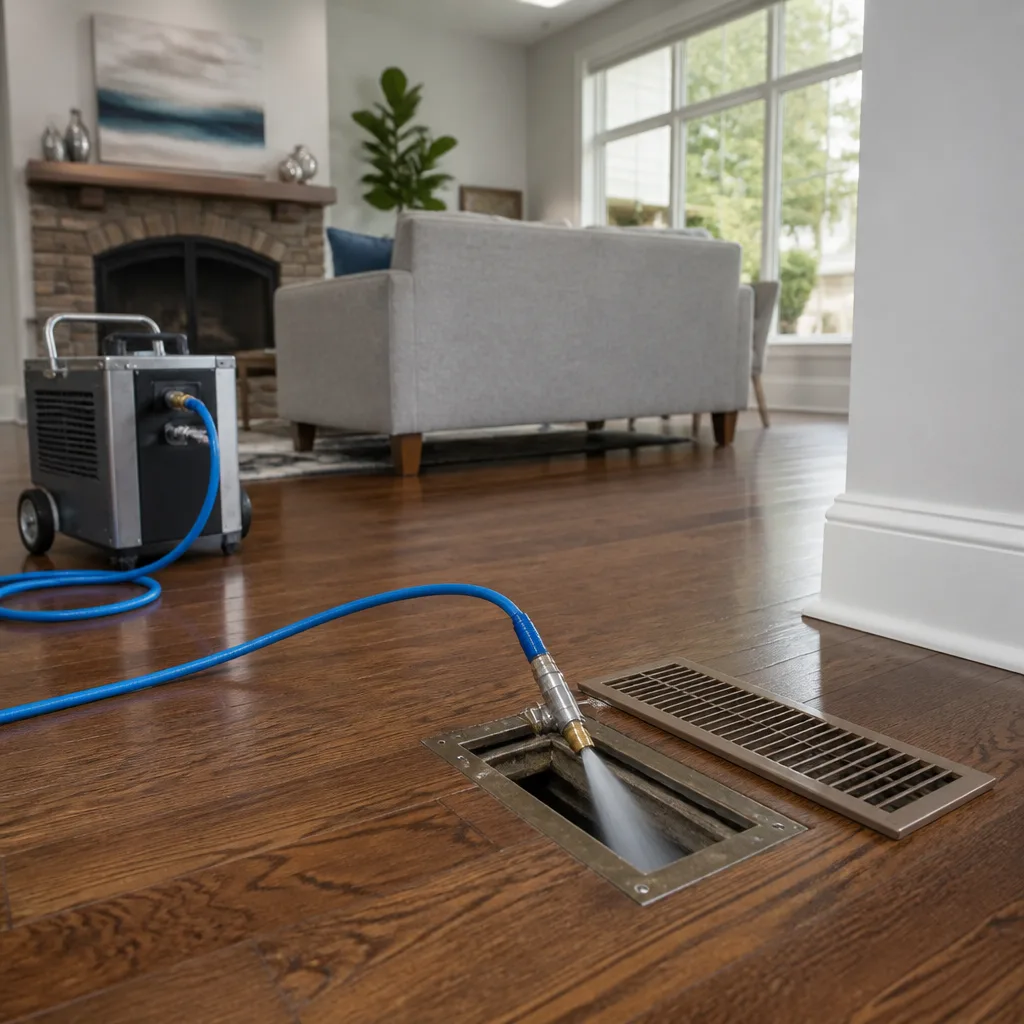 Sanitizing & deodorizing
Whole-system duct and dryer vent check with before-and-after photos - you see exactly what came out of your vents
That "$99 whole-house special" is a bait ad - the real number appears once they are in your hallway, or the "clean" is a shop-vac at the register. We photograph the inside of your ducts before and after instead.
Air Duct Cleaning Warning Signs: A Las Vegas Homeowner’s Reference Guide
Here is a number most Las Vegas homeowners will not believe: the average six-room house moves roughly 40,000 cubic feet of air through its ductwork every single day. In a desert city where windows stay shut from May through September, that air is recycled on a loop. The result is that a normal, healthy system and a system quietly failing look nearly identical from the couch. We have walked into homes where the owner apologized for the dust and the real problem was a completely disconnected return. Others assumed their AC was dying when a blocked filter had simply been choking airflow for eleven months. A thin layer of dust on your registers in Las Vegas is normal. Dust that returns within 48 hours of wiping is a different category of problem. This guide covers both.
Styles & brands we work with
Quick Answer
In Las Vegas, the air duct warning signs that matter are measurable: dust that reappears within 48 hours of wiping a register, a visible gray ring around register edges, persistent sweet or oily smells, room-to-room temperature differences over 5 degrees, and a cooling bill that rises 15 percent or more without a matching change in weather or usage. A faint gray dust film that takes weeks to build is considered normal desert settling and does not justify cleaning.
Table of Contents
- The 48-Hour Dust Test: Separating Normal from Abnormal
- Mold Warning Signs in Las Vegas’s Dry Climate
- The Smell Test: Dust, Mold, and Dead Pest Odors
- Room-by-Room Airflow: The 5-Minute Walk-Through
- The Utility Bill Warning Sign: What a 15 Percent Jump Means
- What to Look for at the Register Itself
- Filter Failure: The Warning Sign Most People Cause Themselves
- Common Mistakes to Avoid
- When to Call a Professional
- Frequently Asked Questions
- The Bottom Line
The 48-Hour Dust Test: Separating Normal from Abnormal
The single most useful tool a Las Vegas homeowner has for evaluating duct health is a damp white cloth and a calendar. Here is the test. Wipe a register cover completely clean. Set a reminder on your phone for 48 hours. Do not run any unusual activity in that room, no sanding, no drywall work, no marathon vacuuming sessions. After 48 hours, wipe the same register again with a fresh white cloth. A dust-free or faintly gray cloth is normal, especially in older Las Vegas neighborhoods like Paradise or Spring Valley where decades of construction and desert wind have loaded the outdoor air with fine particulates. A cloth that comes back dark gray or brown within 48 hours means dust is actively being pushed into that room, not passively settling. That is the distinction. Passive settling takes weeks to reappear. Active delivery happens in days because the ductwork itself is the source, whether that means a torn return pulling attic dust, a failed filter seal, or a supply boot that has separated from the duct run.
We have seen this test tell the truth many times. In Green Valley, a homeowner flagged a single bedroom with the 48-hour test. The rest of the house passed. We found a disconnected supply line in the attic serving that one room, and the furnace was effectively vacuuming insulation into the bedroom every time the blower ran. That is a repair issue, not a cleaning issue, but the test identified it. Run this test in two or three rooms at once and compare results. Inconsistent results between rooms point to a specific duct defect. Consistent failure across the whole house points to a system-wide problem, often a torn return plenum or a filter that has been bypassing for months. Either way, the 48-hour mark is the threshold that matters. It is the difference between living in a desert and living with a duct problem.
Mold Warning Signs in Las Vegas’s Dry Climate
Mold in air ducts is genuinely uncommon in Las Vegas compared to humid markets like Houston or Miami. The average outdoor humidity in Las Vegas during summer sits below 20 percent, and air moving through ducts is typically dry by the time it reaches the registers. But the operative word is typically. There are specific microclimates inside a Las Vegas home where duct mold does occur, and every one of them involves a water source. The most common is the evaporative cooler connection. Homes in older central Las Vegas neighborhoods that use a swamp cooler part of the year can push moist air directly into supply ductwork, and when the cooler pads sit wet through a spring turn-off cycle, the interior surface of the adjacent duct becomes a breeding surface. A second location is the condensate drain area near the indoor cooling coil. When that drain clogs, water pools in the drain pan, and the air moving across that standing water carries spores into the supply side of the system.
What does mold look like at the register in a dry climate? It usually does not look like the green and black colonies you see in humid-climate photos. In Las Vegas, mold warning signs are more subtle: a brown or orange staining on the register louvers, a fine gray fuzz on the back side of the register cover, or a persistent smell that returns after cleaning. Check the coolest, darkest registers in the house first, typically in hall bathrooms and laundry rooms where humidity spikes briefly. If you see what appears to be a rust-colored ring around a register or vent opening, that is another indicator. It means condensation has been forming on the metal lip, and where condensation forms repeatedly, mold activity is possible. If you suspect microbial growth, do not open the ductwork to inspect it yourself. Disturbing a mold colony can push spores through the home. A professional with a borescope camera can inspect the interior surface without releasing anything into the living space.
The Smell Test: Dust, Mold, and Dead Pest Odors
Your nose is a diagnostic tool, but it helps to know what different smells actually indicate. We get calls from Las Vegas homeowners describing what turns out to be three very different problems as if they are the same. Here is the breakdown. A dry, chalky, or old-book smell is the most common and least urgent. It is what accumulated dust and skin cells smell like when they get drawn into the system and heated slightly by the blower motor. This smell is a cleaning issue, not a hazard. In most cases, a thorough Air Duct Cleaning in Las Vegas resolves it. The smell should not be blowing strongly through the house, but it is not dangerous. It is the smell of a system that has been neglected for a few years.
A sweet, cloying, or sour smell is different. This is microbial activity. It can come from a dead mouse or rat inside the ductwork, which happens in Las Vegas, particularly in neighborhoods like Summerlin and Henderson where rodent activity moves indoors during the hottest months. A dead pest smell is distinctive: it starts sharply, fades over a week or two, and then returns when the AC cycles on because the blower is wafting air over a carcass. A sour, wet-carpet smell that persists is more likely mold or bacterial growth near a water source. The key question is whether the smell changes with the system. If the odor is stronger when the AC runs and fades when it does not, it is coming from the ducts or the air handler. If it is constant, look elsewhere: flooring, drywall, or a sink trap. Do not attempt to locate a dead animal inside ductwork yourself. That is a removal and sanitation job best handled by a professional with the right equipment and protective gear.
An oily or burning smell at the register is the one category to treat with immediate caution. It can indicate a blower motor overheating or a capacitor failing. Turn the system off and call someone. Dust smells can wait until your schedule aligns. Oily and burning smells cannot.
Room-by-Room Airflow: The 5-Minute Walk-Through
Before you call anyone, walk your house. Here is a five-minute test that reveals more than most inspections. Start at the thermostat and set the system to fan-on mode or a moderate cooling set point so the blower is actively running. Walk to each register in the house and hold the back of your hand four to six inches from the register face. You are not checking temperature yet. You are checking volume. A healthy supply register in Las Vegas should produce a steady, firm push of air you can feel clearly at arm’s length. If one bedroom feels like a strong breeze and the bedroom across the hall feels like a whisper, that imbalance is a signal. The most common cause is a damper that has slipped closed, a kinked flexible duct in the attic, or a supply run that has separated entirely. None of those fix themselves.
- Walk to each supply register with the system running. Note which rooms feel weak compared to the strongest room in the house.
- Check return registers next. Hold a single square of toilet paper near each return grille. A healthy return should pull the tissue flat against the grille. If it barely moves, the return is blocked or undersized.
- Check the temperature difference between rooms after the AC has run for at least 20 minutes. Use any digital probe thermometer. A gap of more than 5 degrees between rooms on the same system points to a delivery problem, not just a perception of heat.
- Close one door at a time in suspect rooms. If the register airflow drops dramatically when the door closes while the system runs, the room has inadequate return path. That room is pressurizing, and the supply is fighting a wall of air.
- Listen at the register. A faint rushing is normal. A whistling, flapping, or tapping sound often means a register damper is loose, debris is inside the boot, or a filter is restricting so severely that air is being pulled through gaps.
We have used this same walk-through in homes across Las Vegas, and it is shocking how often the problem is not a dirty duct at all. It is a closed damper or a torn flex run. Our Air Duct Repair in Las Vegas team handles those fixes all the time. The point of the walk-through is not to diagnose with certainty. It is to know whether the problem is uniform across the house or localized to one area. Uniform weakness suggests a system issue. Localized weakness suggests a duct-specific issue. That single observation often determines what happens next.
The Utility Bill Warning Sign: What a 15 Percent Jump Means
A single high summer bill in Las Vegas is not a warning sign. It is July. But there is a pattern worth paying attention to: a cooling bill that rises 15 percent or more compared to the same month the previous year, with no matching increase in energy rates or a change in thermostat settings. That is the threshold to note. NV Energy rates move, families grow, teenagers bring in gaming PCs that run hot. But if you look at June of this year versus June of last year and the usage jumped by double digits without a behavioral explanation, and one of the other warning signs in this guide is also present, that combination is a reasonable trigger to consider duct evaluation. The physics are straightforward. A system with a clogged evaporator coil, a collapsed return, or a duct system dense with accumulated debris works harder to move the same volume of air. The blower runs longer for the same cooling result. In a city where summer energy use already dominates the annual bill, that inefficiency compounds daily.
We are not saying dirty ducts alone cause a 15 percent bill spike. They rarely drive that kind of jump by themselves. What matters is the combination. A bill up 15 percent plus weak airflow plus the 48-hour dust test returning dark is a strong signal. A bill up 5 percent in July is noise. This distinction matters because the duct cleaning industry has historically used energy savings as a blunt selling tool, and honest operators should be more precise. The relevant frame is this: a clean, sealed duct system lets the equipment you already own operate the way it was designed. When a system is struggling against restrictions, a Linden Air Duct Las Vegas home evaluation can identify whether the restriction is the filter, the coil, or the ducts themselves. Those are three different problems, and they do not all require the same fix.
What to Look for at the Register Itself
The register, which is the visible metal or plastic grille where conditioned air enters your room, acts as a message board. It tells you what is happening upstream. Here is what to inspect. First, look for a gray halo on the ceiling or wall around the register. In Las Vegas, where ceilings are often textured, this halo is easy to dismiss as shadow. It is not. The halo forms because air pushed through a dirty duct carries fine particles that build up on the surface immediately around the register opening. Run a finger across it. If the surface is rough with fine grit and the surrounding drywall is smooth, that visible ring is a marker of duct bypass, meaning air is moving around the filter and pulling attic or crawl space debris into the supply stream.
Second, look at the register louvers themselves. In a clean, properly filtered system, the louvers stay clean for months. A dark, oily buildup on the louvers is a different story. In Las Vegas where homes are largely free of the high indoor humidity that causes sticky dust accumulation in other climates, oily register residue often means one of two things: air is bypassing the filter entirely, or the system has been running with a severely clogged filter for so long that dust is being baked onto the metal surfaces. Third, remove the register cover if you can do so safely, a simple Phillips screw on most models, and look down into the boot, which is the metal box that transitions the duct to the register. You should see sheet metal. If you see a thick lining of gray material that looks like a shag carpet, that is years of accumulated particulate. That is the condition that makes our Air Duct Cleaning services necessary worthwhile. Use a flashlight and take a photo with your phone for reference.
Finally, check the return side. The return grilles in hallways and open living areas pull air back into the system. If the filter behind that grille is bowed inward, visibly caked, or the return grille is covered in a dense layer of lint and animal hair, the system is starving for air. In Las Vegas, many homes run a single central return, and when that one return is dirty, every room in the house suffers reduced airflow. Simple registers tell a detailed story if you know what to look for.
Filter Failure: The Warning Sign Most People Cause Themselves
Write this somewhere visible: in a Las Vegas home with central air, the filter is the only barrier between the air you breathe and everything that lives in your ductwork. And most filters are not changed anywhere near often enough. The standard one-inch fiberglass filter should be checked monthly and replaced at least every 30 to 60 days during cooling season. Homes with pets, homes near active construction, and homes in neighborhoods like Mountain’s Edge or Centennial Hills where landscapers kick up regular dust should lean closer to 30 days. A filter left in place for six months is not just dirty. It has begun to fail structurally. As the media loads with particles, the pressure differential across the filter increases. Eventually, the filter bows. Once a filter bows, the corners lift off the frame, and air begins moving around the filter instead of through it. At that point, you are filtering nothing. The dust that would have been caught by the filter is now entering the blower, the coil, and the supply ducts, where it accumulates and then gets delivered to your rooms.
We mention filter failure in a warning-sign guide because it is the single most common cause of the conditions that make duct cleaning necessary. A homeowner in Las Vegas who runs a loaded filter for a full cooling season often ends up with visible dust in the supply system, a reduced airflow at every register, and a shortened evaporator coil life. Coil replacement costs thousands. A quality filter costs ten dollars. The filter is not part of the duct system, but its failure is the condition that contaminates the duct system. If you have been running filters long past their useful life and you are seeing the dust and airflow signs described in this guide, the fix usually involves both replacing your approach to filters and having the ducts evaluated. Cleaning alone will not prevent recurrence if the filter bypass continues. Our team at Linden Air Duct Las Vegas uses professional-grade equipment from Rotobrush and Nikro for this work, and we can also advise on filter upgrades, including options from Honeywell and Aprilaire that fit standard return openings. The goal is to solve the cause, not just the symptom.
Common Mistakes to Avoid
- Treating a single high energy bill as proof of a duct problem. One hot month in Las Vegas is not a diagnostic signal. Compare usage against the same month last year and look for the 15 percent threshold before treating it as a warning sign.
- Wiping the registers and calling it done. Cleaning the visible register face does nothing for the duct behind it. If dust returns within 48 hours, the problem is upstream and the register wipe only made the visible surface clean temporarily.
- Assuming every strange odor is mold. Most duct odors in Las Vegas are simply accumulated dust or a pest issue. A musty smell earns a closer look, but a dead animal smell is a different problem with a different fix than microbial growth. Guessing wrong leads to the wrong service.
- Running a clogged filter for one more month. A bowing filter is bypassing. That single decision can paint the inside of your supply ductwork with unfiltered attic air, which is difficult and expensive to remediate later.
- Choosing a duct cleaner based on a coupon price. This industry is well known for bait-and-switch pricing. A low per-vent price becomes a much larger invoice once the technician is in the attic. Ask for a written whole-system price before work begins, and if the company will not provide one, call someone else.
- Waiting for visible black mold before taking moisture seriously. By the time mold is visible at the register, the colony has been growing for weeks or months. Watch for condensate drain pans that hold water, water stains near the air handler, and persistent smells, those are the early warnings.
- Ignoring one weak room because the rest of the house feels fine. A single room with weak airflow often has a disconnected or kinked duct. That defect does not heal, and the room will only get hotter. Localized problems are cheap to diagnose and relatively inexpensive to fix when caught early.
When to Call a Professional
Call a professional when you see two or more of these warning signs at the same time: the 48-hour dust test returns dark in multiple rooms, a visible gray ring has formed around a register, airflow is noticeably weak in one or more rooms, or you smell an odor that changes when the system runs. These compounding signals indicate a duct system that is either badly contaminated or partially obstructed. A visual inspection with a camera is a reasonable next step because it tells you what is happening without opening up walls or cutting into ducts. In Las Vegas, the decision timeline matters less than elsewhere because summer cooling demands are relentless. A system under strain in July has already been working inefficiently all spring.
Linden Air Duct Las Vegas offers free estimates in Las Vegas and we are the Dryer Vent Cleaning in Las Vegas team that handles the full spectrum of duct work. Call (725) 726-5532 to schedule an inspection and get a written price before any work begins.
Frequently Asked Questions
For a standard single-system home in Las Vegas, whole-system air duct cleaning typically runs between $450 and $900 depending on the number of registers, the accessibility of the ductwork, and the level of contamination. You should receive a written price for the entire system before the work begins, not a per-vent quote that can be inflated after the technician arrives. Call (725) 726-5532 for an exact quote. Estimates are free.
Cheap duct cleaning quotes are usually priced per vent, and the low number is a foot in the door. Once the technician is inside, add-ons and upsells often push the total well above a fair whole-system price. A credible company will give you one flat price per system before work starts, and that price will not change once the van is parked in your driveway.
Any legitimate duct cleaning company in Las Vegas should provide photo documentation of the interior duct surfaces, both before and after the work. You should see the actual change: bare sheet metal where there was previously a dust layer, debris removed from boots and plenums, and the system reassembled correctly. A company that cannot or will not show you the inside of your ducts after cleaning is one to avoid. At Linden Air Duct Las Vegas, we show you before-and-after photos of your own system, and every job is backed by our 365-Day Done Right Promise in writing.
For most Las Vegas homes, duct cleaning is appropriate every 3 to 5 years. Homes with pets, smokers, recent renovation work, or evaporative coolers may need it more frequently, sometimes every 2 to 3 years. The trigger is not a calendar date. It is the warning signs described in this guide: persistent dust, visible register buildup, airflow changes, or a related odor. A clean system in a home with good filter habits can go longer than 5 years without meaningful accumulation.
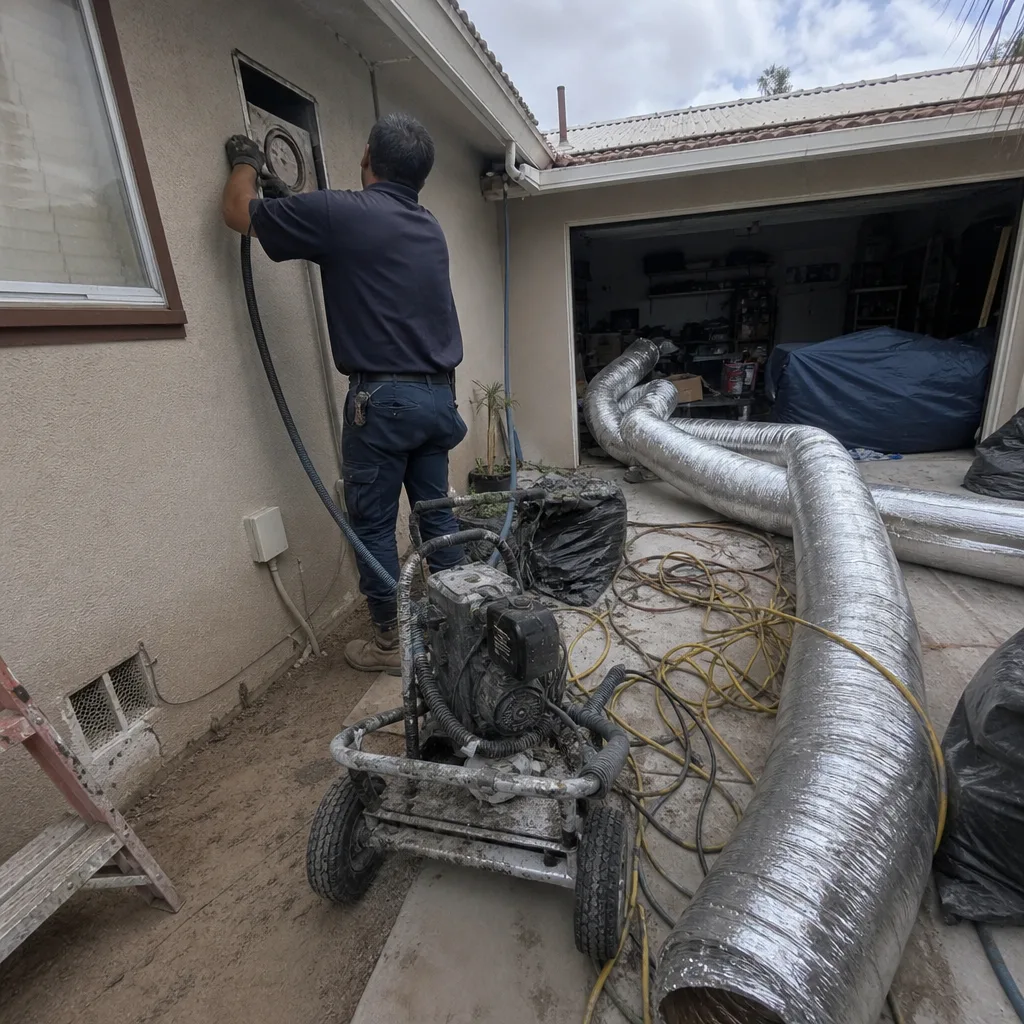
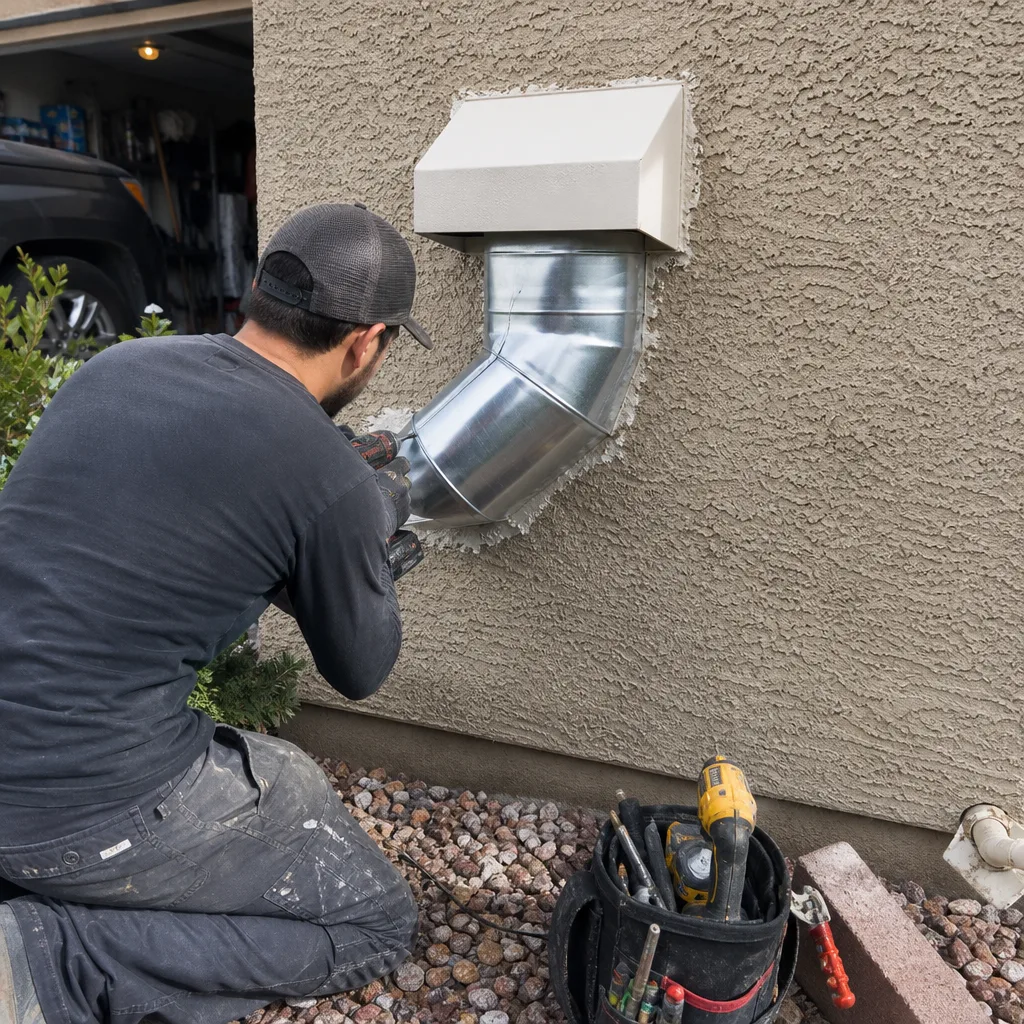
Air duct cleaning addresses the HVAC distribution system that moves heated and cooled air through your home. Dryer vent cleaning addresses the dedicated exhaust line that carries lint and hot air from your clothes dryer to the exterior. They are completely separate systems. Lint buildup in a dryer vent is a fire hazard and should be addressed annually or whenever drying performance drops. We offer both services in Las Vegas and will evaluate each system independently because they fail in different ways.
They can. Las Vegas has high levels of outdoor particulates including dust, pollen, and construction debris that enter the home and settle in ductwork. When the blower runs, it can re-suspend those particles and deliver them directly into your living space. For people with allergies or asthma, a clean duct system with a properly fit filter reduces the amount of recirculated particulate. The effect is most meaningful when duct cleaning is paired with improved filtration, and we often recommend options from Honeywell and Aprilaire installed by our Las Vegas team to support that goal.
The Bottom Line
Warning signs are not just symptoms. They are thresholds. Dust that stays gone after you wipe a register is normal. Dust that returns in 48 hours is a message. A smell that happens when the AC runs is a duct signal. A bill that rises 15 percent without explanation is a number worth investigating. You do not need to become an HVAC expert. You need to know what normal looks like, what abnormal looks like, and when to call someone who can look inside the system with a camera instead of guessing. In Las Vegas, where the cooling system runs for months at a stretch, early attention to duct health is a lower-cost path than waiting for a repair. If any of the warning signs in this guide match what you are seeing, call Linden Air Duct Las Vegas at (725) 726-5532. We will inspect, explain what we find, and give you a written price before any work starts.
Written by Marcus Veale, Owner at Linden Air Duct Las Vegas, serving Las Vegas since 2004.
See the difference
 Before
 After
After Before
 After
After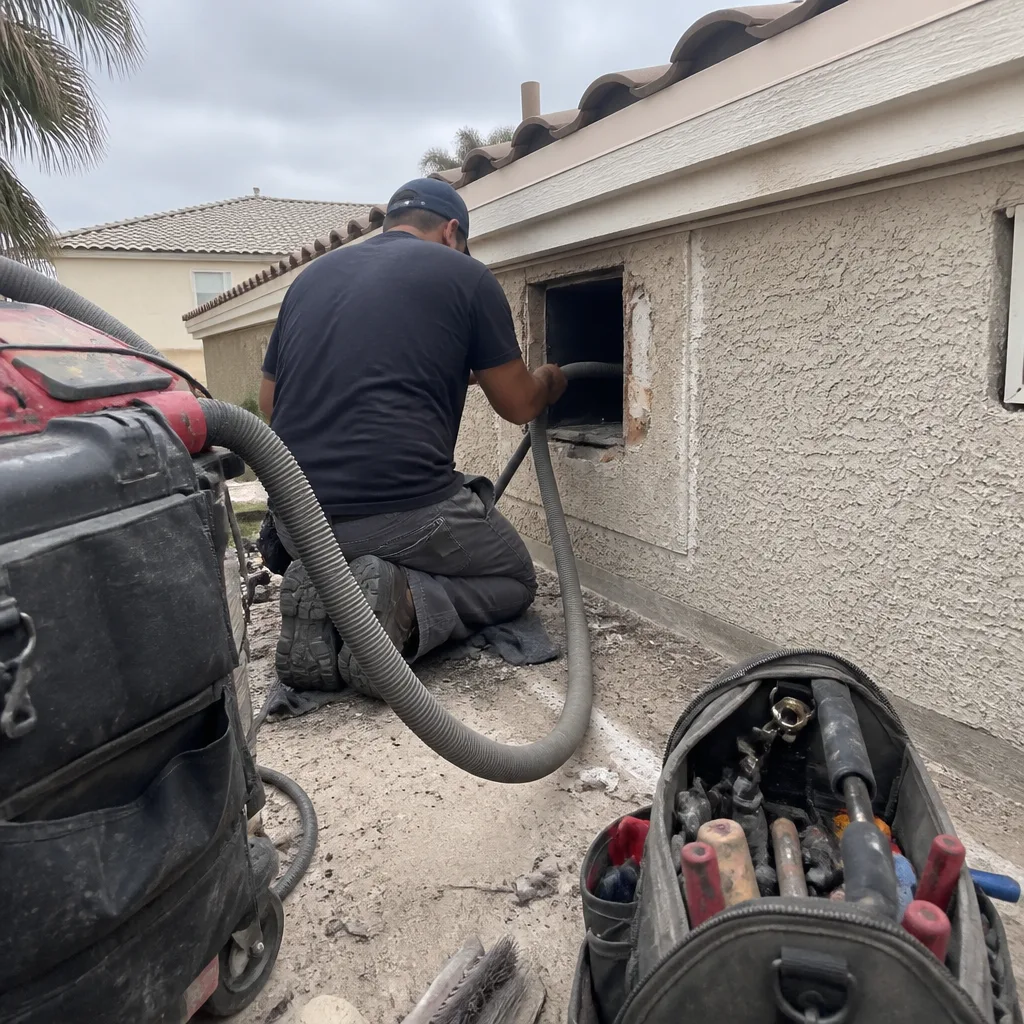 Before
 After
After