
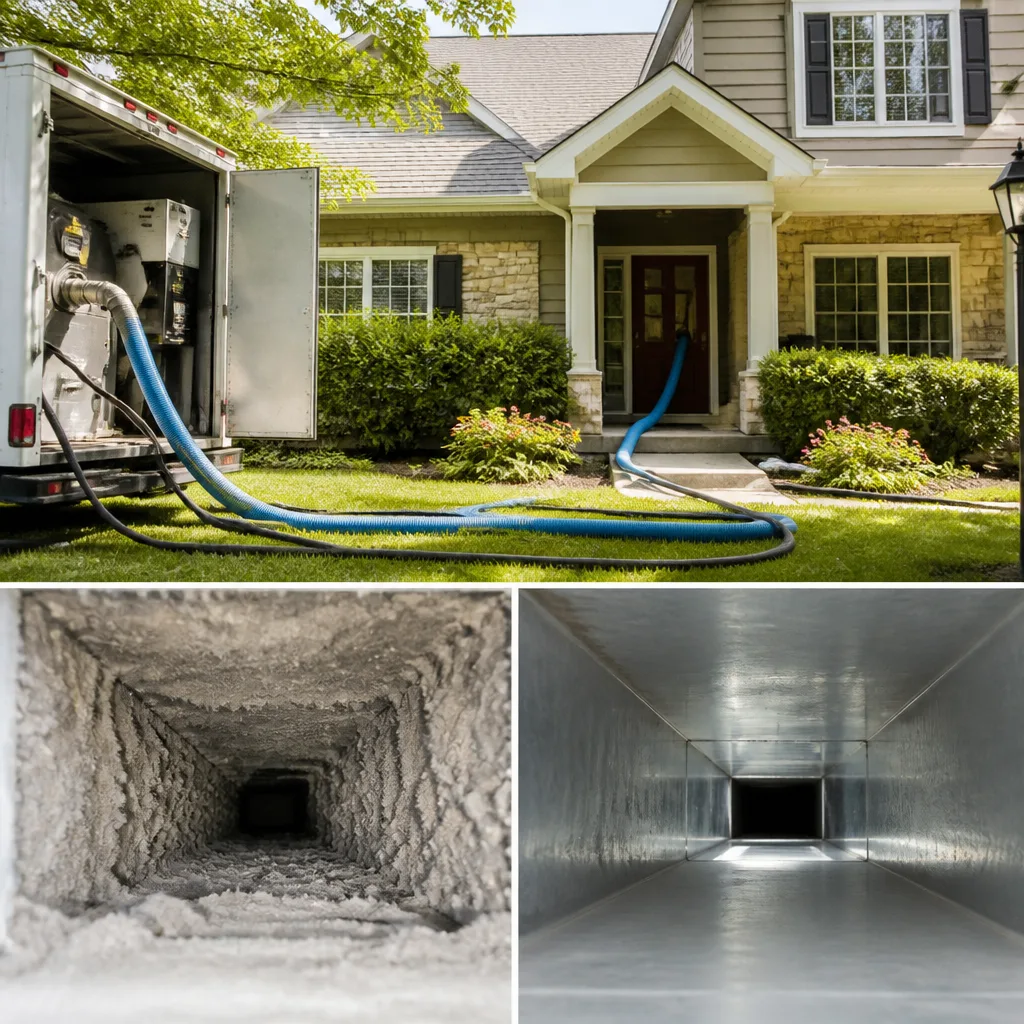
 Whole-home duct cleaning
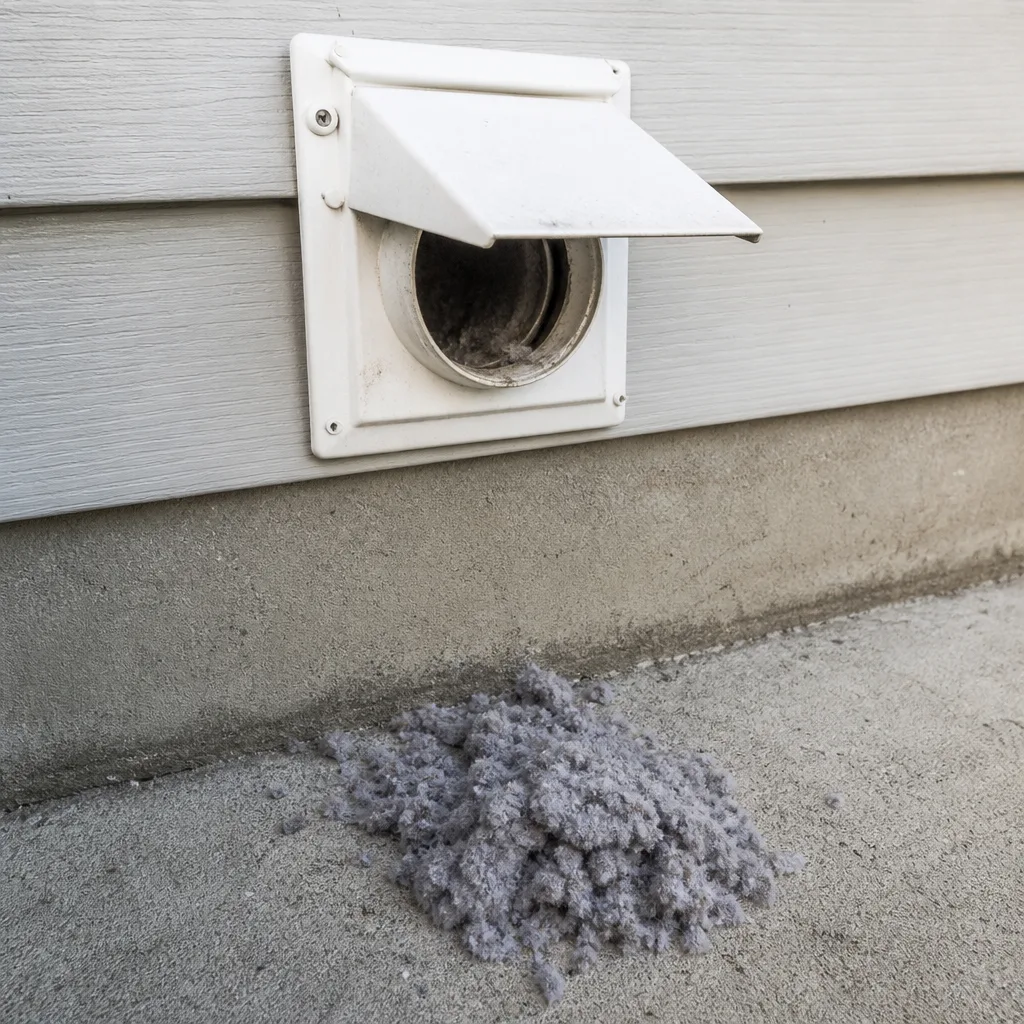 Dryer vent cleaning
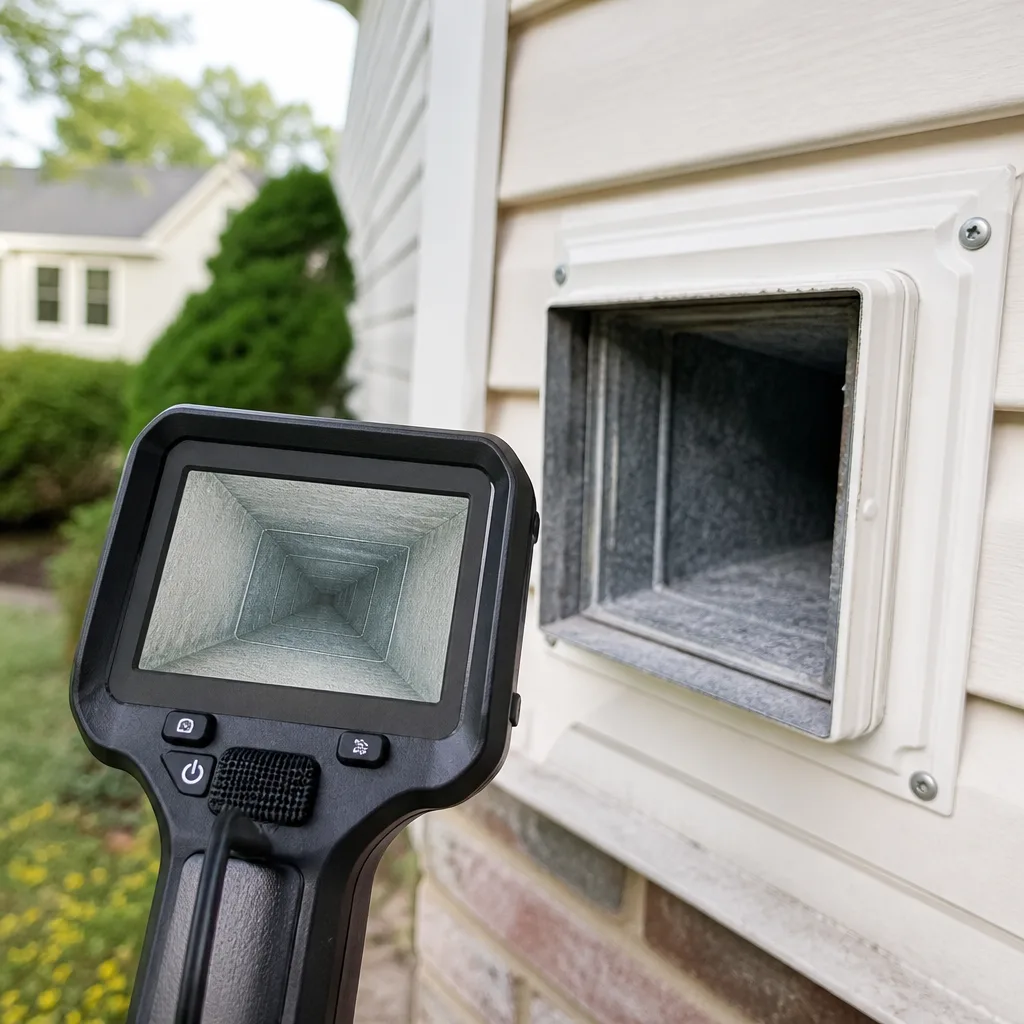 Camera inspection
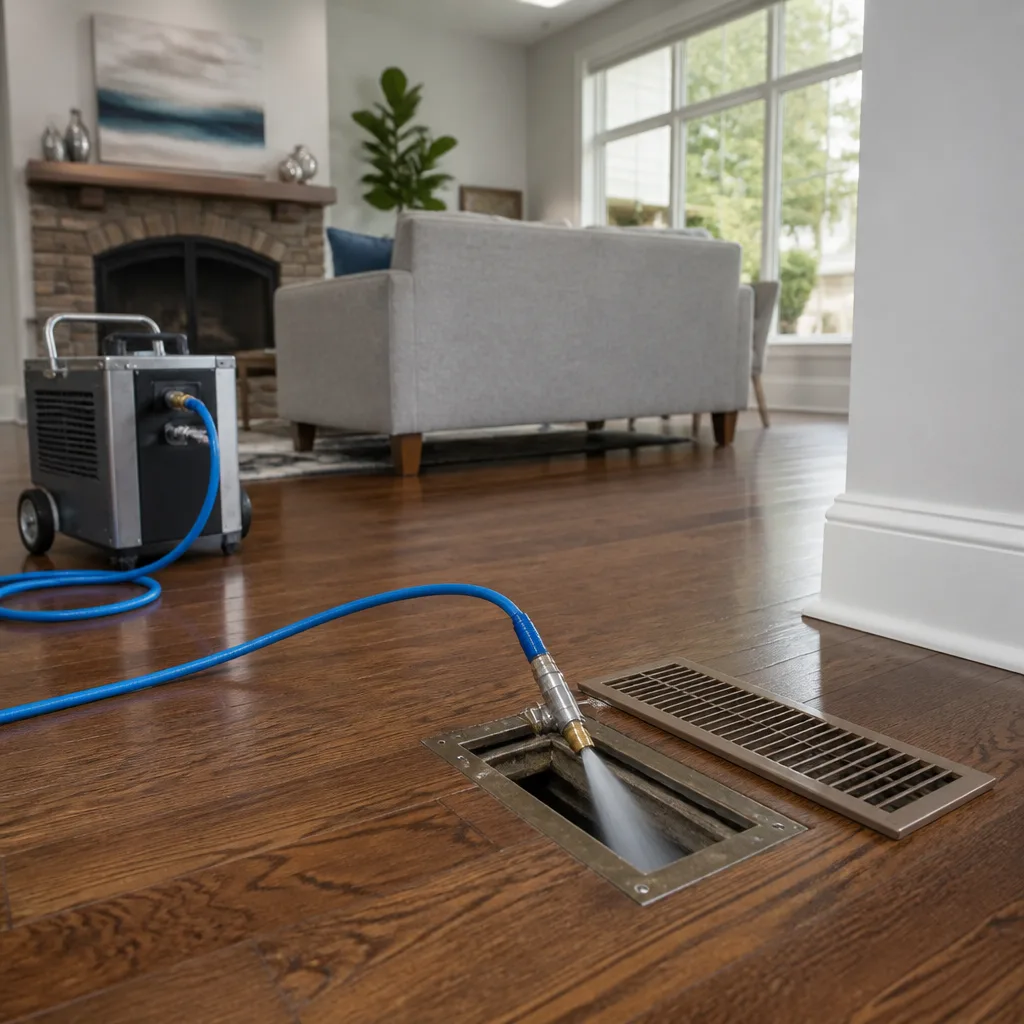 Sanitizing & deodorizing
Whole-system duct and dryer vent check with before-and-after photos - you see exactly what came out of your vents
That "$99 whole-house special" is a bait ad - the real number appears once they are in your hallway, or the "clean" is a shop-vac at the register. We photograph the inside of your ducts before and after instead.
Rotobrush Vent Sanitizing: The Las Vegas Owner’s Guide
If your Rotobrush system’s vent sanitizing module has stopped producing the sanitizing mist, or the pump cycles but nothing reaches the vent openings, the most likely culprits are a failed solenoid, a clogged atomizer nozzle, or a worn pump diaphragm. We stock Rotobrush-compatible sanitizing parts on our Las Vegas service trucks and can typically have your system running again the same week you call. Expect to pay $185 to $420 installed, depending on which component failed. The telltale sign most owners notice first: the sanitizer reservoir level hasn’t dropped after a full job, or the mist is visibly weak coming out of the vent heads.
Here’s the thing about Rotobrush sanitizing systems in Las Vegas specifically: the water here evaporates before you finish reading about it. That matters because the atomizer nozzles on these units are small enough that even slight mineral buildup from our hard water will choke them. We see it constantly in Summerlin, Henderson, and North Las Vegas alike – the unit runs fine for a year or two, then the mist thins out, and suddenly you’re wondering whether the sanitizing step is doing anything at all.
Which Rotobrush Models This Applies To
Rotobrush sanitizing components appear across their air duct cleaning system lineup, but the most common units we service in Las Vegas are the AiR+ and the Roto-Vision series, along with their earlier brush-and-vacuum rigs that added a fogger module. The sanitizing attachment itself is usually a separate boxed unit that mounts to the main machine, with a pickup tube running down into a sanitizer bottle and an output line feeding either a single fogger wand or multiple vent heads.
One compatibility gotcha worth knowing: Rotobrush changed the quick-connect fitting on the sanitizer output line around 2018. Older units use a barbed fitting secured with a hose clamp; newer ones use a push-fit fitting that looks similar but won’t seat properly on an old-style barb. If you’re ordering a replacement atomizer or output hose, match the year of your machine to the fitting, not just the model name. We can sort that out over the phone if you tell us the serial number prefix off the main unit’s data plate.
On the OEM versus aftermarket question for Rotobrush: the atomizer nozzle and pump diaphragm are honestly better sourced as OEM parts. They’re not expensive in the scheme of things, and a generic replacement nozzle often has a slightly different orifice size, which changes spray pattern and throw distance. The sanitizer fluid itself is another story – Rotobrush’s branded sanitizer works, but it’s mostly a stabilized quaternary ammonium solution, and we’ve run several EPA-registered equivalents through customer systems with results just as consistent. We’ll tell you straight what we stock and what we don’t try to substitute.
We also keep parts on hand for the bigger HVAC names you might have around the house – Lennox, Trane, and Carrier – because a sanitizing service call often turns up a filter cabinet or coil issue that needs attention before the sanitizer can do its job.
Styles & brands we work with
Signs Your Rotobrush Vent Sanitizing Is Failing
- The mist is weak or streaming instead of fogging. This almost always points to a partially clogged atomizer nozzle or low pump pressure. In Las Vegas hard water, mineral scale builds up in the nozzle orifice and the spray pattern degrades long before it fails completely.
- The sanitizer reservoir level doesn’t drop after a full job. If the bottle is full and the machine ran through its cycle but the level is unchanged, the pickup tube has lost prime, the solenoid isn’t opening, or the pump diaphragm has cracked. Air leaks in any of those spots will kill suction fast.
- The pump runs but makes a rattling or knocking noise. That’s usually the diaphragm separating from the pump head, which happens more often in Vegas because heat cycling makes the rubber brittle faster than it would in a coastal climate.
- You hear air hissing but no liquid reaches the wand. A cracked pickup tube or a bad seal at the bottle cap will pull air instead of sanitizer. The system sounds like it’s working, but you’re fogging nothing.
- The fogger trips a breaker or the pump won’t start at all. This is typically the solenoid coil shorting out or the pump motor drawing too much current on startup. We’ve also seen a surprising number of units with the cord strain relief worn through from being dragged across driveway gravel.
See the difference
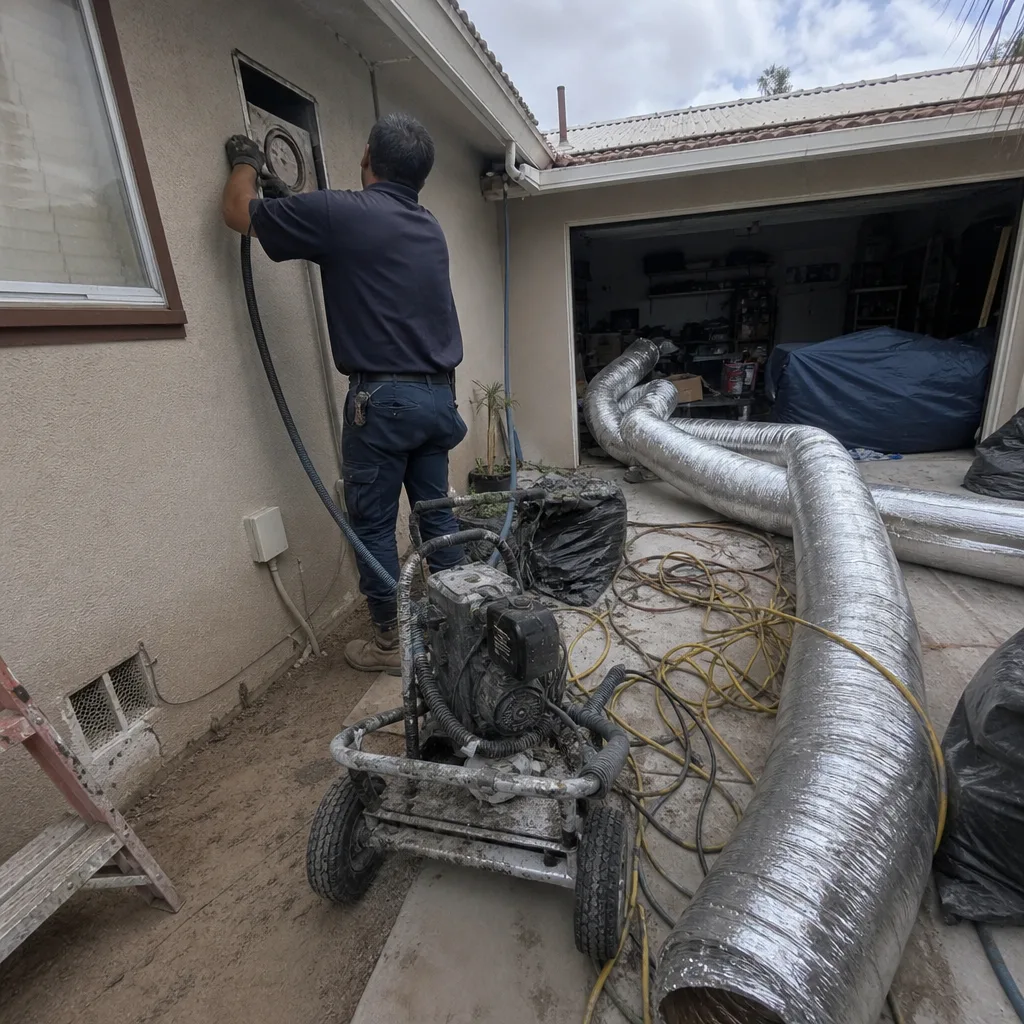 Before
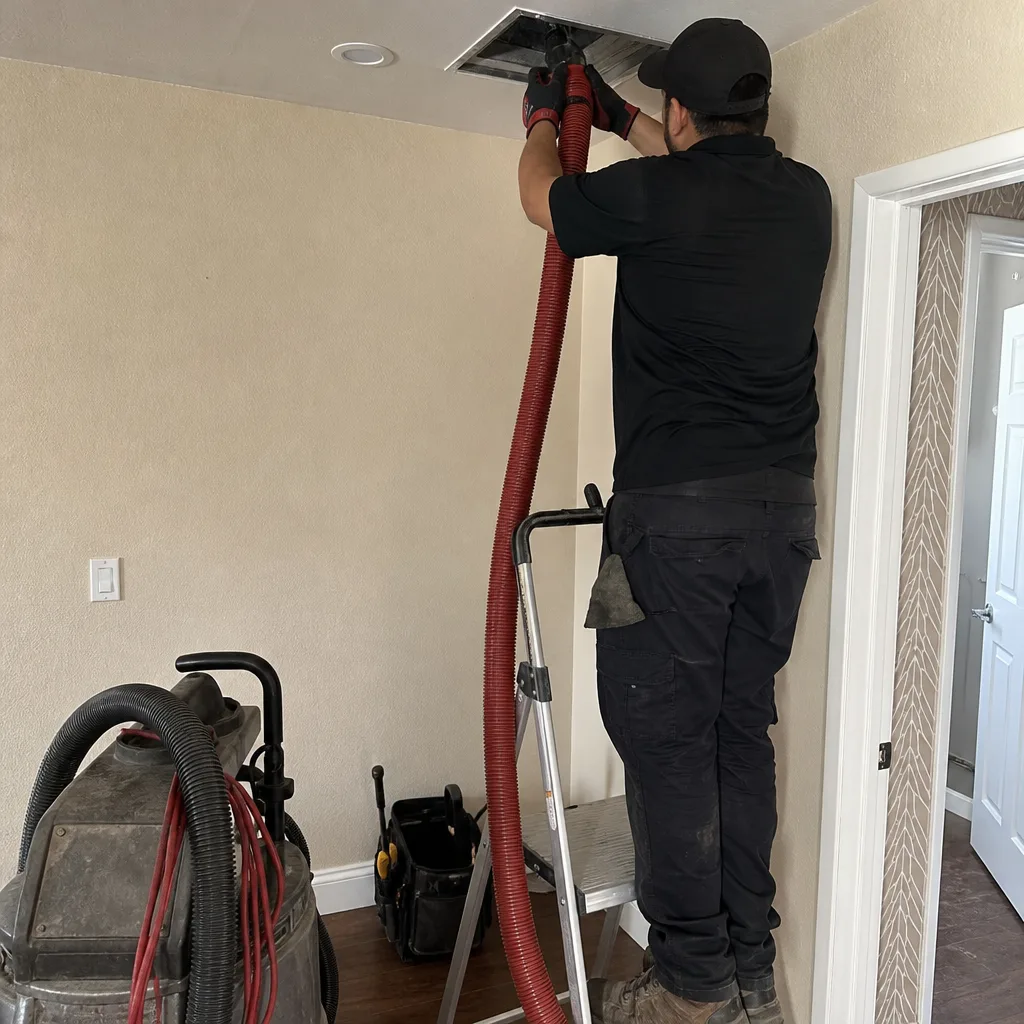 After
After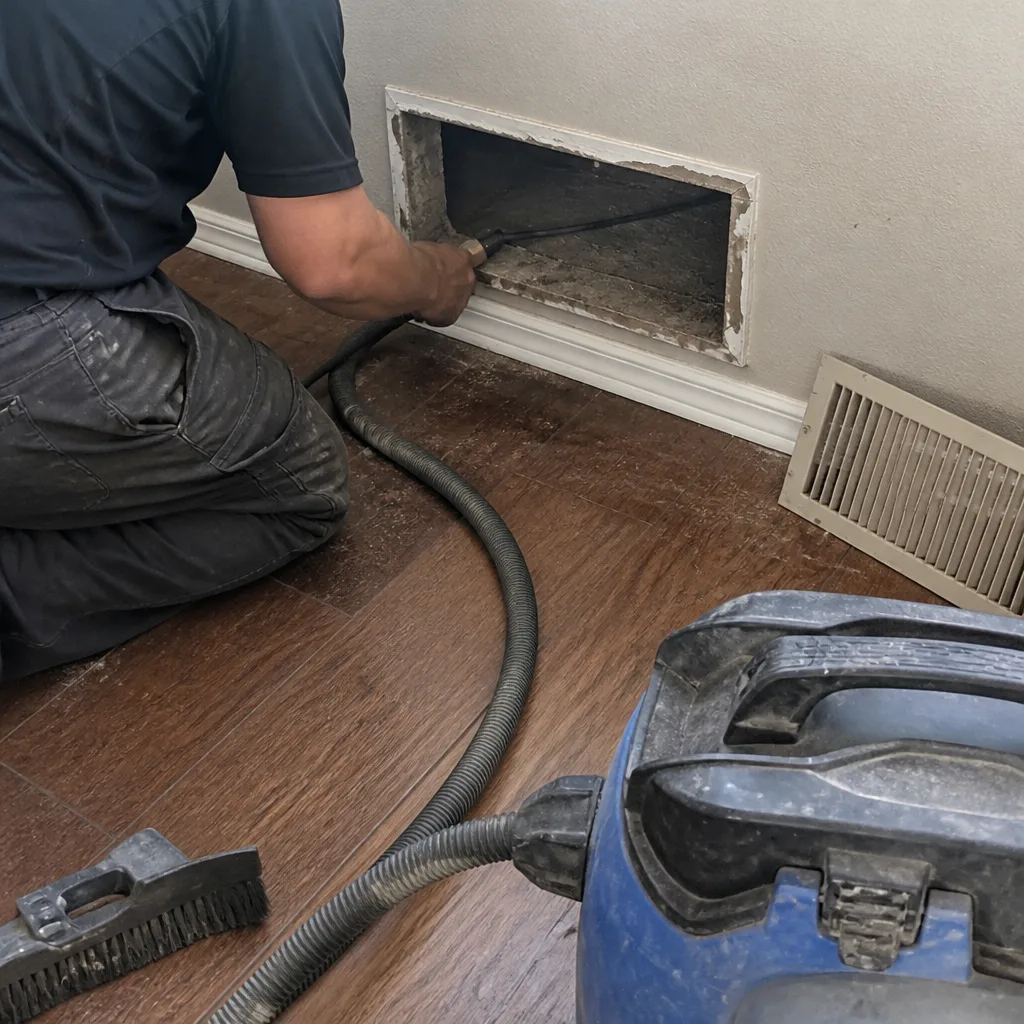 Before
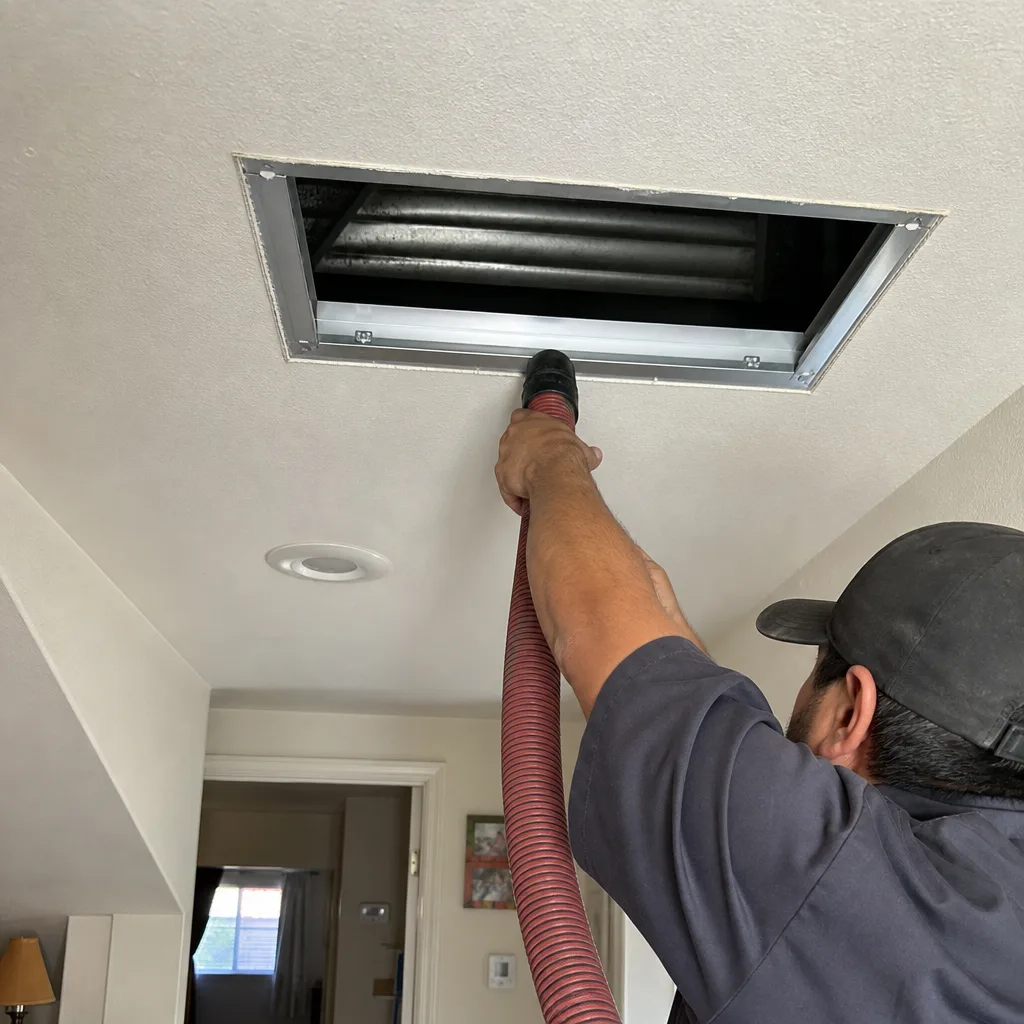 After
After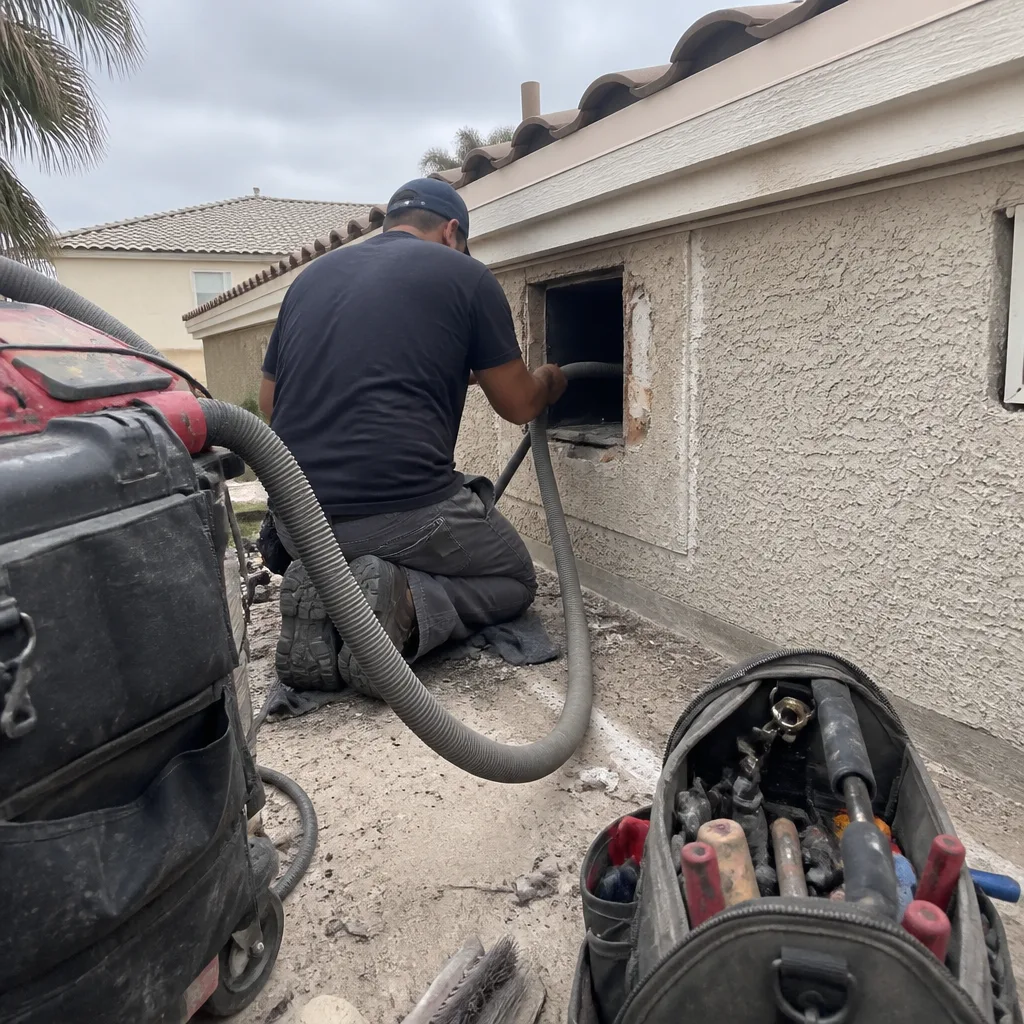 Before
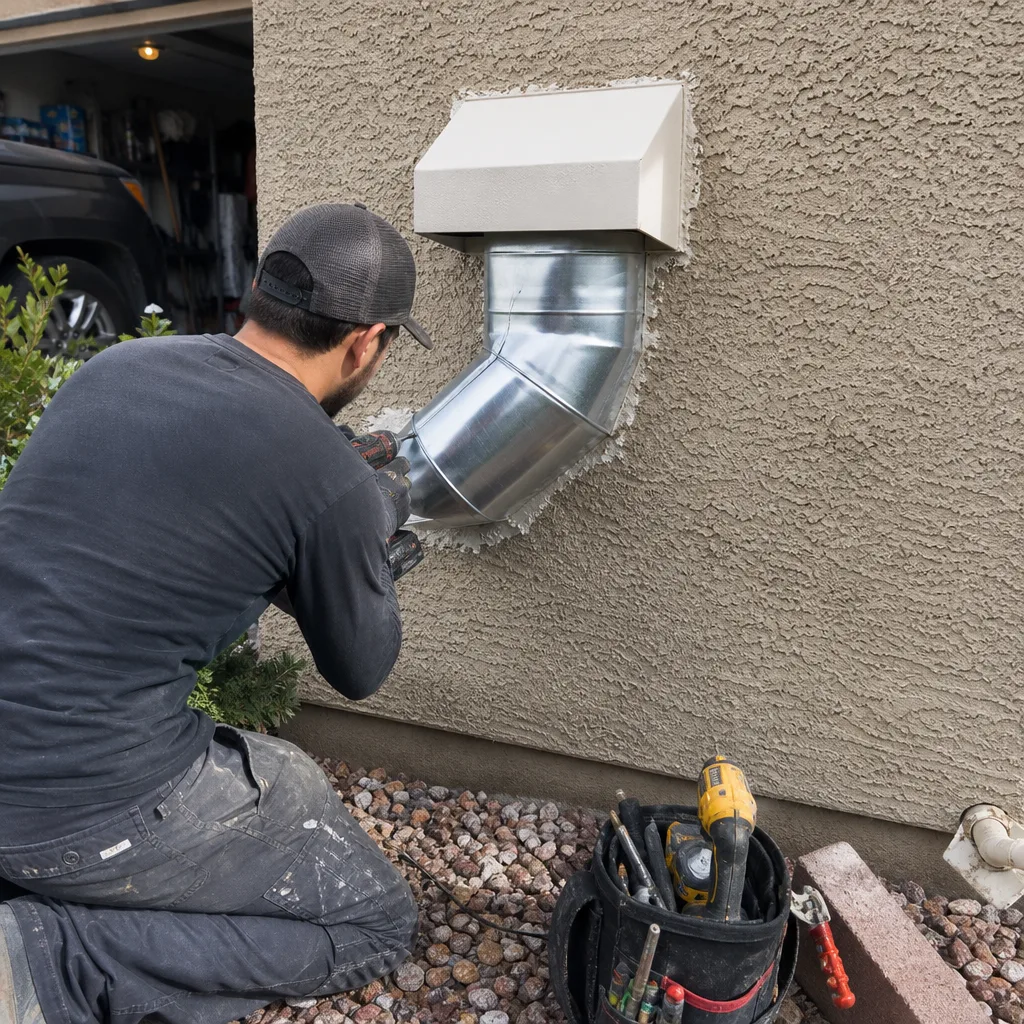 After
AfterReplacement Cost & What’s Included
For a Rotobrush vent sanitizing module in Las Vegas, the installed price range is $185 to $420. The low end covers a replacement atomizer nozzle and a pump diaphragm, which is about the cheapest component job we do. The mid-range, around $260 to $320, is where most repairs land – that includes the part, the service call, and a full sanitizing system function test. If the solenoid and the pump both need replaced, you’re at the top of the range.
Every quote includes the part and labor as one figure, put in writing before we start. No hourly open-ended billing, no “while we’re here we noticed” surprise line items at the end. If we find something else wrong during the swap, we show you what we found and you approve any additional work before we touch it. The repair itself is covered by our 365-Day Done Right Promise, and every repair carries a written guarantee with a free second visit if the fix doesn’t hold.
DIY or Call Us?
The sanitizer fluid in these systems is a quaternary ammonium compound diluted to working strength, so it’s not acutely dangerous to handle, but it will irritate your eyes and skin if you splash it, and you don’t want to breathe in the concentrate. The electrical side is low voltage, so you’re not risking a serious shock. The realistic DIY limit is checking the obvious: is the pickup tube seated fully, is the bottle vent clear, is the power cord intact, and does the nozzle look crusted with white mineral deposits? You can clean a nozzle with warm water and a soft brush if the scale is light.
Where DIY goes wrong on Rotobrush sanitizing units is the pump diaphragm and the solenoid. Both sit inside the machine housing in a tight area, and if you misalign the diaphragm on reassembly, the pump will run dry and burn itself out in under a minute. A $30 part turns into a $300 pump. That’s when it’s worth a call to us at (725) 726-5532. We’ll tell you over the phone if it’s something you can safely handle or something we should come look at.
FAQs
A Rotobrush sanitizing module in Las Vegas typically lasts three to five years before needing a pump diaphragm or nozzle replacement, with the atomizer nozzle usually being the first thing to go due to hard water mineral buildup. If you run sanitizer through it daily during peak season, expect to replace the nozzle every couple of years. Call us at (725) 726-5532 and we’ll quote you an exact price for your specific system.
In most cases the Rotobrush sanitizing module can be repaired by replacing the individual failed component – the nozzle, solenoid, diaphragm, or pickup line – rather than the entire module. Full module replacement is only necessary if the pump housing itself is cracked or the electronics board has failed, which we don’t see often. We always quote the repair option first and only recommend full replacement if it genuinely saves you money down the line.
Most Rotobrush sanitizing part replacements take 30 to 60 minutes on site, including the function test where we run the sanitizer through the system and verify the mist pattern is right. If we have to pull the machine apart to access the pump diaphragm, budget closer to 90 minutes. We bring the parts with us based on what you describe over the phone, so there’s usually no second trip needed.
Yes, we stock Rotobrush-compatible sanitizing nozzles, solenoids, pump diaphragms, pickup tubes, and output hoses on our Las Vegas service trucks, and we work with Rotobrush, Nikro, and several aftermarket suppliers for parts we don’t keep in inventory. If your part is a specific model we don’t have on hand, it’s usually two to three business days to get it in. Call us at (725) 726-5532 and we’ll check stock while you’re on the phone.
Written by Marcus Veale, Owner, Linden Air Duct Las Vegas at Linden Air Duct Las Vegas, serving Las Vegas and nearby areas.